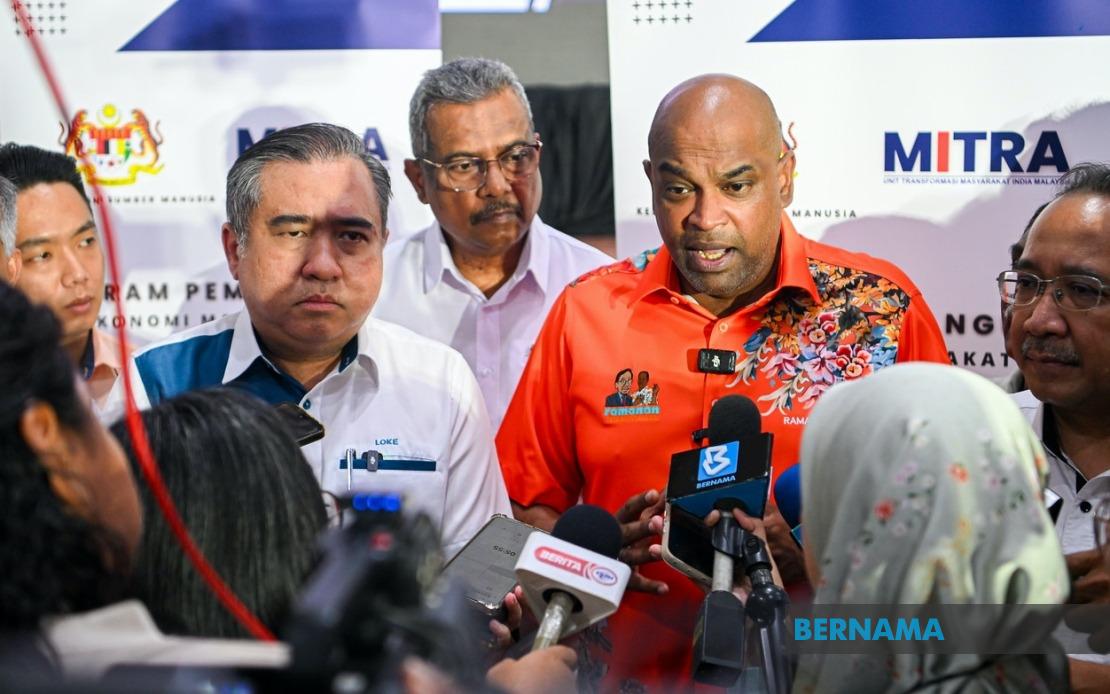
Transport Minister Anthony Loke has firmly pushed back against persistent suggestions that the Democratic Action Party wields disproportionate influence over Malaysia's government apparatus, characterising such claims as a familiar political attack strategy that opponents routinely deploy against the Pakatan Harapan coalition.
Speaking in Seremban on July 7, Loke outlined the decision-making framework that, according to him, governs how the administration functions at both national and state levels. Under this model, all major policy initiatives and governmental choices emerge from collaborative discussions between the various parties that comprise the ruling alliance, rather than emanating from any single faction's agenda. This includes the federal administration as well as the Negeri Sembilan state government, where Menteri Besar Datuk Seri Aminuddin Harun applies the same consultative approach.
The DAP leader emphasised that component parties—encompassing DAP itself alongside UMNO and PKR in the federal sphere—each receive an opportunity to articulate their positions and policy preferences before Prime Minister Datuk Seri Anwar Ibrahim renders a final determination. Loke stressed that this inclusive process does not represent weakness or indecision, but rather a deliberate commitment to pluralistic governance within a multi-party framework.
Loke's remarks directly address criticism that has circulated within opposition circles and among certain segments of the Malay-Muslim electorate, which contend that DAP, despite being a non-Muslim, predominantly Chinese-led party, exercises outsized control over government operations. These allegations have gained traction particularly among UMNO supporters and within segments of society concerned about the balance of power within the ruling coalition.
In his rebuttal, Loke appeared exasperated with the repetition of such narratives, asking rhetorically whether critics possessed any alternative rationale beyond attributing government actions to DAP interference. He pointed out that within any functioning coalition administration, participating parties naturally voice their perspectives, interests, and concerns. This is not clandestine influence-peddling, he suggested, but rather the ordinary mechanics of multiparty governance.
The Transport Minister elaborated that while UMNO representatives contribute input to deliberations and PKR members similarly express their viewpoints, the ultimate prerogative for finalising decisions rests with the Prime Minister as the head of government. This distinction—between providing counsel and wielding decision-making authority—forms the crux of Loke's argument against claims of DAP dominance.
In Negeri Sembilan specifically, Loke noted that Menteri Besar Aminuddin Harun follows an identical consultation protocol, ensuring that all coalition partners contribute to the formulation of state-level policy. This consistency across governmental levels, Loke implied, demonstrates that the supposedly problematic influence of DAP operates as a phantom concern rather than a demonstrable reality.
Loke also addressed a related criticism that has gained traction in certain quarters: the assertion that Malays and Muslim interests face diminution under PH administration in Negeri Sembilan. He dismissed such concerns as recycled political rhetoric, pointing to concrete realities on the ground. The state's chief executive remains a Malay individual, he noted, while the government's policy agenda and implemented programmes have consistently prioritised the welfare and interests of all communities, including the Malay population, since Pakatan Harapan assumed control of state administration in 2018.
Loke's framing of these challenges represents an attempt to counter the narrative that the ruling coalition operates as an arrangement whereby non-Malay, non-Muslim parties exercise leverage over policy direction. The suggestion that Malay interests face systematic endangerment, he argued, contradicts observable facts regarding state leadership and governmental performance. This counter-narrative seeks to reassure Malay voters and address anxieties that have been cultivated through sustained opposition messaging.
The Transport Minister's intervention comes amid ongoing political tensions within Malaysia's coalition government, as various parties occasionally clash over policy priorities and resource allocation. These disagreements periodically generate speculation that certain parties exert outsized influence, particularly given DAP's role as a pivotal component in maintaining the coalition's parliamentary majority.
Loke's insistence on collective decision-making reflects a broader challenge facing Pakatan Harapan: building public confidence that coalition governance, despite its inherent complexities and occasional frictions, operates according to principles of democratic deliberation rather than factional domination. The prevalence of narratives claiming DAP control suggests that scepticism about the coalition's internal dynamics remains widespread, particularly among constituencies traditionally aligned with UMNO and among voters concerned about the representation of Malay-Muslim interests.
For Malaysian observers, Loke's statement underscores the persistent fragility of the coalition arrangement and the vulnerability of multiparty administrations to allegations of hidden power dynamics. Whether such reassurances prove persuasive to swing voters and traditionally Malay-Muslim constituencies will likely depend on broader perceptions of government performance and the coalition's ability to demonstrate substantive achievements that benefit all communities.

