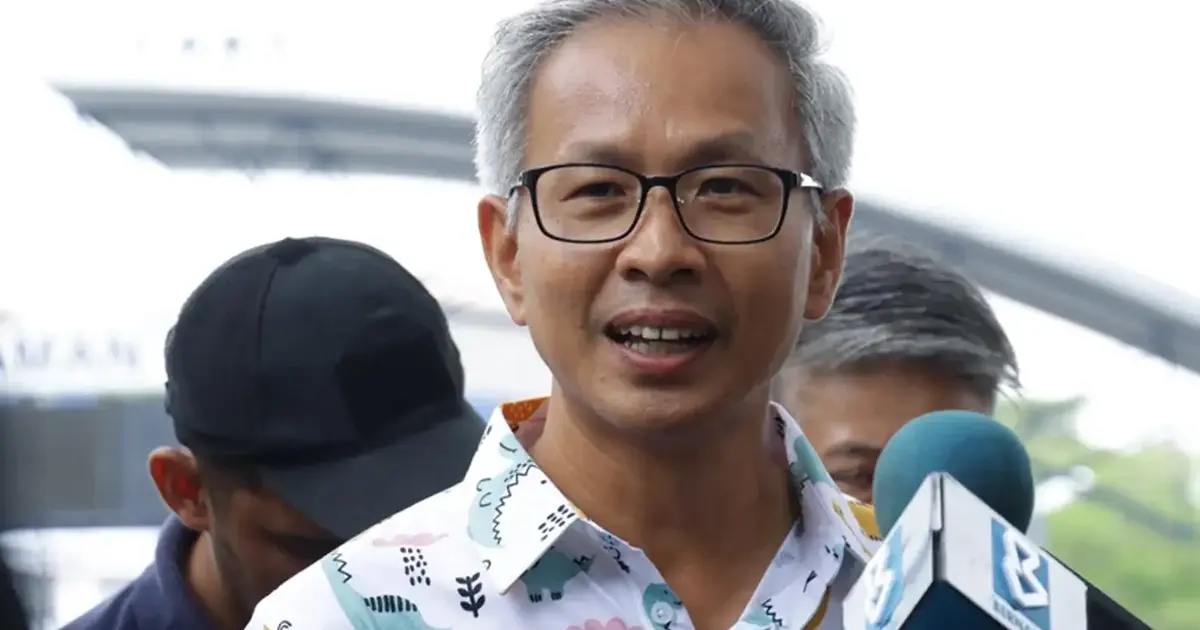
The investigation into Democratic Action Party leader Tony Pua remains active, according to a statement from the Home Minister, who disclosed that the ongoing police inquiry stems from a social media post that attracted significant public attention and formal complaints. The matter has drawn 140 police reports from members of the public, each expressing concern over the content and messaging of Pua's Facebook post, which touched upon two foundational pillars of Malaysia's constitutional framework: the institution of the constitutional monarchy and the Rukun Negara, the country's five national principles.
The decision to keep the investigation open underscores the sensitivity surrounding discussions of Malaysia's monarchy and national symbols, matters that traditionally command broad respect across the political spectrum and among the general population. Constitutional issues in Malaysia carry particular weight given the special position of the Yang di-Pertuan Agong and the agreement reached during the formation of the federation. Comments perceived as critical of these institutions frequently generate swift public reaction and formal complaints to authorities, as evidenced by the substantial number of reports filed in this instance.
The Rukun Negara, enshrined as Malaysia's five fundamental principles—belief in God, loyalty to the king and country, upholding the constitution, rule of law, and good behaviour and morality—serves as a unifying national doctrine that transcends partisan boundaries. When public figures, particularly those in political opposition, address these principles through digital platforms, their remarks are subject to heightened scrutiny. The nature and intent of Pua's comments, along with how they were interpreted by those filing complaints, appear to have convinced police that further investigation was warranted.
Pua's status as a prominent voice within the DAP, one of Malaysia's largest opposition parties, adds another dimension to this case. His position within the party means his public statements carry amplified reach and influence, reaching not only party members and supporters but also opposition-minded Malaysians and general internet users. The DAP has consistently positioned itself as a proponent of constitutional governance and parliamentary democracy, which creates a particular context for understanding how remarks by senior party figures regarding constitutional matters might be perceived or contested.
The investigation also reflects broader tensions in Malaysia regarding the boundaries of permissible political speech, particularly when touching on sensitive national institutions. While freedom of expression remains constitutionally protected, courts and law enforcement have historically recognised certain limits, particularly concerning statements that might be deemed disrespectful toward the monarchy or the constitutional framework. The question of where exactly these boundaries lie—and who determines them—remains contested in Malaysian public discourse and among legal scholars.
From a regional perspective, Malaysia's approach to policing comments about constitutional institutions contrasts with different models in neighbouring democracies. Singapore maintains strict sedition laws, while Indonesia's vast and diverse democracy grapples with similar tensions between free speech and respect for national symbols. Thailand's strict lèse-majesté laws represent an even more restrictive approach. Malaysia's middle ground reflects its particular historical compromise between Islamic constitutional monarchy and multicultural parliamentary democracy.
The 140 police reports indicate significant public concern, though they do not necessarily represent a cross-section of Malaysian opinion. Those motivated to lodge formal complaints often represent more politically engaged or concerned segments of the population. The sheer number of reports, however, does suggest that Pua's remarks resonated beyond a narrow audience and triggered substantive objection from multiple quarters.
For the DAP and opposition politics more broadly, the continuation of this investigation raises questions about the political space available for critical commentary on constitutional arrangements. Opposition parties routinely argue that their role includes scrutinising and critiquing existing systems, a function they view as essential to a healthy democracy. Conversely, defenders of strong laws protecting national institutions argue that certain foundational pillars require protection from relativisation or challenge.
The investigative process itself remains opaque to public view, with authorities declining to detail the specific allegations, the precise wording of Pua's post that prompted complaints, or the timeline for concluding their inquiry. This opacity is typical of ongoing police investigations but also reflects Malaysian practice in handling sensitive political matters involving national institutions. The balance between investigating potential offences and protecting individual rights continues to generate debate among Malaysian civil rights advocates and constitutional lawyers.
Looking ahead, the resolution of this case could set important precedent for how similar matters are handled. Whether authorities conclude that Pua's remarks crossed legal thresholds into prohibited territory, or determine that his comments, however controversial, remain within protected speech, will carry implications for political discourse and the space available for critical engagement with constitutional questions. For now, the investigation's continuation signals that authorities view the matter as sufficiently serious to warrant ongoing police resources and attention.

