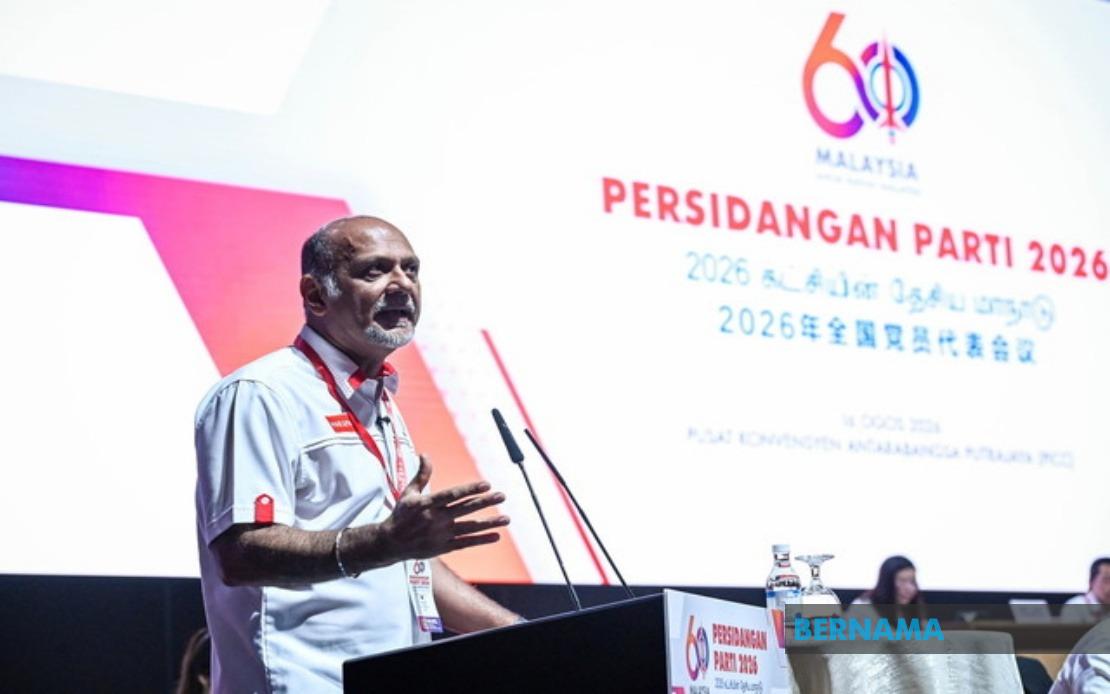
Democratic Action Party Chairman Gobind Singh Deo has called on the party to undertake a comprehensive reassessment of its strategic direction in response to disappointing outcomes in the recent state elections, stressing that doing so is vital to maintaining the party's relevance as Malaysia's political landscape continues to shift. Speaking at the opening of the DAP Party Conference 2026 at the Putrajaya International Convention Centre, Gobind acknowledged the electoral message while signalling that the party would use the results as a catalyst for serious introspection before determining its path forward over the coming years.
The call for reflection comes at a pivotal moment for the party, which has now spent three and a half years as a participant in the multi-party Unity Government arrangement. Gobind framed this extended period of governance experience as an opportunity to take stock of what the party has managed to accomplish alongside its coalition partners, while also identifying areas where it has fallen short of expectations or encountered obstacles. This self-evaluation is particularly significant given the party's long history as an opposition voice and its relative newness to wielding executive power at the national level in partnership with other political entities.
Crucially, Gobind articulated a pragmatic shift in the party's approach to reform efforts, suggesting that DAP must abandon the notion of unilaterally advancing its entire policy agenda and instead focus exclusively on initiatives that can attract support from across the coalition. Rather than pursuing contentious or ideologically divisive measures that might provoke resistance from coalition partners, the party should identify and concentrate on reforms where consensus already exists or can be readily built. This represents a notable recalibration from the expectations that accompanied DAP's entry into the Unity Government, when many observers believed the party would aggressively push its stated manifesto commitments on institutional change and governance renewal.
As a concrete example of this more collaborative approach, Gobind proposed that Parliament be reconvened in a special sitting specifically dedicated to debating and voting on a slate of amendments to foundational legislation. These proposed amendments would tackle the Security Offences (Special Measures) Act 2012, known colloquially as SOSMA, which has long been a focus of civil society criticism and remains controversial among civil liberties advocates. The package would also encompass reforms to the Peaceful Assembly Act 2012, a statute that human rights organisations have frequently challenged as overly restrictive. Additionally, the proposals would address the separation of powers between the Attorney General and Public Prosecutor roles, an institutional safeguard that reformers have argued is essential to judicial independence.
The chairman further advocated for constitutional amendments that would impose a two-term limit on the office of Prime Minister, a structural reform intended to prevent prolonged concentration of executive power. Gobind positioned these interconnected amendments as evidence that the government is genuinely committed to institutional renewal designed to strengthen governance transparency and erect barriers against potential abuses of state authority. However, the emphasis on advancing only those reforms capable of securing cross-party consensus suggests that the scope of such amendments may ultimately prove narrower than some civil society advocates and democratic reform enthusiasts might prefer.
On the broader economic front, Gobind stressed that the government must develop a more nuanced and empathetic understanding of the specific hardships that ordinary Malaysians face in their daily lives, from employment instability to rising costs of living and inadequate social safety nets. He argued that translating this understanding into concrete policy measures designed to alleviate financial pressure on households must become a central priority for the Unity Government. This acknowledgement of economic discontent reflects the underlying anxiety that motivated the recent election results and suggests that DAP recognises voter frustration has crystallised around bread-and-butter concerns rather than abstract constitutional questions.
Parallel to addressing domestic economic grievances, Gobind asserted that maintaining political stability and predictability is indispensable for convincing international investors to regard Malaysia as a sufficiently secure and attractive destination for capital deployment. He contended that foreign direct investment decisions hinge substantially on investors' assessment of political risk, including the likelihood of sudden policy reversals, institutional dysfunction, or governmental instability. By extension, a government perceived as coherent and durable becomes more capable of attracting the manufacturing operations, technology ventures, and infrastructure projects that generate high-quality employment opportunities for Malaysian workers across multiple sectors and regions.
The timing of Gobind's remarks is particularly significant because the party conference itself is scheduled to consider a landmark motion that will fundamentally determine DAP's posture toward the Unity Government arrangement itself. Party secretary-general Anthony Loke is expected to table a motion inviting delegates to decide whether DAP should remain within the coalition framework through the completion of the current parliamentary term, or alternatively withdraw from the government structure. With 4,264 delegates from 1,704 eligible branches participating in a secret ballot following substantive debate, this decision carries substantial weight for the party's future trajectory and will likely reverberate across the broader coalitional architecture supporting the current administration.
The conference additionally marks the sixtieth anniversary of DAP's founding, a milestone that invites reflection on the party's evolution from a scrappy opposition outfit challenging authoritarian governance to a major coalition partner sharing ministerial responsibilities. This institutional milestone, combined with the party's current strategic moment, creates space for genuine reckoning about whether the compromises inherent in governing have strengthened or compromised the party's core identity and stated values. The identity question has become more acute given that DAP functions as one of three principal components of the Pakatan Harapan coalition, alongside PKR and Amanah, meaning its decisions have ripple effects across the broader opposition-turned-government bloc.
For regional observers and Malaysian stakeholders, the DAP deliberations carry implications extending beyond party dynamics. The outcome of the party's reassessment will substantially shape the stability and policy direction of the federal government through the remainder of the parliamentary term. Should DAP determine that coalition participation no longer serves its interests or values, it could trigger a broader political realignment with unpredictable consequences for Malaysia's governance trajectory. Conversely, a recommitment to the Unity Government paired with renewed focus on achievable institutional reforms could signal a maturing approach to power-sharing governance, though potentially at the cost of sacrificing some of the transformative ambitions that originally energised the coalition during the 2018 electoral breakthrough.

