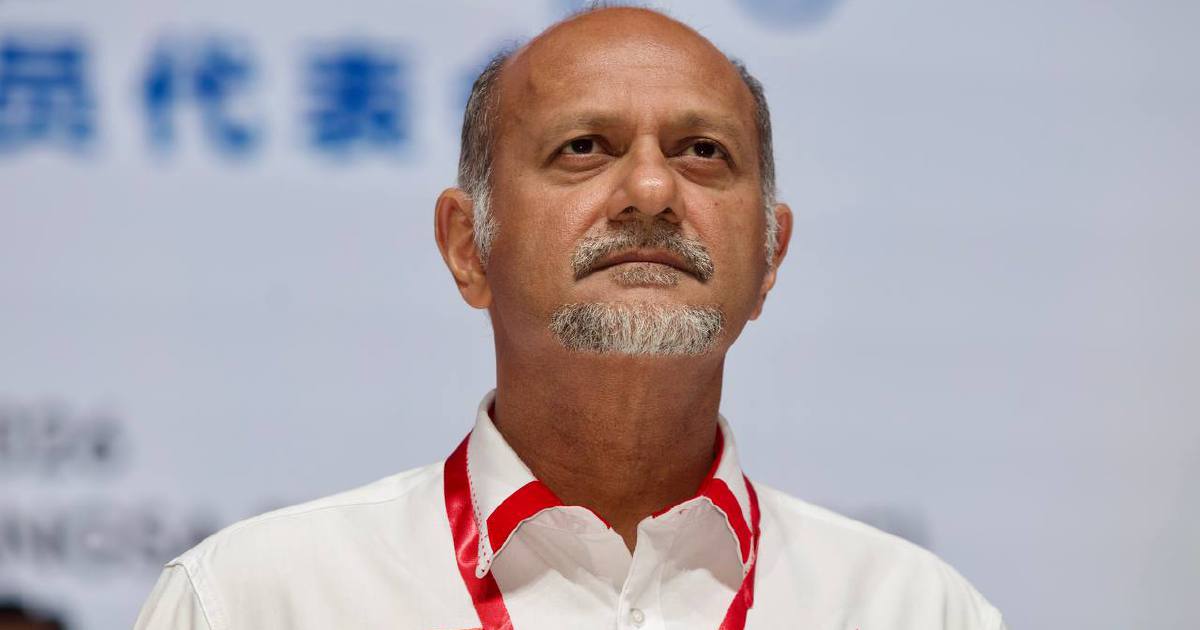
The Democratic Action Party has raised the volume on calls for accelerated transformation within Malaysia's governing structures, with party chairman Gobind Singh Deo directing his appeal specifically at Prime Minister Datuk Seri Anwar Ibrahim as the unity government enters its fourth year in power. The intervention marks a significant moment of public pressure from a coalition partner, reflecting growing frustration about the pace of systemic change despite the administration's early pledges to overhaul how Malaysia operates at institutional and economic levels.
Gobind's appeal arrives at a critical juncture for the Pakatan Harapan-led administration. With three and a half years elapsed since the November 2022 appointment of Anwar Ibrahim, the government faces mounting expectations from its constituent parties to demonstrate tangible progress on the reform agenda that underpinned its electoral platform. The DAP's willingness to voice dissatisfaction publicly suggests internal coalition tensions around implementation speed and political prioritisation—a dynamic that carries implications for government stability as it approaches what would traditionally be considered its policy consolidation phase.
The DAP's position within Malaysian politics deserves examination. As the largest opposition force during the Mahathir and Muhyiddin eras, the party has positioned itself as a champion of institutional transparency and evidence-based governance. Its pivot into the unity government represented a pragmatic accommodation with Barisan Nasional partners and independent bloc MPs, creating a sprawling coalition united more by what it opposed than by coherent programmatic vision. Gobind's intervention effectively restates the DAP's core identity as a reform-oriented force, signalling to party members and supporters that this identity has not been diluted by coalition participation.
The substance of the DAP's critique—inadequate pace on institutional reform—touches on areas central to Malaysia's structural challenges. Institutional reform encompasses everything from civil service modernisation and anti-corruption strengthening to judicial independence safeguards and parliamentary procedure enhancement. These are lengthy transformation projects that span electoral cycles, requiring sustained political will and substantial resource allocation. Anwar's government has made moves on several fronts: the Institutional Reform Committee established early in the tenure, amendments to anti-corruption legislation, and various bureaucratic restructuring initiatives. Yet the perception among reform-focused constituencies clearly remains that momentum has plateaued.
Economic reform constitutes the parallel thrust of the DAP's demand. Malaysia's economy faces structural headwinds—declining productivity growth, over-reliance on commodity exports, an underdeveloped knowledge-intensive sector, and persistent regional inequality. The unity government inherited these challenges from its predecessors but has struggled to articulate a comprehensive economic transformation strategy with clear timelines and measurable targets. Initiatives announced piecemeal—industrial policy adjustments, digital economy roadmaps, infrastructure spending programmes—have not cohered into a readily comprehensible grand vision that suggests fundamental economic reorientation.
The political dynamics surrounding such reform demands require unpacking. Within Malaysia's unity government, the DAP occupies a subordinate position relative to the Malaysian United Indigenous Party's electoral weight and the Barisan Nasional's parliamentary dominance. This structural weakness means DAP pressure campaigns rely on public messaging and coalition persuasion rather than legislative leverage. Gobind's public appeal constitutes precisely such a strategy—mobilising party grassroots sentiment while signalling to Anwar that reform constituencies expect visible action.
For Malaysian observers, the timing of this intervention merits consideration. As we approach the midterm review point of the current government's natural tenure, various stakeholder groups are recalibrating expectations and assessing whether their core political demands have been meaningfully advanced. The DAP's move suggests the party intends to maintain reform pressure heading into what could become a more contested political phase. This has spillover implications: should DAP escalate its public criticism, coalition cohesion could face genuine stress, particularly if other components feel emboldened to air grievances simultaneously.
The institutional reform agenda carries particular weight in Malaysia's context. Years of executive dominance, corruption scandals implicating high-level figures across parties, and erosion of checks-and-balances mechanisms have created significant institutional deficits. Voters from across the political spectrum register concern about governance quality and elite accountability. The DAP's appeal effectively channels such concerns while positioning the party as custodian of reform principles, distinguishing itself from components more focused on patronage or community-specific interests.
Regional implications deserve attention too. Malaysia's status as a significant Southeast Asian economy means governance quality here influences investor confidence and regional stability more broadly. The unity government's ability to demonstrate institutional strengthening and economic dynamism sends signals about whether democratic governance systems can deliver substantive results in the region. Conversely, perceptions of stalled reform agendas risk reinforcing scepticism about democratic systems' capacity for substantive change.
The DAP's intervention also reflects internal party politics. The party has preserved its reformist positioning through coalition participation partly by maintaining public distinction from partners. Gobind's statements serve to reaffirm that distinction while testing how much political capital the party can mobilise around its core identity. Whether Anwar's administration responds with concrete acceleration of reform projects will substantially shape coalition dynamics in coming months.
For ordinary Malaysians, the substance of this dispute matters considerably. Institutional reform translates into court independence affecting personal justice access, anti-corruption efficacy influencing procurement integrity, and civil service quality determining service delivery. Economic reform impacts employment prospects, wage trajectories, and cost-of-living pressures. The DAP's public push essentially demands that the government prioritise these material improvements, framing reform not as abstract governance principle but as essential to constituent welfare.
Looking ahead, this episode suggests the unity government approaches a critical inflection point. Coalition members retain genuine policy influence but increasingly will test how far that influence extends. The DAP's intervention indicates that patience is finite and that demonstrable reform progress will become a more prominent component of political contestation within the ruling alliance. How the government responds will significantly shape whether Malaysia's governance trajectory continues recent improvements or settles into incremental adjustment without fundamental transformation.

