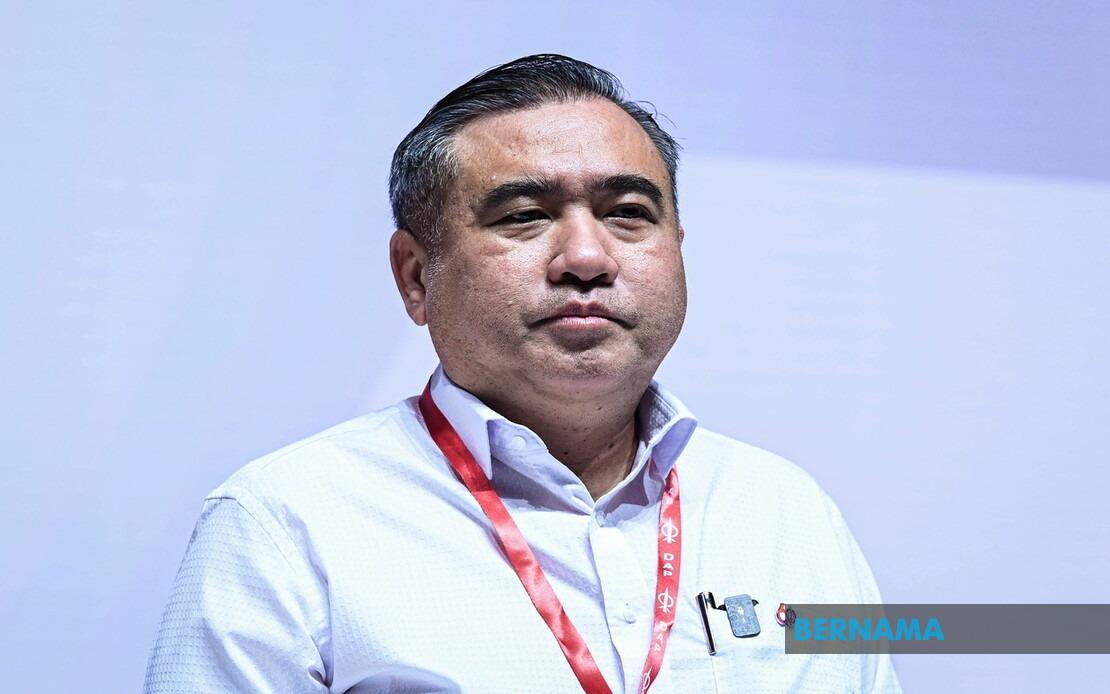
The Democratic Action Party has pledged to bring concerns raised by its membership directly into government decision-making through Cabinet channels, following the party's largest annual gathering held in Putrajaya on August 16. Secretary-general Anthony Loke announced that delegates' feedback, gathered during the 2026 DAP Party Conference, underscored widespread calls for both the party and federal government to adopt a more decisive and assertive policy stance going forward. The commitment reflects the party's intention to translate internal democratic processes into tangible shifts in how the administration operates, positioning DAP's leadership as a conduit between grassroots sentiment and high-level policymaking.
The party's conference took place amid broader debates within DAP about the merits of continuing the coalition arrangement known as the Unity Government. Loke facilitated an open forum where delegates were explicitly encouraged to voice criticism—a notable departure from party cultures that typically suppress dissent at official gatherings. This approach yielded substantive feedback, with members expressing dissatisfaction with what they perceive as governmental timidity on key issues. Rather than dismissing these critiques, Loke treated them as valuable input representing the broader party perspective, signalling that DAP intends to act as an internal reformist force within the government structure rather than a passive coalition partner.
The numerical outcome left little ambiguity: 1,857 delegates voted to remain within the Unity Government arrangement, representing 88 per cent of those who cast ballots, while 242 opted for withdrawal and seven ballots were spoilt from the 2,106 issued. The decisive margin—roughly a nine-to-one endorsement—provided Loke with a strong mandate to continue working within the current government framework. However, Loke made explicit that the minority position would receive respect and protection. He stated unequivocally that no consequences would befall the 12 per cent who voted against continued participation, emphasising that democratic processes demand acceptance of dissenting views. This stance may prove significant for maintaining party cohesion as DAP navigates its role within a coalition that has periodically drawn criticism from its own rank-and-file.
Loke framed the delegates' calls for assertiveness not as party-specific demands but as elements of a broader reform agenda already negotiated at multiple governmental levels. He pointed to several initiatives enjoying cross-party support within both the Pakatan Harapan coalition and the wider Unity Government framework, including structural changes to separate the Attorney-General's office from the Public Prosecutor position, constitutional amendments to limit prime ministerial tenure to two consecutive terms, and enhanced anti-corruption measures. By anchoring these demands in jointly agreed commitments rather than unilateral DAP positions, Loke sought to deflect opposition accusations that the party was using its internal conference as leverage to impose a narrowly defined agenda upon coalition partners.
The timing of this clarification deserves scrutiny. Opposition figures have frequently attacked DAP as an undue influence within government, suggesting that the party exploits coalition arrangements to advance its own priorities while concealing them behind broader reform rhetoric. Loke's explicit statement that reform objectives reflect election manifesto commitments and inter-coalition agreements represents a defensive posture, attempting to legitimise DAP's policy advocacy as rooted in shared governance principles rather than factional ambition. This framing acknowledges that accusations of power-seeking carry political weight in Malaysian discourse, particularly among voters sceptical of Chinese-majority parties wielding disproportionate influence in a Malay-Muslim majority nation.
For Malaysian readers and Southeast Asian observers, the DAP conference dynamics illuminate ongoing tensions within Malaysia's governing coalition. The Unity Government, formed following the 2022 general election, brought together parties from different political blocs—Pakatan Harapan alongside the previously dominant Barisan Nasional and several others—creating an inherently unstable arrangement requiring constant negotiation. DAP's position within this framework has remained delicate, as the party must simultaneously satisfy reform-minded members while avoiding alienating coalition partners who may view aggressive internal advocacy as destabilising. The conference vote essentially endorsed continuing this balancing act, even as delegates signalled frustration with perceived governmental passivity.
The emphasis on democratic process within DAP's decision-making contrasts sharply with authoritarian governance patterns sometimes observed in Malaysian politics. That Loke explicitly invited dissent, protected minority voters from retaliation, and committed to representing critical feedback through official channels demonstrates a party working to maintain internal legitimacy while staying in government. This model may hold lessons for other Malaysian political organisations struggling to reconcile grassroots expectations with the practical constraints of coalition governance. Whether the federal government will genuinely incorporate DAP's conveyed concerns into policy direction remains uncertain, however, particularly if recommendations diverge from coalition partners' preferences.
The issue of governmental decisiveness versus caution resonates throughout Southeast Asian policymaking. Investors, international observers, and domestic stakeholders frequently criticise regional governments for perceived slowness in implementing reforms or addressing urgent challenges. DAP delegates' apparent frustration with what they view as insufficient urgency suggests that elements within Malaysia's governing coalition share this broader regional concern. The party's commitment to advocate for bolder action—whether on institutional reform, corruption prevention, or other domains—may pressure the federal government toward more visible, forceful governance. Conversely, such pressure could exacerbate coalition tensions if other partners prioritise caution and continuity over transformative change.
Looking forward, the DAP conference outcome establishes a framework wherein the party remains invested in the government's success while reserving the right to demand operational improvements. Loke's careful stewardship of internal debate, combined with his determination to channel grassroots input upward, positions DAP as a party attempting to function as both insider and reformist voice simultaneously. The success of this approach depends on whether federal Cabinet structures genuinely receive and act upon DAP's conveyed feedback, or whether the party's input gets absorbed into bureaucratic processes without generating meaningful policy shifts. The next eighteen months will reveal whether DAP's grassroots demands for assertiveness translate into observable changes in government behaviour, or whether the party's position within the coalition constrains its ability to drive substantive reform outcomes.

