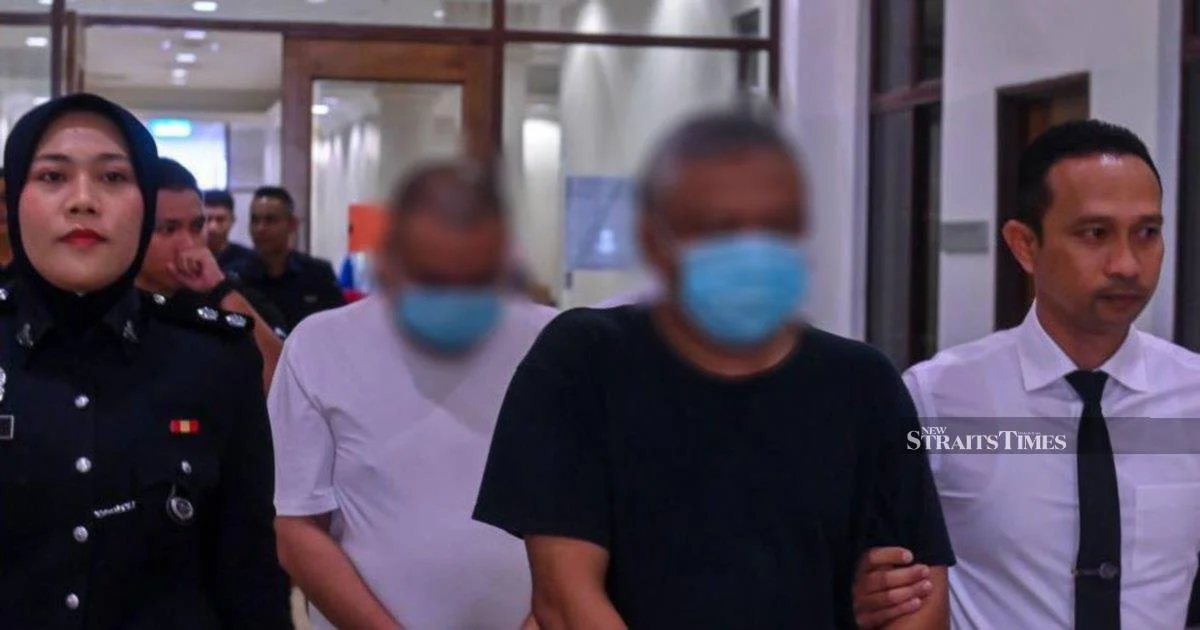
A businessman holding the rank of Datuk and his assistant have been apprehended by authorities in Kuantan following an investigation into document forgery involving royal insignia. The two are suspected of creating fraudulent correspondence that bore the official coat of arms of the Tengku Mahkota of Pahang, with the intention of deceiving individuals or organisations through the misuse of royal credentials.
The arrest represents a serious breach of trust and respect accorded to the Malaysian royal institution, particularly at the state level where the Tengku Mahkota holds significant ceremonial and administrative standing. The use of royal emblems to perpetrate financial or commercial fraud undermines public confidence in official communications and raises concerns about how such symbols are protected under existing legal frameworks.
Forging documents bearing royal insignia constitutes a criminal offence in Malaysia, falling under provisions designed to safeguard the institution's integrity and prevent exploitation of its reputation. Such cases, though not uncommon, reflect vulnerability in document authentication systems and the relative ease with which official seals and marks can be replicated using modern printing technology. The involvement of a Datuk-titled individual—a title that carries social standing and civic responsibility—adds another layer of concern about the maintenance of professional ethics among those who have received state recognition.
The Tengku Mahkota of Pahang occupies a pivotal role within the state's governance structure, and any misappropriation of official documents connected to this position strikes at the heart of institutional authority. Fraudsters who exploit royal insignia typically target parties who rely on assumed authenticity of such correspondence, ranging from business entities seeking to verify legitimacy of proposed partnerships to individuals attempting to gain unwarranted advantage in various transactions.
The assistant's involvement in the scheme suggests a degree of premeditation and coordination in the forgery operation. Such cases commonly involve division of labour between a principal architect of the fraud and supporting personnel who may handle document production, distribution, or liaison with prospective victims. The collaborative nature of the alleged offence typically warrants investigation into whether either party harboured direct benefit or was coerced into participation.
Police investigations in forgery cases of this magnitude generally examine the scope of fraudulent documents produced, the identity of intended or actual victims, and the specific objectives behind the deception. The digital trail left by document creation, printing, and circulation—combined with witness statements from those approached with the forged correspondence—typically forms the backbone of prosecutorial evidence. Authorities must also determine whether multiple instances of document forgery occurred, which could elevate charges to more serious offences.
The incident underscores persistent vulnerabilities in Malaysia's document security infrastructure, despite advancements in authentication technologies. While government agencies and corporate entities often employ multiple verification layers, smaller business operators and individuals may lack the resources or knowledge to authenticate official correspondence effectively. This disparity creates opportunity for fraudsters to target those less equipped to detect sophisticated forgeries.
From a Southeast Asian perspective, Malaysia remains an attractive jurisdiction for organised fraud operations partly due to its developed infrastructure and the prestige associated with royal and official credentials. The region has witnessed increasing sophistication in document forgery schemes, with networks operating across multiple countries to exploit regulatory gaps and varying enforcement standards. A single operation uncovered in one nation often reveals tentacles extending into neighbouring countries, necessitating cross-border cooperation among law enforcement agencies.
The case also reflects broader concerns about the proliferation of titles within Malaysia's honours system. The Datuk rank, bestowed for achievements in business, arts, and public service, carries social currency and is sometimes weaponised by unscrupulous individuals to enhance credibility in fraudulent schemes. While title holders are not inherently dishonest, the prestige associated with such appointments occasionally attracts those who seek to leverage formal recognition for nefarious purposes.
For Malaysian businesses and the general public, this arrest serves as a reminder of the critical importance of verifying official communications through authorised channels rather than relying solely on document appearance. Direct confirmation with relevant government offices or royal secretariat constitutes best practice when approached with correspondence purporting to bear official blessing or instruction.
Moving forward, the case will likely prompt discussions within law enforcement and document security circles regarding enhanced protections for royal insignia and official emblems. Implementation of holographic features, digital watermarks, and blockchain-based authentication systems represent technological avenues that governments increasingly explore to prevent forgery of critical documents.
The outcome of this investigation and subsequent prosecution will establish important precedent regarding penalties for document forgery involving royal institutions, potentially serving as deterrent against similar offences. Enhanced public awareness campaigns may also feature as part of wider efforts to combat fraud schemes that deliberately misappropriate symbols of institutional authority and trust.

