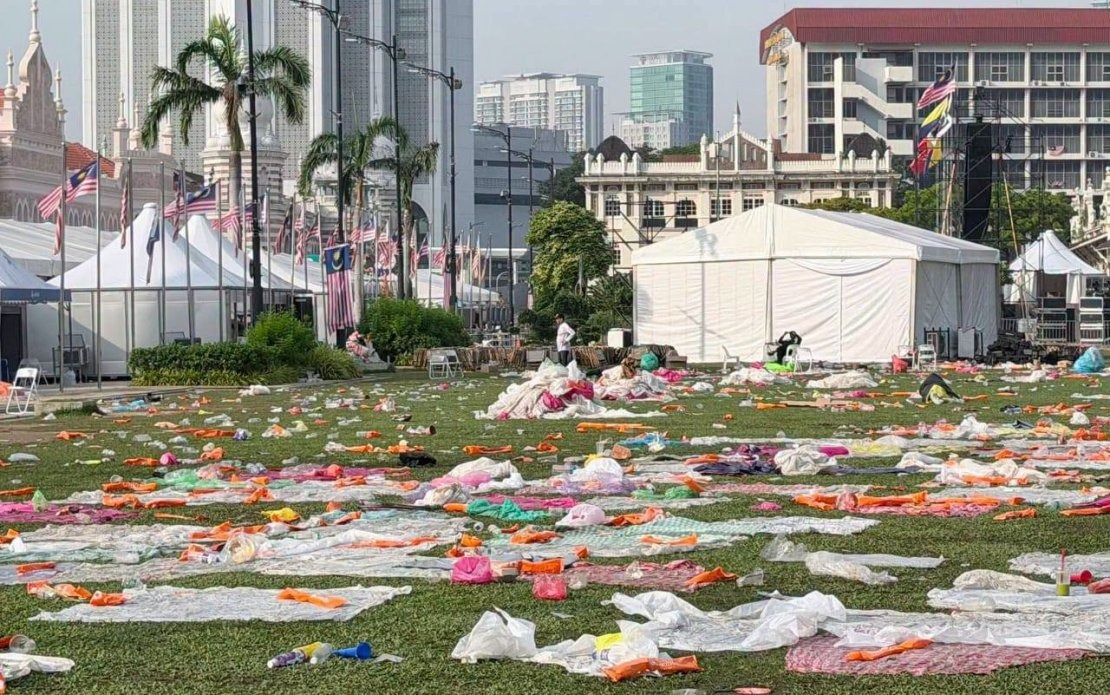
Kuala Lumpur City Hall (DBKL) has initiated a comprehensive cleaning operation at Dataran Merdeka following the early morning broadcast of the 2026 FIFA World Cup final, during which thousands of spectators gathered at the historic site to witness Spain's 1-0 victory over Argentina. The cleanup effort comes after the venue was left strewn with rubbish once the celebration concluded, prompting city authorities to address both the immediate environmental concerns and the broader issue of public responsibility.
The gatherings at Dataran Merdeka have become a popular tradition for major sporting events, particularly football matches that capture the imagination of Malaysian fans. The venue, which accommodated more than 25,000 spectators for this particular World Cup final broadcast, demonstrated the public's enthusiasm for international football and the capital's capacity to serve as a gathering point for mass celebrations. However, the aftermath of such large-scale events has repeatedly highlighted challenges in maintaining the cleanliness and dignity of public spaces.
In its official statement released through social media platforms, DBKL acknowledged the significant cleanup task ahead while taking the opportunity to reflect on civic values and community responsibility. The authority did not frame the situation as merely a logistical problem requiring municipal resources, but rather as a moment to engage residents in a broader conversation about shared public spaces and collective stewardship. This approach signals a shift toward emphasizing preventive civic behaviour rather than reactive cleanup operations.
The statement issued by DBKL articulated a deliberate contrast between the joy and celebration that animated the crowd and the degradation of the public space that followed. Officials noted that while thousands of residents and football enthusiasts had gathered to cheer, celebrate, and share moments of joy, the departure of these crowds left the field in a littered condition. This juxtaposition served to highlight the disconnect between the positive intentions of the gathering and its negative environmental consequences.
A central theme in DBKL's communication was the symbolic and historical significance of Dataran Merdeka itself. The authority emphasized that the landmark represents more than just a physical location—it embodies the nation's dignity and history, making its condition a reflection of how Malaysians value their shared heritage. By framing littering at the venue as disrespectful to national identity, city authorities attempted to invoke a higher moral standard of conduct beyond simple rules and penalties.
The authority's messaging carefully balanced acknowledgement of the public's right to celebrate with clarification that such freedom carries corresponding responsibilities. DBKL stated explicitly that the freedom to enjoy celebrations does not extend to the freedom to compromise the cleanliness of communal areas. This framing positioned environmental stewardship as an intrinsic aspect of citizenship rather than an obligation imposed externally by authorities.
For Malaysian cities and Southeast Asian urban centers more broadly, the Dataran Merdeka situation reflects ongoing tensions between rapid urbanization, mass public gatherings, and municipal waste management capacity. The sheer number of people—over 25,000—who descended on the venue demonstrates the drawing power of major sporting events and the appetite for public celebration in Malaysia's capital. Yet the volume also strains existing infrastructure and cleanup systems, creating operational and environmental management challenges that require both institutional solutions and behavioral change.
The cleanup operation itself represents a significant expenditure of municipal resources that might otherwise be allocated to other city services and maintenance priorities. When DBKL stressed that the capital's cleanliness should not depend solely on the efforts of city staff following public use, the authority was essentially articulating a resource constraint reality. Budget limitations in municipal services mean that preventing littering is more cost-effective than remediation, yet prevention depends on public cooperation.
The incident at Dataran Merdeka also raises questions about crowd management and environmental awareness campaigns during large public events. Other major cities globally have implemented various strategies to address post-event littering, ranging from enhanced signage and bin placement to incentive programs and real-time waste management monitoring. The response from DBKL suggests that Kuala Lumpur may consider adopting more comprehensive pre-event strategies to minimize cleanup requirements and foster greater civic consciousness among attendees.
Culturally, the situation touches on broader discussions within Malaysian society about urban identity and civic responsibility. As the capital continues to position itself as a world-class city capable of hosting major international events and public celebrations, maintaining the aesthetic and environmental quality of landmark spaces becomes increasingly important for both residents and the city's international reputation. The conditions under which public spaces are left after major gatherings reflect broader societal attitudes toward community resources and collective well-being.
Looking forward, the experience may prompt discussions between city authorities, event organizers, and community groups about shared responsibility for maintaining public spaces. Enhanced coordination during large-scale public gatherings—including pre-event education, increased bin availability, and post-event accountability measures—could help address the root causes of littering rather than simply managing its consequences. The DBKL statement's emphasis on treating Kuala Lumpur as a shared home requiring collective care suggests openness to more collaborative approaches to urban cleanliness.
The broader implications for Malaysia's urban development extend beyond a single cleanup operation. As cities across Southeast Asia experience rapid growth and increasing pressure from large public events, the balancing act between enabling public participation in celebrations and maintaining environmental standards becomes more complex. Dataran Merdeka's role as both a historic national symbol and a contemporary gathering space embodies this tension, making it a meaningful barometer for how Malaysian society navigates the intersection of civic celebration and environmental responsibility.

