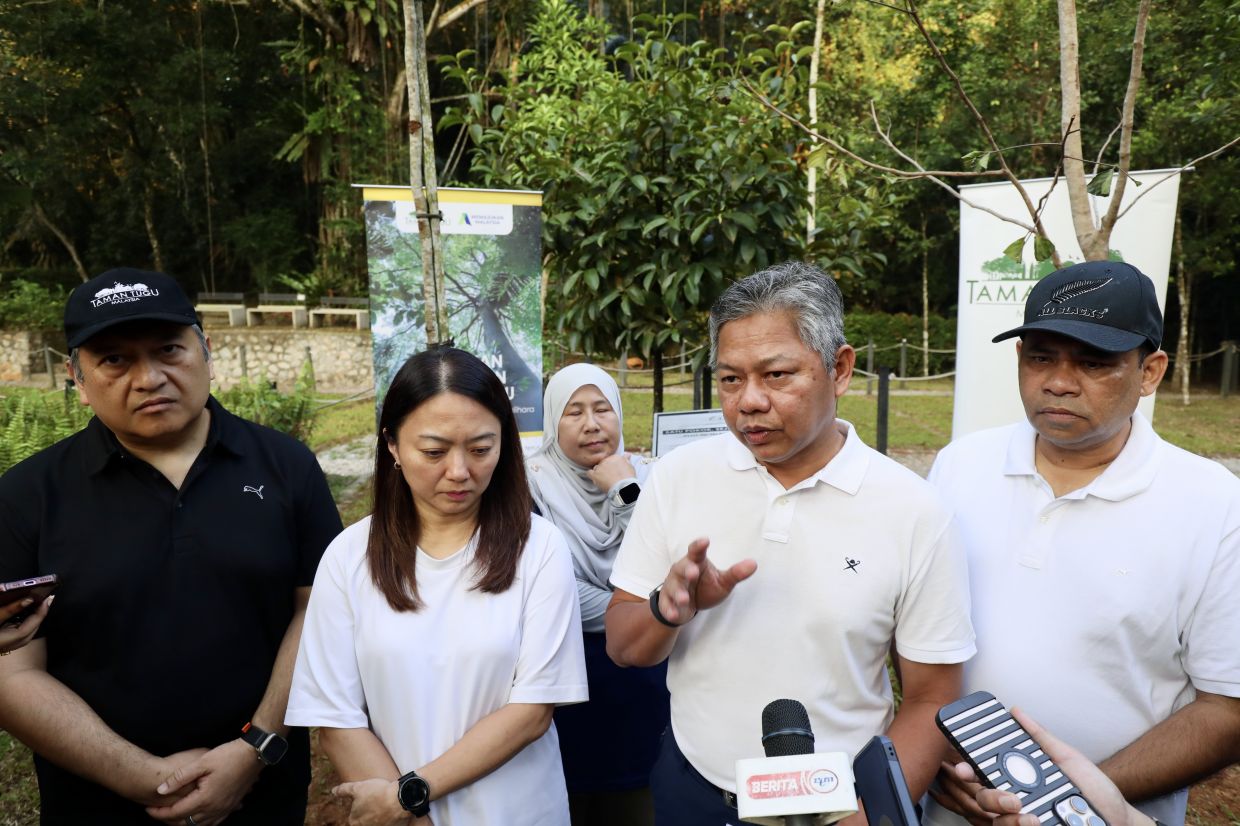
Kuala Lumpur City Hall (DBKL) is advancing its urban forestry management by deploying 200 sensor devices to provide real-time monitoring of tree conditions throughout the capital. This technology-driven initiative represents the second phase of the municipal authority's comprehensive tree management programme and signals a shift towards data-informed decisions in maintaining the city's green infrastructure. The announcement, made by Kuala Lumpur mayor Datuk Seri Fadlun Mak Ujud during the launch of the Taman Tugu Plot Adoption Programme on Saturday, reflects growing recognition among city planners that strategic technology deployment can enhance public safety while preserving valuable urban vegetation.
The sensor programme builds directly on the foundation of work completed earlier this year, when DBKL successfully catalogued and assessed the health status of approximately 25,000 trees distributed across the city. That mapping initiative, supported by funding from the Ministry of Digital, enabled municipal staff to create a comprehensive database documenting the condition and location of significant tree specimens. By understanding the baseline health and structural integrity of the existing urban forest, City Hall could identify priority locations where continuous monitoring would deliver the greatest safety benefits. This systematic approach transforms tree management from reactive removal to preventive care, allowing authorities to address potential hazards before they pose immediate danger to residents and infrastructure.
The technical specification of the sensor network demonstrates a carefully calibrated approach to urban forestry. Installation points will be positioned approximately 1.2 metres above ground level on selected specimens, with all devices connected to a central control facility operated by DBKL. This architecture enables continuous surveillance of critical tree parameters, providing early warning signals when structural failures, disease progression, or environmental stress reaches dangerous thresholds. Staff at the control centre can therefore monitor the entire network simultaneously and dispatch maintenance teams to address emerging problems with minimal delay. For a dense tropical city like Kuala Lumpur, where heavy monsoon rains and high humidity accelerate tree decay, this real-time intelligence represents a substantial advancement over traditional visual inspections conducted sporadically by field crews.
The geographical focus of the initial sensor deployment emphasises mature specimens in areas of concentrated tree density. Jalan Ampang, renowned as one of Kuala Lumpur's iconic tree-lined corridors, will receive particular attention, reflecting the high replacement and repair costs associated with losing such established specimens. These mature trees provide substantial environmental and aesthetic value to the capital, sequestering carbon, reducing urban heat island effect, and contributing to the city's character. By installing monitoring equipment rather than scheduling removal, DBKL signals commitment to preservation strategies that extend the productive lifespan of valuable mature vegetation. Where sensors detect structural concerns, the approach will prioritise remedial measures such as branch support systems that reduce fall risks whilst maintaining the tree's overall health and canopy.
Major city authorities across Southeast Asia face similar challenges in balancing urban development pressures with environmental preservation. In cities like Bangkok, Singapore, and Jakarta, rapid urbanisation has historically resulted in substantial net loss of tree cover. Kuala Lumpur's sensor deployment strategy reflects emerging international best practice that seeks to harmonise urban growth with green space retention. The technology offers a middle path between wholesale tree removal and passive acceptance of public safety risks. This approach carries particular relevance for Malaysian local governments managing similar density and climate conditions, suggesting potential applications across other major municipal areas in the region.
The broader tree management programme extends beyond monitoring technology to active planting initiatives. DBKL has committed to establishing 200 new trees as part of the current phase of expansion, with officials indicating they will pursue dedicated funding sources to support widespread implementation. This planting target represents meaningful expansion of the city's tree canopy and would contribute positively to environmental sustainability metrics. The combination of preservation efforts for existing mature specimens and expansion through new plantings creates a comprehensive strategy addressing both retention and growth dimensions of urban forestry policy.
Minister in the Prime Minister's Department (Federal Territories) Hannah Yeoh provided political support for the environmental preservation agenda underlying the sensor programme. Her public commitment to protecting Kuala Lumpur's remaining green spaces reflects alignment between municipal and federal leadership on urban environmental priorities. Yeoh explicitly cautioned against converting existing green areas to commercial development, characterising the existing built environment as sufficient and advocating for greater emphasis on greening initiatives. This ministerial position carries weight with property developers and government agencies considering land-use changes, as it signals that green space protection remains a legitimate policy objective even in a rapidly developing metropolitan area where commercial interests frequently pressure authorities to release land for revenue-generating projects.
Financial support for green infrastructure advancement has materialised through multiple government sources. Yeoh's ministry committed RM50,000 towards tree planting and maintenance specifically at Taman Tugu, with DBKL providing matching funding of equivalent value. This coordinated investment totalling RM100,000 demonstrates that federal and municipal authorities are deploying actual resources, not merely issuing rhetorical statements, to support environmental objectives. The Taman Tugu Plot Adoption Programme mechanism itself represents an innovative approach to scaling maintenance and restoration work by engaging corporate sponsors, civil society organisations, and individual community members in structured stewardship roles.
The Taman Tugu initiative illustrates how plot-based adoption models can activate distributed community participation in urban forest management. Under the programme structure, individual nine-square-metre plots will be developed and maintained through contributions from various stakeholders, with planting focused exclusively on native Malaysian forest species. This bioregional planting approach strengthens ecosystem function and supports indigenous biodiversity whilst creating memorable engagement opportunities for participating organisations and residents. For Kuala Lumpur residents concerned about environmental degradation, such initiatives provide concrete mechanisms through which individuals and companies can contribute meaningfully to urban ecological restoration. The adoption model has proven effective in other Asian cities and represents a scalable mechanism that could expand beyond Taman Tugu to other municipal green spaces.
The cumulative policy direction articulated through these interconnected initiatives—sensor monitoring, mature tree preservation, new planting targets, and community adoption programmes—reflects maturation of urban environmental management thinking within Kuala Lumpur's civic institutions. Rather than treating tree management as an incidental maintenance function subordinate to development priorities, these programmes position forestry as a strategic component of sustainable city planning. For Malaysian readers following urban policy developments, this trajectory suggests that environmental considerations are gradually achieving greater integration into mainstream municipal governance. The sensor technology deployment specifically demonstrates that environmental protection need not remain confined to traditional approaches but can harness digital innovation to enhance both ecological outcomes and public safety simultaneously.

