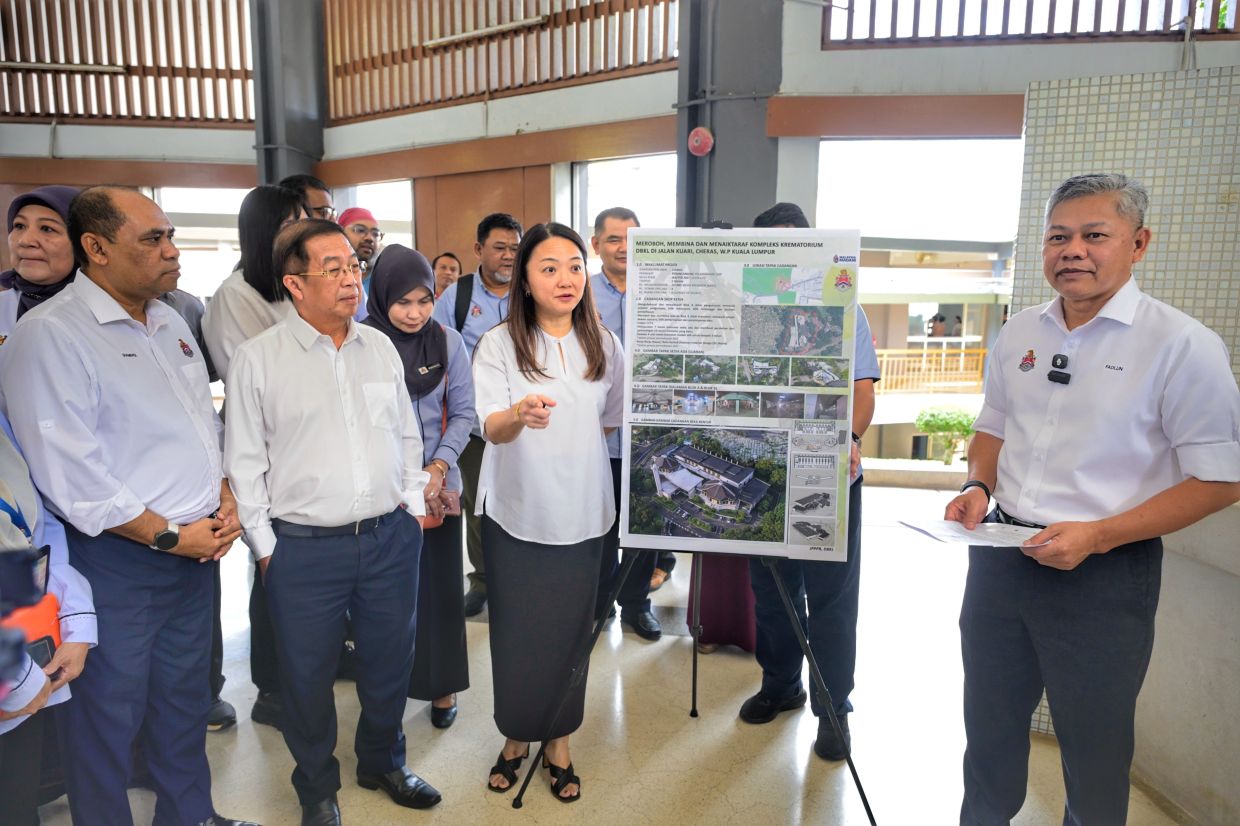
Kuala Lumpur City Hall (DBKL) has committed RM45 million to an extensive modernisation programme at its Cheras crematorium on Jalan Kuari, responding to mounting demand from the capital's non-Muslim communities. The upgrade will significantly expand the facility's capacity by introducing three additional cremation units to complement the current seven operational units, according to Mayor Datuk Seri Fadlun Mak Ujud, who inspected the site on Wednesday.
The initiative represents a substantial infrastructure investment aimed at sustaining municipal services in line with the evolving composition and size of Kuala Lumpur's resident population. City Hall officials have allocated resources for this undertaking under the 13th Malaysia Plan framework, signalling government commitment to addressing infrastructure gaps in death care services. The expansion project underscores how demographic shifts and religious diversity patterns shape municipal planning priorities in Malaysia's federal capital.
Construction activities are scheduled to commence in February 2025, with a projected completion timeline of two years. To minimise operational disruptions to grieving families and funeral service operators, DBKL has designed the upgrade programme to maintain continuous service availability. Four of the ten cremation units will remain fully functional throughout the construction phase, ensuring the facility can continue processing cremations without significant delays or service backlogs during the renovation period.
The Cheras crematorium, which has operated continuously since 1977, currently processes more than 5,800 cremations annually, making it an essential infrastructure asset for Kuala Lumpur's Hindu, Buddhist, Sikh and Christian populations. The facility's half-century history reflects changing urban demographics and the city's evolution from a smaller commercial centre to a major metropolitan region. Despite its decades of operation, the aging facility has struggled to keep pace with growing demand, creating mounting pressure on municipal authorities to modernise and expand capacity.
Cheras Member of Parliament Tan Kok Wai attended the site visit and publicly advocated for accelerating the project timeline, emphasising that the crematorium's antiquated infrastructure cannot adequately serve Kuala Lumpur's expanding population. His intervention highlights the political salience of death care services in urban constituencies, where grieving families expect efficient, dignified processing of their deceased relatives. The MP's call for expedited work reflects constituent feedback regarding service delays and capacity constraints that have affected funeral arrangements in recent years.
Minister in the Prime Minister's Department (Federal Territories) Hannah Yeoh participated in the inspection, demonstrating high-level political attention to this infrastructure initiative. Her presence signalled the Federal Government's recognition that municipal death care services require inter-agency coordination and resource commitments that extend beyond city-level administration. The ministerial engagement also reflects the broader federal responsibility for managing Kuala Lumpur's development and ensuring adequate public services across religious and community lines.
Beyond the crematorium expansion, Yeoh disclosed ongoing negotiations between the Federal Government and Selangor state authorities to establish new Muslim burial grounds in the Semenyih area. This parallel initiative acknowledges that death care infrastructure challenges are not confined to non-Muslim communities but extend across the city's diverse religious demographics. The land scarcity problem afflicting Kuala Lumpur makes it increasingly difficult for local authorities to reserve adequate space for burial grounds, cemeteries and cremation facilities within municipal boundaries.
The crematorium upgrade carries significant implications for funeral industry stakeholders, from funeral directors to religious organisations coordinating rites and ceremonies. Enhanced capacity will reduce waiting periods, allowing families greater flexibility in scheduling cremation services and funeral rituals. Improved facilities may also attract investment in complementary services, such as viewing areas and administrative offices, creating downstream economic activity in the death care sector.
The project's financing through the 13th Malaysia Plan signals long-term government planning for infrastructure development beyond traditional sectors like transportation and utilities. Death care services, historically underfunded relative to their importance in community wellbeing, are receiving recognition as legitimate development priorities. This budgetary approach reflects maturer thinking about municipal governance, whereby age-old services receive investment matching contemporary demand levels.
For the broader Southeast Asian context, the Cheras crematorium expansion demonstrates how major cities are grappling with infrastructure deficits stemming from rapid urbanisation and changing population structures. As religious diversity increases within urban centres throughout the region, local governments must develop culturally sensitive infrastructure plans accommodating different faith traditions. The Malaysian experience offers comparative insights for metropolitan authorities across Singapore, Thailand, Indonesia and the Philippines facing analogous challenges.
The two-year completion horizon positions the facility for readiness around 2027, by which time Kuala Lumpur's population is expected to increase further. This forward-looking timeframe reflects DBKL's attempt to build capacity margins rather than simply matching current demand. Nonetheless, urban planners acknowledge that permanent infrastructure often becomes inadequate within years of completion, suggesting that future expansions may be necessary within the next decade if demographic trends continue accelerating.

