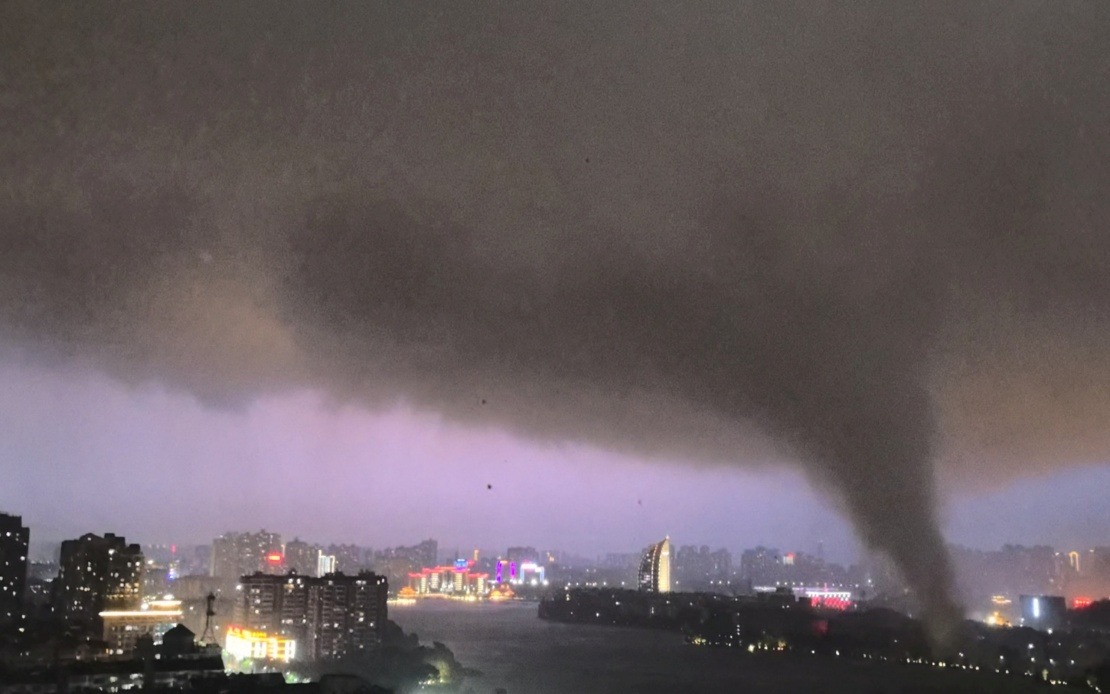
A devastating bout of severe convective weather battered the eastern reaches of Hubei Province in central China on Monday night, leaving a trail of destruction across multiple municipalities. Provincial authorities confirmed that eleven people perished in the disaster, while rescue teams continue searching for one missing individual. The incident underscores the intensifying frequency and severity of extreme weather events across Asia's heavily populated regions, a concern that resonates equally with neighbouring countries including Malaysia, which faces similar meteorological challenges during monsoon seasons.
The onslaught unfolded between 7 pm and 11 pm on Monday, with thunderstorms and powerful winds battering the cities of Huangshi, Huanggang, Ezhou, and Xianning in succession. The ferocity of the gales proved particularly severe in two townships, where wind speeds reached level 13 on the standard weather scale—equivalent to approximately 120 kilometres per hour. Such extreme wind conditions pose significant dangers to both infrastructure and human life, rapidly transforming the landscape and overwhelming emergency response systems.
Beyond the high winds, tornado activity compounded the disaster's severity across affected areas. These rotating vortices, though localised in their destructive footprint, caused catastrophic damage wherever they touched down. The combination of sustained gales, sudden tornado formation, and heavy precipitation created a perfect storm scenario that local emergency services struggled to manage effectively during the initial hours of the crisis.
The material devastation reveals the scale of the meteorological assault. Authorities documented the complete destruction of 22 buildings throughout the affected municipalities, with the structural integrity of nearly 5,000 additional structures compromised by the winds and associated weather phenomena. Such widespread damage typically takes weeks or months to repair, leaving residents displaced and communities fragmented during recovery operations. The economic toll extends beyond the immediate reconstruction costs, affecting local commerce, agriculture, and essential services delivery.
Human casualties extended far beyond the fatalities. Rescue personnel documented 331 individuals injured by falling debris, flying objects, and structural collapses—a figure that highlights how extreme weather events affect civilian populations indiscriminately. Hospitals throughout the region mobilised additional medical staff to handle the surge in emergency admissions, with many victims suffering from trauma injuries requiring extended treatment and rehabilitation.
China's disaster response mechanisms activated immediately following the initial reports. Provincial authorities commenced comprehensive rescue and relief operations, deploying teams across all four affected municipalities to locate missing persons, provide emergency medical assistance, and begin preliminary damage assessments. Such coordinated responses reflect the lessons learned from previous natural disasters and the institutional frameworks now in place to manage crises of this magnitude.
The focus on preventing secondary disasters represents a critical phase of the emergency response that often receives less public attention than immediate rescue efforts. Secondary disasters—such as disease outbreaks from contaminated water supplies, structural collapses of damaged buildings, flooding from blocked drainage systems, and landslides from destabilised terrain—frequently claim additional victims in the days and weeks following the primary event. Authorities prioritised identifying and mitigating these lurking dangers alongside conventional search and rescue operations.
For Malaysian observers and policymakers, this incident offers pertinent lessons regarding disaster preparedness and climate resilience. Southeast Asia's tropical and subtropical regions increasingly experience extreme convective weather events comparable in intensity to those affecting central China. Building codes, early warning systems, and community education programmes designed around such threats become progressively more essential as meteorological patterns continue shifting. Malaysia's vulnerable coastal and low-lying areas require similar robust frameworks to protect populations and infrastructure.
The broader context reveals how atmospheric instability across the northern hemisphere intensifies during summer months, creating conditions favourable for severe storm development. Central China's geography—characterised by plains and moderate elevation terrain—offers limited natural barriers to wind acceleration, making the region particularly susceptible to damaging gales. Climate scientists continue documenting how warming oceans and shifting pressure systems contribute to more pronounced extreme weather episodes, suggesting that incidents like Monday's storm may become increasingly common across the region.
The rapid deployment of resources and systematic documentation of damages reflects China's institutional capacity to respond to major natural disasters. However, the incident also underscores the inherent vulnerability of densely populated regions to meteorological hazards, regardless of response capabilities. Prevention through improved early warning systems, community awareness initiatives, and infrastructure hardening remains ultimately the most effective approach to reducing casualties and economic losses from such events.
As recovery operations continue in Hubei, authorities will likely conduct thorough post-disaster assessments to identify systemic gaps in preparedness and response mechanisms. These findings typically inform revisions to building standards, emergency protocols, and public education programmes. Regional cooperation initiatives that share early warning data and best practices across Southeast and East Asian nations could further enhance collective resilience against increasingly severe weather phenomena that respect no political boundaries.

