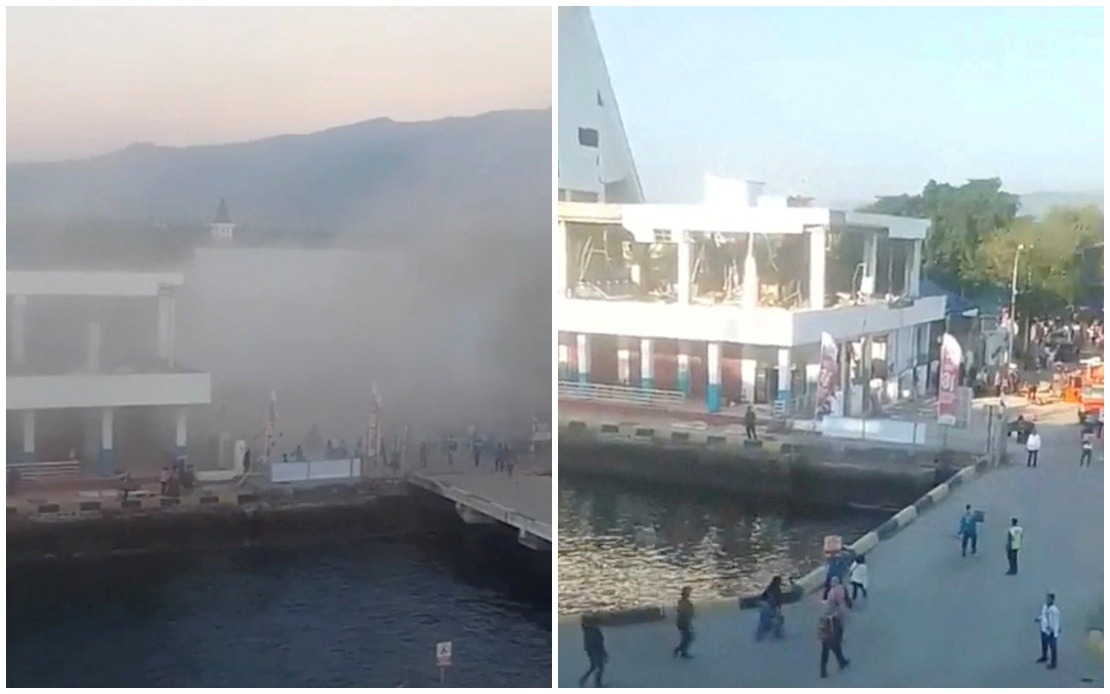
A devastating magnitude 7.7 earthquake struck off the coast of Flores Island in eastern Indonesia early Saturday morning, leaving at least 20 people dead and triggering widespread damage across the affected region. The seismic event, which was centred near Mbay town in Nagekeo Regency, unleashed powerful aftershocks that compounded the initial destruction, prompting regional authorities to mobilise rescue and emergency response teams across East Nusa Tenggara province.
According to officials from the Maumere Search and Rescue Office, the casualty figures remain fluid as search operations intensify across damaged communities. Beyond the confirmed deaths, six individuals sustained injuries during the earthquake, whilst two others remain unaccounted for and feared buried beneath collapsed structures. Fathur Rahman, an official at the rescue coordination centre, indicated that teams are working systematically through affected settlements to locate missing persons and assess the full humanitarian toll.
Governor Melki Laka Lena of East Nusa Tenggara province briefed media representatives in Kupang on the scale of infrastructure damage across the region. Multiple residential and commercial buildings have been rendered unsafe, whilst homes belonging to affected families lie in ruins. Additionally, critical transportation routes have become impassable either through direct earthquake damage or due to landslides triggered by the seismic activity, significantly hampering evacuation and relief supply efforts.
Emergency authorities acknowledged that comprehensive damage assessment remains incomplete, as teams continue to access remote and isolated communities in the archipelagic region. The destruction captured on mobile phone footage circulating through social media networks revealed harrowing scenes—structures disintegrating into dust and debris, with residents fleeing their homes in panic as powerful tremors shook the ground beneath them. Such imagery underscores the violence of the seismic event and the immediate threat residents faced in those critical moments.
The earthquake prompted Indonesia's Meteorology, Climatology and Geophysics Agency to issue a temporary tsunami warning for coastal areas surrounding Flores Island. Although this warning was subsequently lifted following analysis of oceanic conditions, authorities urge continued vigilance given the unpredictable nature of aftershock sequences. Residents in low-lying and coastal settlements remain particularly vulnerable to secondary hazards, as powerful aftershocks could potentially generate additional waves.
The transportation sector has experienced significant disruption in the aftermath of the disaster. Multiple commercial flights serving East Nusa Tenggara province were cancelled on Saturday as airports underwent structural inspections and as aviation authorities prioritised relief operations. This isolation compounds challenges facing emergency responders attempting to deploy additional resources and medical personnel to affected communities.
The Chinese Consulate General in Denpasar issued an urgent advisory to Chinese nationals present throughout the consular district, with particular concern for tourists currently visiting the popular destination of Labuan Bajo. The consulate directed citizens to maintain heightened awareness of local warnings issued by Indonesian disaster management agencies and to exercise extreme caution regarding potential tsunami risks. Authorities specifically warned against lingering in coastal areas where secondary waves could strike with minimal warning.
The positioning of this earthquake within the broader Pacific Ring of Fire context carries significant implications for Indonesia's disaster preparedness and early warning systems. The nation faces persistent seismic hazards due to its location atop multiple tectonic plate boundaries, where the Indo-Australian Plate subducts beneath the Eurasian Plate. This geological reality means that communities across eastern Indonesia remain perpetually vulnerable to large-magnitude earthquakes capable of generating substantial loss of life and economic damage.
For Malaysia and other Southeast Asian nations, this earthquake serves as a sobering reminder of the region's seismic vulnerability. The interconnected nature of modern economies means that disruption to Indonesian infrastructure and tourism sectors inevitably ripples through regional trade networks and aviation routes. Malaysian businesses with operations in eastern Indonesia, particularly in tourism and maritime sectors, may experience operational challenges during the emergency response phase.
The incident also highlights the critical importance of maintaining robust disaster preparedness frameworks and international cooperation mechanisms. Rapid information sharing between regional meteorological agencies, coordinated evacuation protocols, and pre-positioned emergency supplies have proven instrumental in mitigating casualties during previous major earthquakes across the region. Southeast Asian nations continue refining these capabilities through bilateral and multilateral disaster management agreements.
Rescue operations are expected to intensify in coming days as additional resources reach affected areas and as teams systematically search through collapsed buildings. The focus will shift progressively from emergency response toward recovery and reconstruction, though immediate priorities centre on locating survivors, providing medical care to the injured, and establishing temporary shelter and food distribution systems for displaced residents. The coming weeks will reveal the full extent of the disaster's impact on East Nusa Tenggara's economy, infrastructure, and communities.

