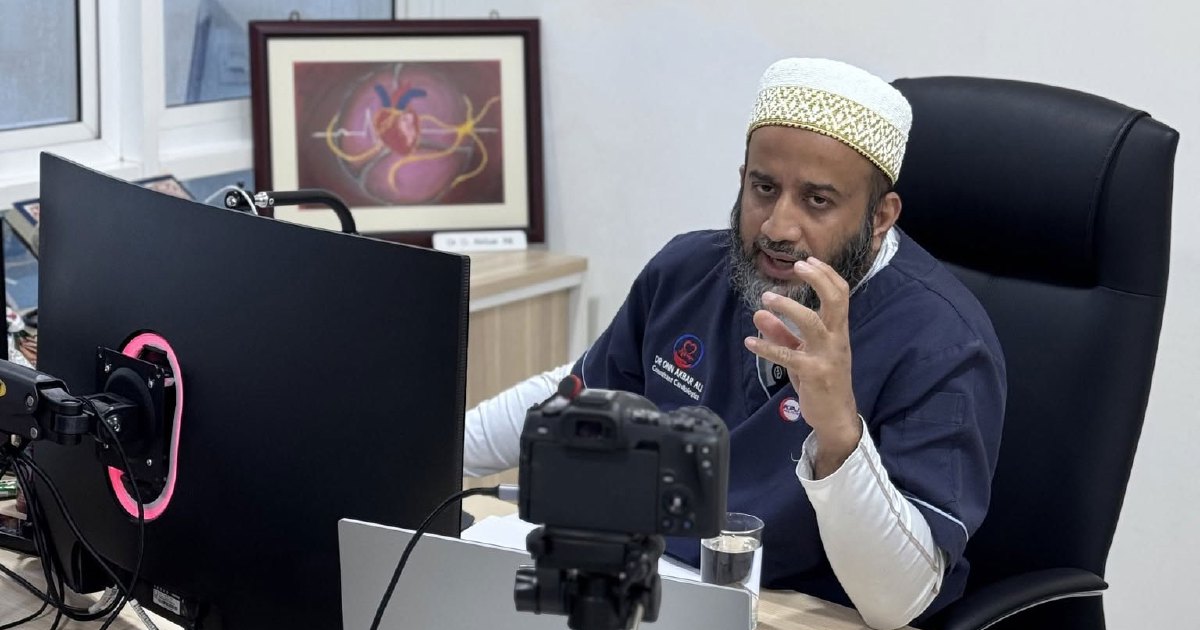
Medical professionals across Malaysia are confronting a troubling new challenge as artificial intelligence technology enables criminals to fabricate convincing videos impersonating legitimate doctors. Consultant cardiologist Dr Onn Akbar Ali recently encountered such a case when he learned that deepfake footage bearing his face and voice had been distributed online, falsely endorsing herbal tea as a remedy for diabetes. The discovery jolted the physician into awareness of how emerging technologies could be weaponised against medical practitioners and, more significantly, against vulnerable patients seeking treatment.
The weaponisation of deepfake technology against healthcare professionals represents a convergence of two critical problems: the increasing sophistication of synthetic media tools and the persistent public appetite for alternative remedies. When fraudsters can instantaneously appropriate the identity and credibility of established medical experts, they bypass years of trust-building that legitimate practitioners invest in their careers. For Dr Onn Akbar Ali, the incident was not merely an attack on his professional reputation but a concerning demonstration of how easily public confidence in medical authority could be undermined. Patients watching such fabricated content might genuinely believe a qualified cardiologist endorses an unproven treatment, leading them to delay evidence-based care or waste resources on ineffective products.
The mechanics of deepfake creation have become alarmingly accessible to bad actors. Advanced artificial intelligence algorithms can now synthesise realistic video and audio by training on publicly available images and recordings. A scammer requires only a handful of images and audio clips—potentially sourced from social media, hospital websites, or television appearances—to generate synthetic content that fools even attentive viewers. The technology exploits the psychological principle of visual authority: people tend to believe what they see and hear, particularly when the source appears credible and official. In the context of health claims, this credulity carries tangible consequences. Patients with diabetes who abandon prescribed medications in favour of herbal remedies endorsed by what appears to be a cardiac specialist face potentially life-threatening complications.
Malaysia's regulatory landscape and digital infrastructure make the nation particularly vulnerable to such fraud. The country's high internet penetration and active social media adoption create expansive distribution channels for fraudulent health claims. Traditional Malaysian attitudes toward herbal and traditional medicine, whilst grounded in centuries of legitimate practice, can inadvertently create openings for con artists to exploit cultural trust. When a deepfake video claims that a respected cardiologist recommends a herbal solution, it weaponises both technological deception and cultural authenticity simultaneously.
The implications for Malaysia's healthcare system extend beyond individual practitioners to institutional and public health levels. When confidence in medical experts erodes due to widespread deepfake impersonation, patients become more hesitant to accept genuine medical advice. This erosion of trust compounds existing challenges in public health messaging, particularly regarding chronic diseases like diabetes that require sustained patient compliance and lifestyle changes. The Malaysian healthcare establishment, already managing substantial caseloads and resource constraints, faces the additional burden of reassuring patients that their doctors genuinely recommended particular treatments.
Documentation of deepfake incidents involving Malaysian medical professionals remains fragmented, largely because affected practitioners often lack clear reporting channels or legal recourse mechanisms. Unlike copyright infringement or defamation cases with established legal frameworks, deepfake healthcare fraud occupies a murky regulatory grey zone. The relevant authorities—whether medical councils, consumer protection agencies, or cybercrime units—often lack specific protocols for addressing synthetic media impersonation. This regulatory vacuum leaves physicians largely dependent on their own investigative efforts and social media platforms' willingness to remove fraudulent content, a process that can be slow and incomplete.
The technical arms race between deepfake creators and detection systems continues to favour the attackers. Detection tools struggle to keep pace with advancing synthesis capabilities, and platform moderation systems prioritise volume over nuance, often failing to identify health fraud that appears sufficiently polished. Malaysian authorities have yet to implement comprehensive deepfake detection frameworks or public awareness campaigns educating citizens about verifying medical claims. Without such measures, the presumption remains that video evidence represents documentary truth, a dangerous assumption in an era of synthetic media.
The case involving Dr Onn Akbar Ali catalysed broader conversations within Malaysia's medical community about collective vulnerability. Professional associations and hospital networks have begun discussing internal protocols for responding to impersonation incidents, recognising that isolated defensive measures prove insufficient against coordinated or repeated fraud campaigns. Some forward-thinking institutions are exploring identity verification technologies and public awareness initiatives that help patients distinguish authentic medical guidance from fabricated endorsements. However, these efforts remain scattered rather than systematic.
International precedents demonstrate that deepfake healthcare fraud will escalate without deliberate intervention. Jurisdictions including South Korea and Australia have experienced similar incidents, sometimes involving scams promoting dietary supplements or unlicensed medical devices. These cases illustrate how quickly fraudulent videos can propagate globally and attract vulnerable patients across borders, amplifying the damage to both individuals and public health authorities. Malaysia's response must therefore consider not merely national dimensions but regional implications of cross-border digital deception.
The path forward requires coordinated action across multiple fronts. Medical councils should establish formal deepfake reporting mechanisms, while law enforcement agencies need specialised training in prosecuting synthetic media health fraud. Technology companies operating social media and video platforms in Malaysia should implement rapid removal protocols for health-related deepfakes, prioritising speed over perfect accuracy given the stakes involved. Simultaneously, public health campaigns must educate Malaysians about verifying medical claims through official channels, checking practitioner credentials, and recognising signs of fraudulent endorsements.
Ultimately, the experience of Dr Onn Akbar Ali and potentially numerous other Malaysian physicians underscores how technological advancement outpaces institutional readiness. Deepfake technology poses genuine threats to medical integrity and patient safety precisely because it exploits the visual and auditory credibility that has historically anchored medical authority. Malaysia's response will likely set precedents for how Southeast Asian nations manage this emerging threat, determining whether healthcare systems can maintain public trust whilst adapting to the realities of synthetic media.

