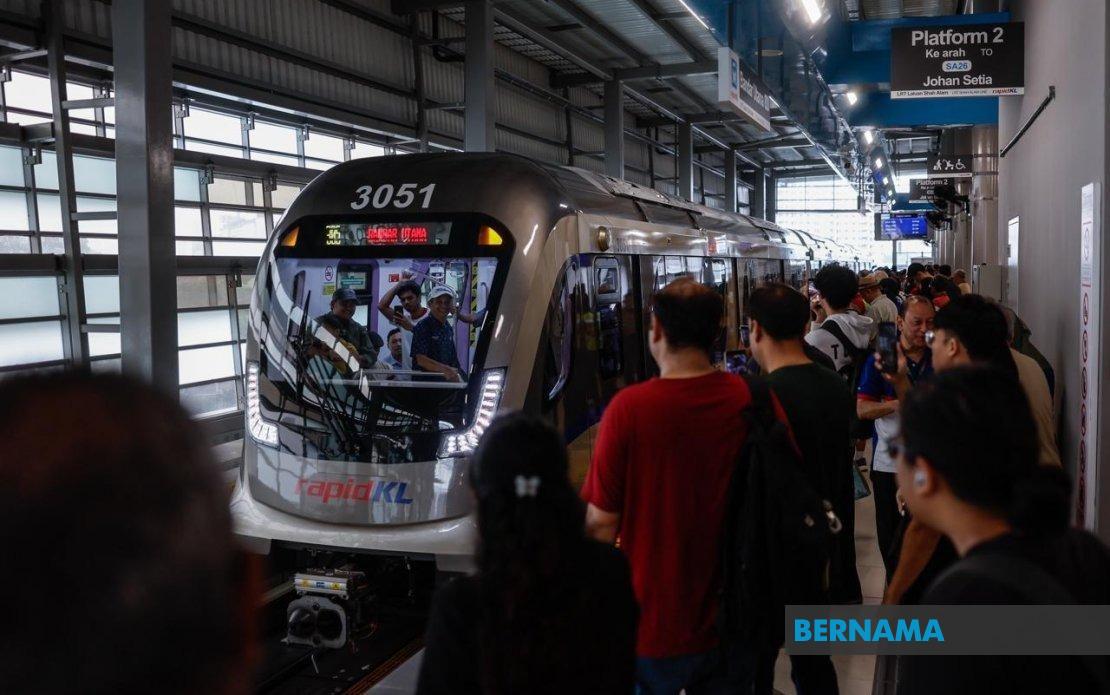
A mechanical defect in a Light Rail Transit 3 train component led to an electrical contact incident on the Shah Alam Line in early July, transit operator Rapid KL confirmed this week. The malfunction, which occurred when a component touched the power conductor, produced a sudden spark and a small explosive-like sound but caused no injuries or disruption to passenger operations, the company said in a statement.
The incident unfolded at 7.05 pm on July 4 at Shah Alam Stadium Station, one of the busier interchanges on the southern section of the LRT3 network. The spark and sound lasted only moments, but the event immediately prompted Rapid KL staff to take the affected train out of regular circulation as a precautionary step. Passengers aboard were safely directed to disembark at the subsequent station, where they transferred to another working train to complete their journeys without significant delay.
Rapid KL's rapid response reflected established safety protocols for the line. Once passengers were moved to alternative transport, the compromised train was dispatched to the company's maintenance depot for comprehensive technical evaluation. Engineers conducted detailed inspections to identify the root cause and assess the full extent of any damage sustained during the electrical contact.
The investigation pinpointed a single defective component as the culprit. This part had failed to maintain proper clearance from the power conductor rail, creating an unintended electrical connection. The faulty component was removed and replaced with a functioning unit during the depot service.
After repairs were completed and all safety tests confirmed normal operation, the train underwent final clearance checks before resuming regular service on the line. Rapid KL stated that the train was authorised to return to active duty only after inspections had verified it was safe for passenger operation. The company did not specify how long the train remained out of service or identify the exact nature of the defective part.
Beyond addressing the immediate issue, Rapid KL initiated a broader precautionary maintenance campaign across the LRT3 fleet. Additional inspections and monitoring of other trains on the Shah Alam Line were conducted to identify any similar component faults or wear patterns that might pose a safety risk. This fleet-wide review reflects industry best practice in response to component failures, particularly those involving electrical systems.
The Shah Alam Stadium Station incident gained significance given growing public scrutiny of rapid transit safety in the Klang Valley. The LRT3 network, which opened to the public in 2016, serves a dense corridor connecting Bandar Utama, Shah Alam, and other sprawling suburban communities. Hundreds of thousands of passengers rely on the line daily, making maintenance and operational reliability matters of considerable public concern.
Rapid KL emphasised that passenger safety constitutes its paramount operational objective and that the company remains committed to rigorous maintenance schedules and preventive monitoring. The statement underscored the importance of swift identification and remediation of component faults before they can threaten passenger wellbeing. By publicly disclosing details of the incident and the corrective actions taken, the operator sought to reinforce confidence in the system's safety frameworks.
The July incident exemplifies common challenges facing transit operators across Southeast Asia, where rapid urbanisation and heavy passenger loads place considerable stress on ageing infrastructure and mechanical systems. Component failures, whether involving wheels, electrical contacts, or signalling equipment, remain routine maintenance concerns requiring constant vigilance. The speed and effectiveness of Rapid KL's response—identifying the fault, repairing the train, and conducting fleet-wide precautionary checks—demonstrates the operational discipline necessary to maintain safe, reliable public transport in congested metropolitan areas.
For commuters who depend on the LRT3 network, the incident and its resolution illustrate the complex technical demands of modern light rail systems. While a spark and noise might alarm passengers, the fact that safety mechanisms functioned as designed—detecting the anomaly, removing the affected train, and preventing injury—reflects the resilience built into the system's architecture. Maintenance challenges will persist as the LRT3 network matures, but ongoing vigilance and rapid response protocols remain essential to sustaining public trust and operational integrity.

