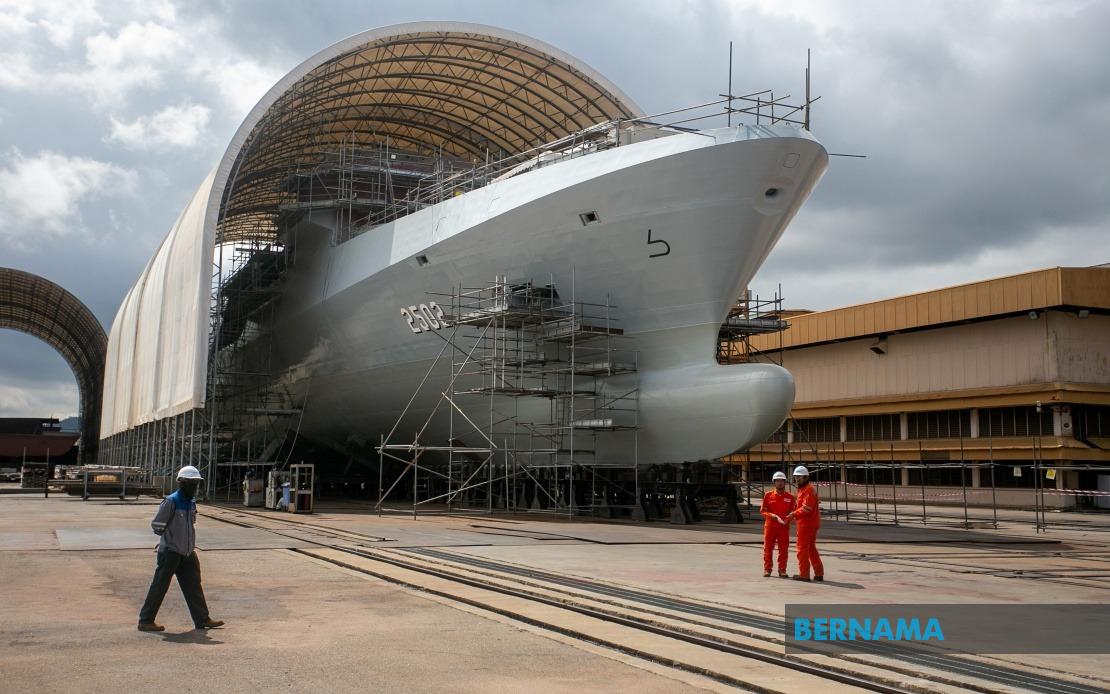
The Malaysian Defence Ministry has moved to counter parliamentary criticism over the payment of RM571.9 million to Norway for Naval Strike Missile anti-ship systems procured for the Littoral Combat Ship project. In a written statement to Parliament, MINDEF rejected assertions that the government had released funds prematurely or that the contract lacked protective provisions, emphasizing instead that the transaction adhered strictly to agreed payment schedules tied to demonstrable progress.
According to the ministry's formal response, the RM571.9 million sum was released only after Norwegian suppliers had completed full manufacturing of all NSM systems, successfully conducted testing protocols required by the Royal Malaysian Navy, and confirmed readiness for shipment to Malaysia. This sequence of events, MINDEF argued, distinguishes the transaction from an advance payment scenario where funds change hands before physical delivery or performance milestones are achieved. The distinction carries significance in public procurement debates, as advance payments without corresponding contractual protections have historically been a source of controversy in Malaysian defence acquisitions.
The ministry's rebuttal directly addressed allegations raised by opposition parliamentarian Hassan Abdul Karim from Pasir Gudang, who had questioned both the timing of the payment and the adequacy of contractual safeguards. MINDEF countered that the contract in question contains comprehensive clauses designed to protect Malaysia's financial interests, including mechanisms permitting government intervention in cases of supplier non-performance or breach. These provisions, the ministry stated, provide legal recourse should circumstances warrant recovery of funds or claims for damages arising from contractual failures.
The broader context of this controversy concerns Norway's unexpected revocation of the export licence for the NSM systems in 2022, a diplomatic and procurement complication that neither Malaysia nor the Norwegian supplier anticipated or could have prevented through contractual design alone. This geopolitical dimension adds complexity to the defence procurement narrative, as the licence cancellation originated from Norwegian government policy decisions rather than contractual non-compliance by either purchasing or supplying parties. MINDEF emphasised that this external constraint fell beyond the control mechanisms typically embedded in commercial agreements.
In response to separate parliamentary inquiries regarding operational implications, MINDEF sought to assure lawmakers and the public that the NSM situation has not compromised the Malaysian Armed Forces' current combat readiness. The Royal Malaysian Navy, the ministry noted, maintains access to existing maritime weapons systems and assets sufficient to fulfil its core mandate of safeguarding Malaysia's maritime sovereignty and territorial waters. This statement aimed to contain potential anxiety about naval capability degradation during the transitional period while alternative solutions are being developed.
The ministry also provided an update on contingency planning, disclosing that the RMN is actively evaluating and assessing alternative missile systems that might substitute for the Norwegian-supplied NSM capability. This evaluation process represents a pragmatic response to the export licence revocation, acknowledging that Malaysia must identify replacement platforms compatible with the Littoral Combat Ship architecture whilst maintaining operational effectiveness. The duration and cost implications of such a substitution programme remain undisclosed, but the replacement search reflects MINDEF's commitment to preserving the naval modernisation trajectory outlined in Malaysia's defence procurement strategy.
The NSM dispute illustrates broader tensions in Malaysian defence acquisition policy, where the government must balance cost efficiency, technological capability, supplier reliability, and geopolitical considerations. The Norwegian missile system represented a significant investment in maritime strike capability for a new generation of naval vessels, and the export licence revocation created substantial complications for force modernisation plans. Malaysia's experience highlights how international defence procurement, whilst offering access to advanced technology and proven systems, carries inherent risks when suppliers operate within jurisdictions subject to shifting strategic policies.
Parliamentary scrutiny of defence spending reflects legitimate public interest in how taxpayer funds are deployed in military capability development. The questions raised by Hassan Abdul Karim and Mohd Kurniawan Naim Moktar from Kinabatangan represent standard oversight functions within Malaysia's parliamentary system. MINDEF's detailed responses signal an effort to address transparency concerns whilst defending the institutional decisions that led to the Norwegian procurement and subsequent payment schedule.
Looking forward, the resolution of this matter will likely depend on the success of legal and diplomatic channels being pursued to recover the RM571.9 million or secure alternative compensation. MINDEF indicated that contractual provisions are being invoked to protect Malaysia's position, though recovery timelines and ultimate outcomes remain uncertain. The episode may also influence how future defence contracts are structured, potentially prompting more stringent force majeure clauses addressing government-level policy reversals by supplier nations.
For Malaysia and other Southeast Asian nations engaged in defence modernisation, the NSM case provides instructive lessons about supplier dependency and geopolitical risk management in military procurement. Countries in the region increasingly seek diversified sources for defence systems to mitigate exposure to policy shifts in any single supplier nation. The experience reinforces the importance of comprehensive contract structuring that anticipates extraordinary circumstances whilst establishing clear accountability mechanisms and recovery pathways when external forces disrupt expected outcomes.

