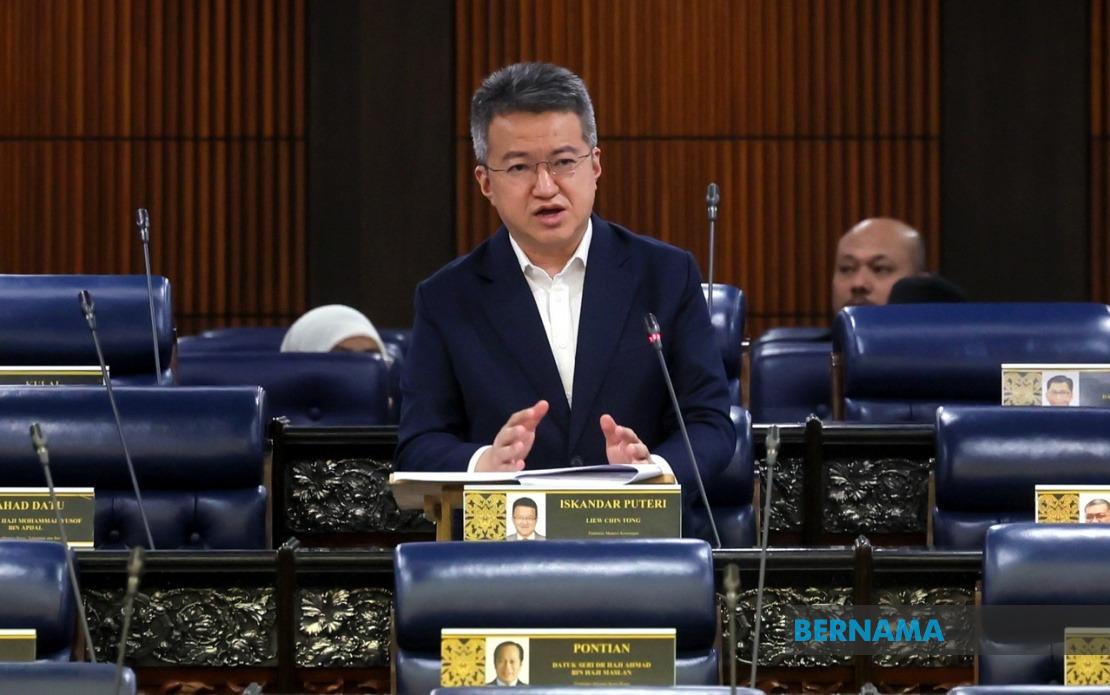
Deputy Finance Minister Liew Chin Tong has firmly denied suggestions that fugitive financier Low Taek Jho, better known as Jho Low, slipped back into Malaysia last year as part of a Chinese business delegation to broker a settlement over the 1Malaysia Development Berhad scandal. When pressed during parliamentary Question Time, Liew offered a terse rejection of the claim, which had circulated in media reports alleging secret discussions involving potential repayment arrangements with the Ministry of Finance. The allegation arose from supplementary questioning by Member of Parliament Syed Saddiq Syed Abdul Rahman, who raised the matter following reports of late-year negotiations.
The denial comes as the government continues its protracted legal campaign to recoup billions in allegedly misappropriated 1MDB funds across multiple jurisdictions. Liew confirmed that enforcement actions proceed simultaneously through criminal prosecutions and civil recovery suits, with authorities pursuing asset recovery from various figures implicated in the scandal. This multi-pronged approach reflects the complexity of untangling the financial mechanisms that enabled one of the globe's most infamous wealth transfers, a process that has stretched across years and required coordination between domestic courts and international regulators.
Former Prime Minister Datuk Seri Najib Tun Razak received a 15-year prison sentence on December 26, 2025, following a High Court verdict that found him culpable on 25 separate counts encompassing money laundering and abuse of power to solicit bribes connected to 1MDB. The same judgment imposed a RM11.38 billion financial penalty, representing one of the most significant sanction outcomes in Malaysian legal history. The conviction marked a watershed moment in the protracted prosecution, though Najib has indicated intentions to challenge the ruling through appellate channels.
Beyond Najib's direct liability, authorities have mounted separate civil action targeting Datin Seri Rosmah Mansor, his former wife, seeking recovery of approximately US$380 million—roughly RM1.56 billion in ringgit terms. The suit alleges that funds siphoned from 1MDB financed purchases of high-value consumer goods including designer handbags and fine jewellery, representing a category of expenditure that symbolises the brazen nature of the theft to Malaysian taxpayers and the international community observing the scandal.
Jho Low himself, identified as the operative orchestrating the core misappropriation scheme, faces both criminal and civil proceedings initiated by the government. The civil claim alone quantifies potential recovery at approximately US$3.78 billion, translating to roughly RM15.4 billion. Despite these legal manoeuvres, Jho Low has maintained a fugitive status, evading extradition efforts from multiple countries including the United States and Malaysia. His precise whereabouts have remained elusive, with speculation periodically surfacing regarding his location and activities, particularly when media reports suggest potential involvement in negotiations or re-entry into Malaysia.
The timing of the parliamentary denial carries strategic significance, as it provides explicit government pushback against narrative suggesting settlement discussions with the primary architect of the fraud. Any impression that authorities might negotiate away accountability or accept partial restitution could undermine public confidence in governance integrity and signal vulnerability in pursuing comprehensive justice. The Deputy Finance Minister's categorical rejection therefore serves both informational and reassurance functions for lawmakers and constituents concerned with 1MDB's resolution.
Liew articulated the government's assessment of the scandal's multi-dimensional damage to Malaysia, encompassing direct monetary losses representing concrete stolen funds, opportunity costs reflecting foregone economic development and investment potential, irrecoverable losses encompassing assets beyond retrieval, and reputational harm affecting Malaysia's standing in international financial circles. This framework demonstrates acknowledgment that 1MDB's consequences extended beyond accounting ledgers to encompass broader implications for economic competitiveness and diplomatic relationships. The scandal had prompted international regulatory scrutiny and contributed to Malaysia's profile as a jurisdiction requiring enhanced due diligence from global financial institutions.
The parliamentary exchange reflects ongoing political salience of 1MDB despite years elapsing since the scandal's exposure. Government officials continue addressing inquiries, indicating that public accountability regarding the matter remains a parliamentary priority. The question posed by Chong Chieng Jen, representing Stampin in Sarawak through a Pan-Malaysian coalition party, sought updates on debt management and recovery progress, illustrating cross-party interest in monitoring enforcement outcomes.
For Malaysian readers and regional observers, the government's stance demonstrates continued commitment to pursuing accountability through available legal mechanisms, though the fugitive status of Jho Low and complexities of international asset recovery mean the process will likely persist for years. The denial of secret negotiations suggests authorities remain unwilling to compromise on accountability even if partial settlements might prove administratively simpler. This posture reflects contemporary Malaysian governance's emphasis on demonstrating institutional reform and credibility restoration following the extensive damage caused by 1MDB's unfolding.

