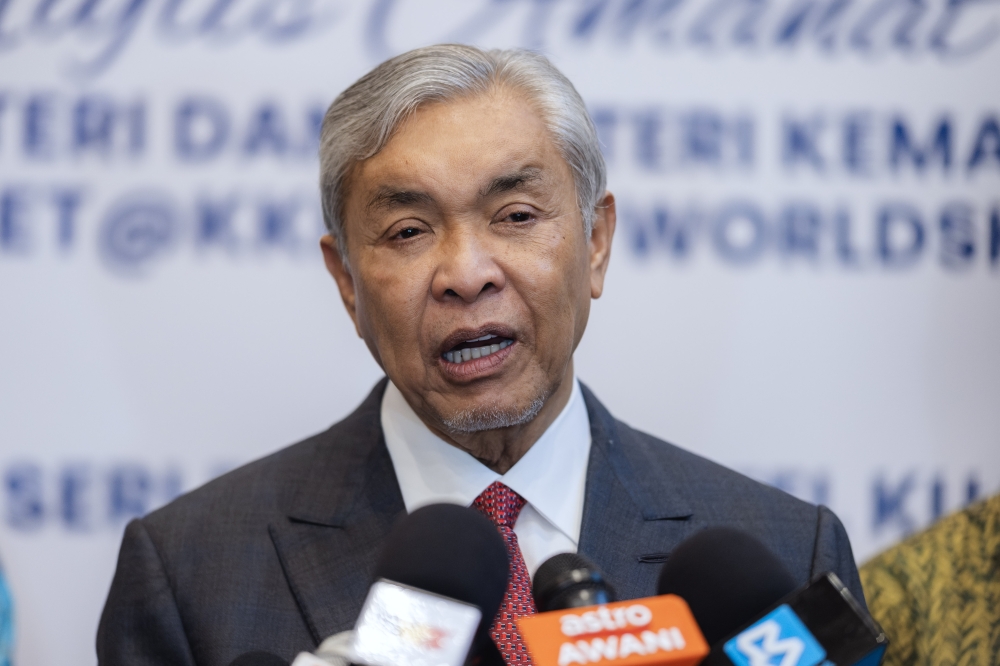
Deputy Prime Minister Datuk Seri Dr Ahmad Zahid Hamidi has announced a significant incentive programme aimed at recognising and rewarding excellence within Malaysia's vocational education sector. The initiative will provide fully sponsored umrah pilgrimages to trainees enrolled in Technical and Vocational Education and Training (TVET) programmes who achieve gold medal status at the WorldSkills competition, one of the world's premier platforms for showcasing technical and craft proficiency among young professionals.
The pledge underscores a broader commitment from Malaysia's federal leadership to elevate the status of vocational training and skilled trades, which have traditionally received less public recognition and government support compared to traditional academic pathways. By coupling financial sponsorship with spiritual recognition through umrah—a significant gesture within Malaysia's Muslim-majority society—the deputy prime minister is attempting to create a holistic incentive structure that appeals to both material aspirations and cultural values among TVET participants.
WorldSkills competitions represent global benchmarks for technical excellence, drawing competitors from over 60 countries who demonstrate mastery across diverse disciplines including automotive technology, culinary arts, information technology, construction, and advanced manufacturing. For Malaysian participants, securing gold medals at this calibre of international event signals not merely personal achievement but also reflects positively on the nation's technical education infrastructure and workforce development initiatives. The recognition signal sent by government sponsorship can significantly enhance the career trajectories and social standing of vocational professionals, addressing long-standing perceptions that TVET pathways are secondary to academic alternatives.
The timing of this announcement reflects Malaysia's intensifying focus on skills-based development as the nation navigates economic transformation and workforce evolution. With manufacturing, tourism, technology, and service sectors increasingly demanding highly skilled technicians and specialists, the government is attempting to make vocational training more attractive to younger Malaysians. Such initiatives help counterbalance the traditional emphasis on university degrees by demonstrating tangible governmental support and recognition for technical excellence.
Umrah sponsorships carry particular resonance in Malaysia's predominantly Muslim context, where the pilgrimage represents a significant life aspiration for many. By linking achievement in technical education to this spiritual opportunity, the government is employing a culturally informed motivational framework that extends beyond conventional monetary rewards or certificates. This approach acknowledges that career development incentives function most effectively when aligned with individuals' broader life values and aspirations.
The WorldSkills platform has historically provided Malaysian participants with opportunities to benchmark their abilities against international standards and establish professional networks with counterparts from other nations. Gold medallists return to Malaysia with credentials that enhance both their employment prospects and their capacity to mentor and train the next generation of skilled workers. By providing umrah sponsorship, the government effectively invests in these individuals' broader development and social contribution beyond their immediate technical expertise.
From a policy perspective, this initiative addresses a persistent challenge within Southeast Asian vocational education systems: the difficulty of attracting high-calibre students into technical training programmes. Many families continue to prioritise traditional academic credentials, influenced by historical perceptions that vocational training serves as a fallback option. By demonstrating high-level governmental commitment through tangible rewards, Malaysia's leadership is attempting to shift these narratives and make TVET pathways genuinely competitive with other educational options.
The announcement also has implications for Malaysia's positioning within regional economic competition. Nations across Southeast Asia are simultaneously upgrading their vocational education infrastructure and competing to develop skilled workforces capable of supporting industrial advancement and innovation. Initiatives that boost TVET prestige and attractiveness contribute to national competitive advantage by ensuring steady pipelines of technically proficient personnel.
For TVET instructors and programme administrators, such recognition from the highest levels of government provides validation for their professional contributions and creates motivation for curriculum enhancement and pedagogical innovation. When leadership visibly celebrates technical excellence, institutional cultures throughout the vocational education system are encouraged to raise standards and pursue continuous improvement.
The practical implementation of this sponsorship programme will require coordination between the Deputy Prime Minister's office, relevant TVET coordinating bodies, and potential umrah service providers. Questions regarding programme scope—such as whether sponsorship extends to accompanying family members, timing flexibility for individuals with work commitments, or integration with existing pilgrimage subsidy schemes—remain to be addressed through detailed policy documentation.
Looking forward, this initiative could serve as a foundation for expanded recognition frameworks encompassing silver and bronze medallists, overseas technical competitions beyond WorldSkills, or sustained excellence within domestic vocational education networks. Such expansion would reinforce the message that technical proficiency and skilled excellence represent paths to meaningful achievement and social advancement within Malaysian society.
The Deputy Prime Minister's pledge ultimately reflects understanding that workforce development requires multi-dimensional incentivisation addressing material, professional, and cultural dimensions of human motivation. For TVET trainees across Malaysia, the announcement signals that national leadership recognises and values their contributions to building a technologically proficient and competitive economy.

