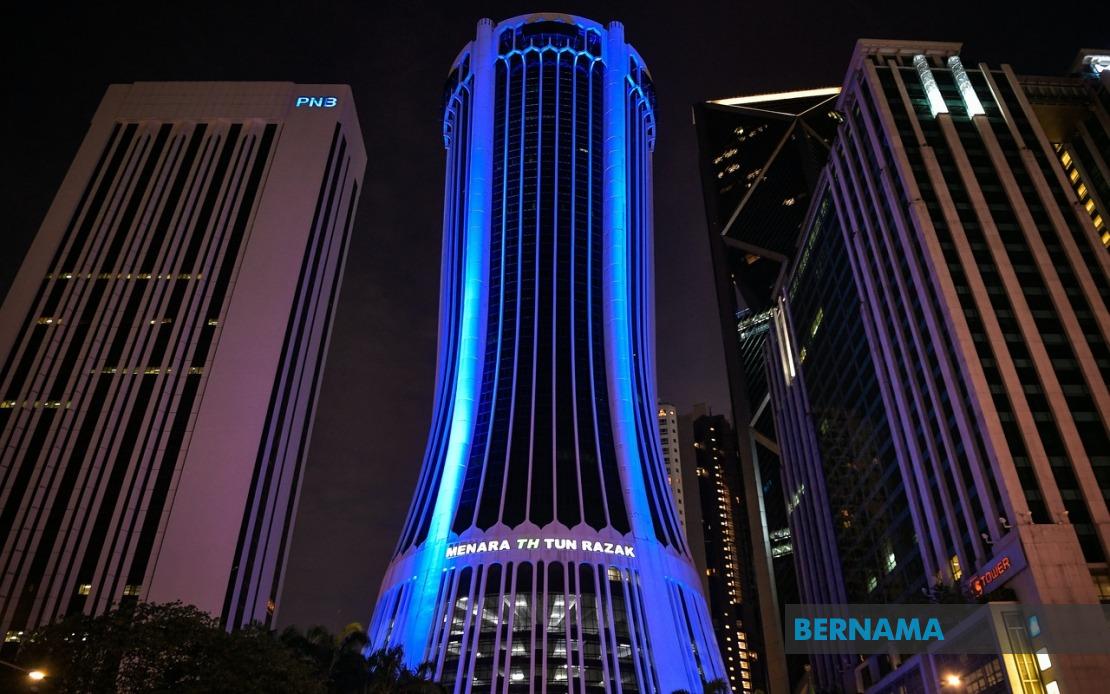
The release of a damning Royal Commission of Inquiry report into Tabung Haji's management has done little to shake the resolve of Malaysian depositors who view the institution through a distinctly spiritual lens. For the country's Muslim population, Tabung Haji transcends the typical boundaries of a financial services provider, serving instead as a sacred intermediary between their earthly savings and one of Islam's five pillars. This unique positioning appears to provide the institution with a resilience that ordinary banks might struggle to maintain when facing similar operational and governance scrutiny.
The psychological and religious attachment depositors maintain toward Tabung Haji distinguishes it fundamentally from conventional savings banks. While the RCI report has documented significant irregularities in management practices and investment decisions, this revelation has not translated into a corresponding exodus of account holders seeking alternative repositories for their haj funds. The institution's role as the official custodian of Muslims' aspirations to perform the pilgrimage to Mecca appears to override concerns that might otherwise prompt account closures or fund transfers elsewhere.
Atiqah Shah Hadi, a 40-year-old tailor who has maintained her account since childhood, exemplifies this steadfast commitment. With her expected turn to perform haj scheduled for 2033 according to Tabung Haji's queue, she continues to channel savings into her account without hesitation. Her father's decision decades ago to open an account for her while she was young has created a multigenerational bond with the institution, one that neither recent controversies nor governance questions appear capable of severing. This pattern of intergenerational engagement with Tabung Haji reinforces its entrenchment within Malaysian Muslim family life and financial planning.
Younger depositors demonstrate equally firm conviction in the institution's future trajectory. Muhammad Haikal Abdul Halim, a civil servant aged 35, has not only retained his existing savings but actively plans to expand his engagement with Tabung Haji through monthly salary deductions. Despite awareness of the governance issues documented in the RCI findings, he views these as separate from his fundamental need to prepare financially and spiritually for his anticipated haj performance in 2032. His intention to open accounts for his three young children signals that the RCI revelations have not altered the fundamental logic by which Malaysian families approach haj savings.
The intergenerational strategy exemplified by both Atiqah and Muhammad Haikal reveals a deeper truth about Tabung Haji's role in Malaysian society. The institution operates not merely as a depository for funds but as a mechanism through which families perpetuate and transmit Islamic values and spiritual commitments across generations. Opening accounts for young children represents more than a financial decision; it constitutes a declaration of parental intention to facilitate their children's eventual participation in one of Islam's most significant religious obligations. This cultural embedding makes Tabung Haji remarkably resistant to the normal market pressures that would undermine confidence in a conventional financial institution facing similar scandals.
Academic experts have begun articulating the specific pathways through which Tabung Haji might restore and strengthen depositor confidence beyond its traditional spiritual appeal. Dr Saizal Pinjaman, director of the Centre for Economic Development and Policy at Universiti Malaysia Sabah, emphasizes that the institution must prioritize two interconnected imperatives. First, it must implement transparent and rigorous audit procedures that account for all investment losses and asset impairments, ensuring that profit distributions reflect genuine financial capacity rather than aspirational accounting. Second, Tabung Haji requires substantially bolstered reserve requirements to weather future market volatility and economic downturns without compromising its ability to fulfill haj-related obligations.
Dr Pinjaman's analysis suggests that transparency in cost accounting represents a particular vulnerability that Tabung Haji must address to maintain long-term institutional credibility. The organization should systematically publish detailed breakdowns of the actual expenses it incurs in administering haj pilgrimages, allowing depositors to understand precisely what services they receive and how their funds are deployed. This level of granular financial disclosure would transform the relationship between Tabung Haji and its depositors from one based primarily on faith and cultural tradition to one incorporating demonstrable accountability and evidence-based confidence.
Dr Noor Nirwandy Mat Noordin, a senior lecturer in media and information warfare studies at Universiti Teknologi MARA, contends that Tabung Haji has already undergone a transformative recovery process following its earlier financial crisis. The institution's subsequent recognition as one of the world's premier haj management organizations suggests that comprehensive institutional reform has yielded tangible improvements in operational standards and service delivery. This international validation provides a counterweight to domestic concerns raised by the RCI, suggesting that current management has successfully implemented lessons learned from previous governance failures.
The convergence of spiritual commitment and institutional resilience surrounding Tabung Haji presents both opportunities and risks for Malaysia's financial regulatory environment. The continued willingness of depositors to maintain confidence despite governance concerns creates a window of opportunity for the institution to implement comprehensive reforms that go beyond minimum compliance requirements. Conversely, this same trust, if perceived as unquestioning or unconditional, might inadvertently reduce pressure for the systemic changes necessary to prevent recurrence of the problematic practices documented in the RCI report.
For Malaysian Muslims approaching middle age like Muhammad Haikal, Tabung Haji's role extends beyond mere financial management into the realm of life planning and spiritual preparation. The institution's waiting lists, which extend into the 2030s for many account holders, create a temporal framework within which individuals structure decades of savings discipline and financial commitment. This long-term horizon fundamentally alters the calculus of institutional trust, as depositors invest not only money but also time and spiritual identity into the relationship.
The path forward for Tabung Haji appears to require leveraging its unique cultural and spiritual position while simultaneously implementing the rigorous governance standards that modern financial institutions require. Rather than viewing the RCI report as a crisis that undermines confidence, the organization might productively reframe it as a mandate to strengthen the very practices that will justify the extraordinary trust Malaysian Muslims continue to place in its stewardship. This would transform the institution from one that trades on accumulated goodwill to one that actively earns continuous confidence through demonstrable excellence in financial management and haj administration.
Ultimately, the persistence of depositor confidence despite the RCI findings reflects the profound significance of the haj obligation within Islam and Malaysian Muslim identity. No governance scandal affecting a conventional financial institution would leave its customer base so remarkably unmoved. This exceptional status carries both privilege and responsibility, creating an implicit social contract whereby Tabung Haji must perpetually justify its role as custodian of Muslims' most important religious and financial aspiration. The institution's continued viability depends not on weathering the current crisis but on transforming institutional practices to deserve the extraordinary trust its depositors continue to extend.

