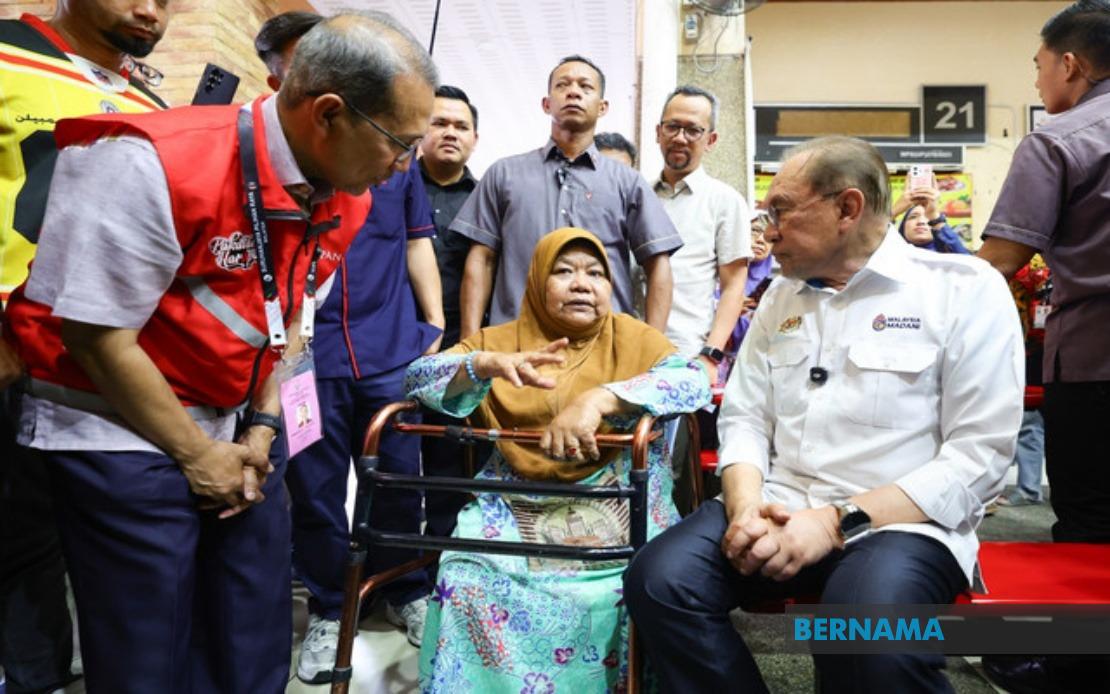
In Seremban, weather and physical challenges proved no obstacle for Jumaah Mohd Alif, a 68-year-old woman living with disabilities, who traversed the distance from Kampung Gedung Lalang to Benteng Ampangan on her three-wheeled motorcycle despite ongoing drizzle. Her determination to meet Prime Minister Datuk Seri Anwar Ibrahim represented far more than a casual encounter—it was the realisation of a cherished aspiration that she described as something she would treasure throughout her remaining years.
Jumaah's journey carried particular poignancy given her personal circumstances. Three and a half decades prior, she lost her left leg in an accident, yet this loss had not diminished her spirit or her desire to engage with national leadership. Learning from neighbouring villagers that the Prime Minister would be present in Ampangan yesterday morning, she made the spontaneous decision to ride her adapted motorcycle to the location, undeterred by the inclement weather. The simplicity of her decision belied its significance—for someone whose physical mobility had been fundamentally altered by tragedy, such a journey required both courage and determination.
For Jumaah, this was no routine political event. Her previous encounters with the country's leader had been limited to distant sightings or television broadcasts, experiences that left her with little hope of ever achieving a face-to-face meeting. The prospect of actually conversing with Anwar Ibrahim in person had seemed improbable, even impractical, given the logistical challenges she faced. Yet when the opportunity materialised, she did not hesitate, viewing it as a moment that might never come again.
Prime Minister Anwar Ibrahim was in Negeri Sembilan as chairman of Pakatan Harapan to bolster the coalition's campaign efforts ahead of the state election scheduled for August 1. The visit represented part of a broader push to consolidate support and drive momentum during the crucial final weeks of the electoral campaign. His presence in the Ampangan area drew various residents, but Jumaah's determination to participate, despite her physical limitations and the weather, distinguished her from the casual observers who might have simply stayed home.
The encounter highlighted broader questions about accessibility and representation in Malaysian public life. Jumaah's willingness to make such effort to participate in a democratic moment spoke to a desire among persons with disabilities to be seen and heard by those in power. Her presence, though perhaps unremarked by most observers, embodied the principle that leadership should be accessible not just in terms of physical location but in spirit and commitment to engage with all segments of society.
Jumaah articulated a hope that the government would intensify its focus on the welfare of vulnerable populations, particularly elderly citizens and persons with disabilities. This was not a demand made from afar or through formal channels; it emerged from a direct conversation with the Prime Minister himself. For someone whose voice might typically go unheard amid the noise of electoral campaigns, this represented a meaningful opportunity to convey the concerns of her community directly to the nation's leader.
The context of this encounter is the Negeri Sembilan state election, with early voting scheduled for July 28 and general polling on August 1. The state has become a battleground for Pakatan Harapan to demonstrate strength and maintain momentum following the coalition's earlier victories. Campaign visits such as Anwar's serve multiple strategic purposes, allowing party leaders to maintain visibility and connect with constituents across different regions and demographics.
Jumaah's story also illuminates the reality of electoral participation for Malaysians with disabilities. While the nation has made progress in establishing frameworks for disability inclusion, the practical challenges of engaging fully in civic activities remain substantial. That a woman in her late sixties, having lost a limb to accident, felt compelled to personally navigate challenging conditions to meet her Prime Minister suggests that existing accessibility measures may still fall short. Her initiative, however remarkable, should ideally not be necessary—rather, it should represent a baseline of what democratic engagement means.
The drizzle that accompanied Jumaah's journey seemed almost symbolic of the broader obstacles she had overcome in her life. Yet neither weather nor physical limitation deterred her from seizing what she perceived as an unrepeatable opportunity. In doing so, she exemplified a spirit of civic engagement that transcends demographic categories and reminds political leaders of their obligations to the entire nation.
Beyond the individual story lies a broader policy consideration for Malaysian governance. Persons with disabilities represent a significant segment of the population, yet they remain substantially underrepresented in conversations about national priorities. Anwar's moment of connection with Jumaah, if it translates into substantive policy attention, could signal a shift toward more inclusive governance. The encounter suggested that there is appetite among members of this community to engage directly with leadership, provided that genuine opportunities and accessible pathways are created.
Jumaah's determination also speaks to how electoral campaigns, despite their sometimes contentious nature, create rare opportunities for ordinary Malaysians to directly access their leaders. These moments, however brief, can carry disproportionate significance for individuals whose voices might otherwise remain peripheral to national discourse. Whether this particular encounter will lead to concrete improvements in disability welfare remains to be seen, but it has at minimum created a tangible connection between citizen and leader.

