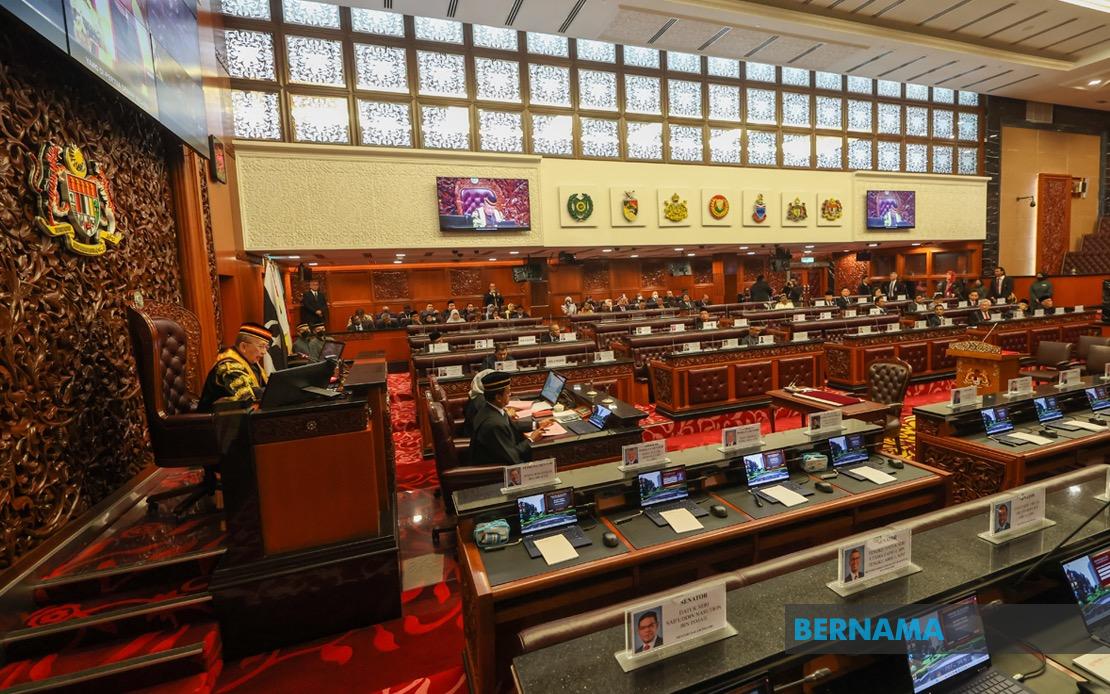
Malaysia's upper house has wrapped up a 10-day parliamentary sitting with the successful passage of two significant pieces of legislation aimed at strengthening the nation's institutional framework and modernising critical administrative systems. The National Trust Fund Bill 2026 and the Statistics Bill 2026, both approved during the Second Meeting of the Fifth Session of the 15th Parliament, represent the government's broader push to reinforce governance standards and establish contemporary legal infrastructure for collecting and managing national data. The sitting, which commenced on July 20 and concluded this week, reflected the administration's multifaceted focus on fiscal discipline, economic dynamism, energy independence and the cultivation of quality foreign direct investment across diverse sectors.
Deputy Finance Minister Liew Chin Tong shepherded the National Trust Fund legislation through the chamber, emphasising its role in tightening oversight mechanisms and establishing stringent protocols for fund withdrawals. The measure addresses longstanding concerns about transparency and accountability in managing the National Trust Fund, introducing explicit guardrails designed to prevent misuse and ensure resources are deployed for their intended purposes. In parallel, Deputy Economy Minister Datuk Mohd Shahar Abdullah introduced the Statistics Bill 2026, which replaces outdated legal provisions with a comprehensive framework befitting contemporary data collection, analysis and dissemination practices. The modernised legislation acknowledges Malaysia's evolving information economy and the necessity for robust, internationally aligned statistical standards.
The government opened the sitting with assurances regarding economic safeguards in response to geopolitical instability in West Asia, signalling its readiness to protect domestic welfare and sustain expansion amidst external uncertainty. Officials articulated a defensive strategy encompassing supply chain resilience, inflation containment through targeted support for affected industries, and structural reinforcement of the broader economy. These commitments reflected the administration's recognition that external shocks, however distant, pose tangible risks to a trade-dependent economy like Malaysia's, necessitating proactive measures rather than reactive policymaking.
Prime Minister Datuk Seri Anwar Ibrahim offered a notably balanced appraisal of the Retirement Fund Incorporated's (KWAP) financial performance, noting the pension fund's RM12.9 billion net profit whilst contextualising a contentious investment in eFishery as a learning opportunity. His remarks sought to defend the fund's stewardship against criticism whilst acknowledging that not every venture yields profitable outcomes, a pragmatic stance that distinguished between acceptable entrepreneurial risk-taking and reckless speculation. The transparency regarding investment missteps, coupled with the overall robust financial results, aimed to restore public confidence in institutional money management during a period of heightened scrutiny over sovereign wealth and pension fund investments globally.
State postal services featured prominently in deliberations, with officials confirming that Pos Malaysia would pursue an ambitious turnaround strategy centred on operational streamlining, digital service expansion and cost discipline. The government is simultaneously exploring the creation of a dedicated Postal Service Fund to provide long-term financial footing for an institution confronting structural decline in traditional mail volumes. This dual approach—operational reform coupled with innovative financing—reflects the challenge many governments face in sustaining essential universal services whilst adapting to technological disruption and changing consumer behaviour.
Energy security emerged as a cardinal concern throughout the sitting, with authorities disclosing plans to evaluate the establishment of a strategic petroleum reserve alongside consideration of associated fiscal, operational and governance implications. The government's recent completion of a 20-year fuel supply agreement with Russia, encompassing petrol, diesel, crude oil and liquefied natural gas, was positioned as complementary to the National Energy Transition Roadmap rather than contradictory. This framing sought to reconcile Malaysia's dual imperatives of ensuring near-term energy stability whilst honouring longer-term commitments to transition towards renewable and lower-carbon sources—a balancing act increasingly common across Southeast Asia as nations pursue simultaneous energy security and climate objectives.
Foreign investment announcements underscored Malaysia's continued attractiveness to multinational manufacturers despite regional competition. Japanese capital commitments totalling RM10.5 billion across 46 electrical and electronics projects between 2021 and 2025 are projected to generate over 9,000 employment opportunities, sustaining Malaysia's position within high-technology manufacturing networks critical to regional economic integration. Such investments validate the government's industrial policy approach and signal sustained international confidence in Malaysia's technical workforce, infrastructure and business environment—attributes increasingly valuable as supply chains diversify away from concentration in single jurisdictions.
Progress toward the government's ambition to rank among the world's twelve most competitive economies by the conclusion of the 13th Malaysia Plan received official confirmation through improved standing in the 2026 World Competitiveness Ranking. Deputy Economy Minister Datuk Mohd Shahar Abdullah's assertion that Malaysia remains on trajectory reflected accumulated reforms across regulatory frameworks, human capital development and innovation ecosystems. This trajectory, if sustained, would represent a meaningful ascent for a middle-income economy competing against advanced industrial nations and dynamic peers across the Asia-Pacific region.
Monetary authorities will implement a revamped Performance Measurement Framework for Development Financial Institutions commencing July 1, 2027, signalling Bank Negara Malaysia's intention to deepen accountability mechanisms beyond traditional financial metrics. The new framework encompasses developmental impact, governance standards and operational effectiveness, recognising that institutions tasked with steering credit towards strategic sectors require evaluation criteria reflecting their multiplicitous mandates. Such refinements address a perennial challenge in development finance: balancing profitability disciplines against social and economic objectives that may not generate optimal financial returns.
Electric vehicle ecosystem development will proceed through market-driven mechanisms rather than government price controls on public charging infrastructure, according to statements from the Ministry of Investment, Trade and Industry. With 6,416 public chargers operational nationwide as of May, the sector demonstrates trajectory towards critical mass despite ongoing infrastructure gaps. Malaysia's decision to rely on private capital and competitive dynamics rather than state management reflects broader ideological preferences for market solutions, though such approaches risk creating charging deserts in less commercially attractive regions unless complemented by targeted subsidisation.
Fiscal consolidation continued as a unifying theme, with the Finance Ministry reporting the fifth consecutive annual reduction in federal budget deficits following sustained economic and fiscal reforms. The disciplined management philosophy extended to the first half of this fiscal year, during which nearly RM5 billion in spending restraint was achieved without visibly compromising essential public services. This accomplishment carries significance for Malaysia's long-term macroeconomic sustainability, as persistently elevated deficits constrain policy flexibility and elevate refinancing risks, particularly given the federal debt already operating near statutory limits.
The successful conclusion of this parliamentary sitting demonstrates the administration's legislative productivity and thematic coherence around interconnected objectives spanning governance modernisation, fiscal prudence, energy independence and competitive positioning. The two bills enacted represent foundational infrastructure for improved institutional functioning, whilst the diverse policy announcements and explanations signal comprehensive government engagement across economic and social domains. For Malaysian stakeholders and regional observers, these developments suggest a administration committed to incremental institutional strengthening and externally oriented economic management, though the sitting also revealed tensions between short-term energy security imperatives and longer-term climate transition objectives that policymakers will continue navigating in subsequent parliamentary sessions.

