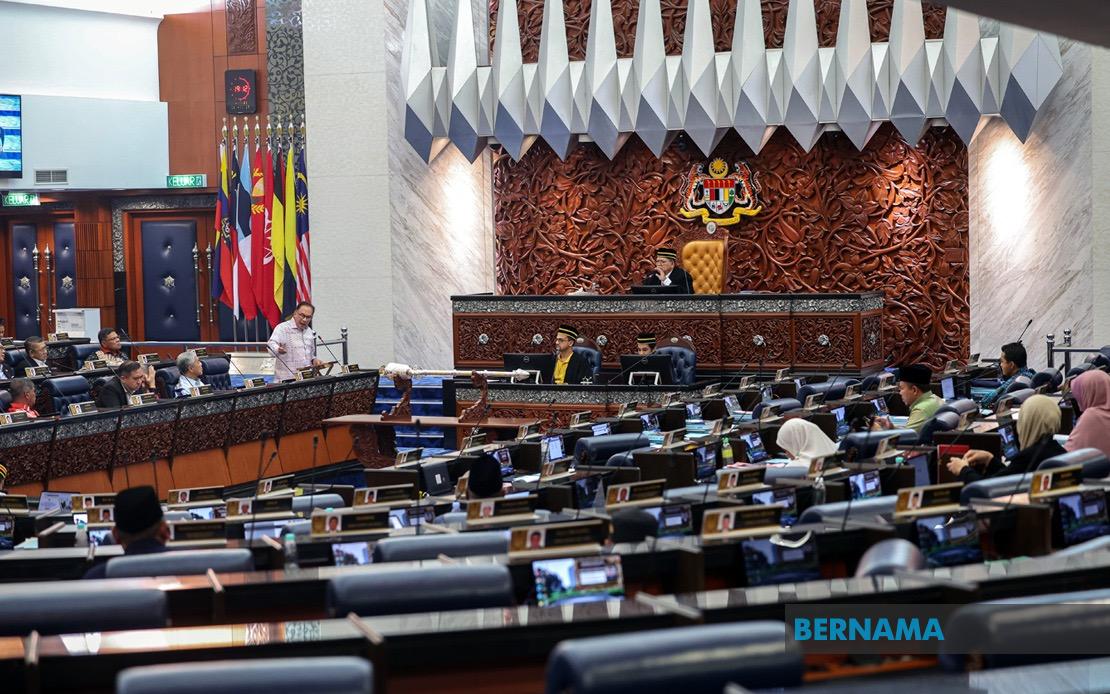
Parliament has given its approval to amendments of the Employment Insurance System (Amendment) Bill 2025, establishing a progressive fine regime designed to encourage employer compliance with mandatory vacancy reporting to the Social Security Organisation (PERKESO). The amendments, which received parliamentary backing through majority voice vote following contributions from 13 members representing both government and opposition parties, represent a refined approach to labour market governance that seeks to balance regulatory enforcement with business operational realities.
The legislative framework now incorporates a graduated penalty structure targeting employers who fail to fulfill their obligation to notify PERKESO when positions become available. Under the revised Clause 11 involving Subsection 45F(4), a first-time violation will incur a fine of up to RM1,000, while repeated non-compliance escalates to RM3,000 for a second breach and up to RM5,000 for any subsequent violation. This tiered approach emerged following the Dewan Negara's approval of the amendments on March 12, with the Bill subsequently presented to the lower house for final endorsement.
Deputy Human Resources Minister Datuk Khairul Firdaus Akbar Khan articulated the government's underlying philosophy during the parliamentary wrap-up, emphasizing that the amendments prioritize education and voluntary adherence rather than punitive measures alone. The ministry's stated position reflects a preference for cooperative engagement with employers before resorting to financial penalties. Significantly, PERKESO will issue compliance notices to businesses, providing a corrective pathway before any compound is formally imposed. This graduated enforcement approach acknowledges that not all violations stem from willful non-cooperation but may instead reflect insufficient awareness or administrative oversight within organizations.
The penalty structure itself underwent meaningful revision during the legislative process, demonstrating responsiveness to stakeholder input. The original proposal contemplated maximum fines reaching RM10,000, but extensive consultation sessions conducted by PERKESO across various economic sectors throughout the country prompted the government to recalibrate. The reduction to RM5,000, combined with the establishment of progressive tiers commencing at RM1,000, reflects deliberate calibration aimed at imposing meaningful accountability without creating disproportionate burdens on enterprises already navigating complex compliance frameworks.
Parliamentary discourse during consideration of the Bill revealed broad agreement on the underlying objectives, though members raised practical implementation concerns. Multiple MPs emphasized that the reporting mechanism itself must achieve simplicity and efficiency, particularly given the mechanism's ultimate purpose: facilitating job matching, reducing unemployment, and enabling evidence-based labour market policymaking. The quality of data supplied through the vacancy notification system directly influences PERKESO's capacity to connect job seekers with opportunities and inform workforce development strategies at both sectoral and national levels.
Among those contributing to the debate, Azahari Hasan from Padang Rengas highlighted that the reporting infrastructure must not impose excessive administrative burden, as this could undermine compliance intentions among smaller enterprises operating with limited back-office capacity. His intervention underscored a reality in Malaysia's employment landscape: institutional capacity varies considerably between multinational corporations and small-to-medium enterprises, necessitating accessible compliance mechanisms.
Nurul Amin Hamid, representing Padang Terap, welcomed the downward revision of maximum penalties but raised concerns particularly pertinent to Malaysia's geographical diversity and economic structure. The MP emphasized that rural and semi-rural businesses, which constitute a substantial portion of Malaysia's economic base, often operate with limited exposure to legislative requirements and administrative procedures. Without targeted awareness campaigns and capacity-building support, rural employers might face inadvertent violations despite lacking deliberate circumvention intent. This observation points to an implementation gap that requires coordinated efforts between PERKESO, state authorities, and business associations to ensure equitable understanding across demographic and geographic boundaries.
Symmetrically, Syerleena Abdul Rashid from Bukit Bendera articulated concerns regarding job market transparency and equitable access. She advocated for channeling employment advertisements through government portals, thereby standardizing visibility and preventing selective access to opportunities based on informal networks or discriminatory criteria. This dimension introduces a broader policy objective beyond mere compliance: ensuring that Malaysia's labour market functions with adequate transparency, enabling diverse populations to access economic opportunity without systemic barriers.
The amendments collectively represent an attempt to align employment market governance with contemporary best practices emphasizing cooperative compliance over purely coercive regulation. By establishing clear, progressive consequences while simultaneously implementing support mechanisms such as guidance sessions and compliance notices, the framework acknowledges that sustainable regulatory effectiveness emerges when businesses understand requirements and possess practical capacity to comply. The reduction from an originally proposed RM10,000 maximum to the current tiered structure demonstrates that parliamentary deliberation and stakeholder engagement can produce calibrated policy outcomes.
For Malaysia's broader policy agenda, this legislation assumes particular importance given the nation's labour market challenges and aspirations toward higher-value economic positioning. Effective job matching through comprehensive vacancy data enables workforce development initiatives to align training provision with demonstrable market demand, potentially reducing skills mismatches and improving employment outcomes for Malaysians entering the job market. The legislation therefore transcends administrative compliance, connecting instead to fundamental national objectives regarding human capital development and economic competitiveness.
The implementation phase will ultimately determine whether the legislative framework achieves its intended balance between accountability and accessibility. Success requires PERKESO to operationalize user-friendly reporting systems, conduct targeted awareness campaigns particularly in underserved areas, and deploy compliance support equitably across economic sectors. Government coordination with industry bodies, chambers of commerce, and employer federations becomes essential for translating legislative intent into practical workplace compliance behaviour.

