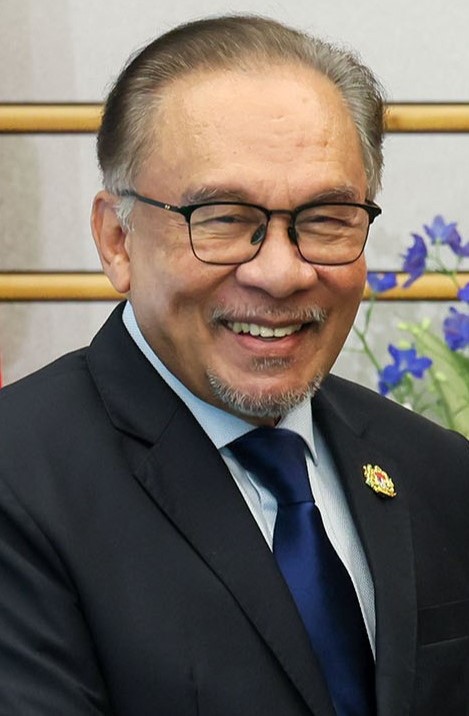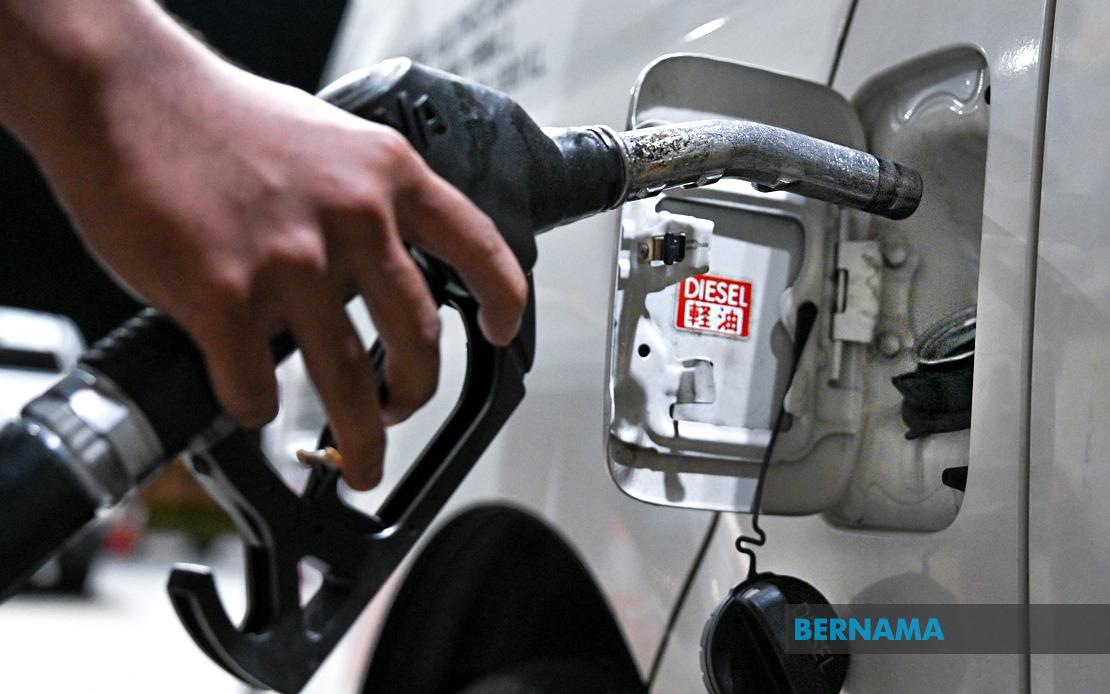
Malaysia's government has announced a reduction in the subsidised diesel price to RM2.10 per litre effective from July, marking what officials describe as tangible progress from the MADANI administration's economic restructuring programme. The price adjustment, disclosed by Prime Minister Datuk Seri Anwar Ibrahim, represents a strategic shift in how the country manages fuel subsidies and aims to deliver measurable relief to households and businesses struggling with elevated operating costs. The timing is significant, arriving as global energy markets remain volatile and geopolitical tensions threaten supply chains across Asia.
Datuk Mustapha Sakmud, Minister in the Prime Minister's Department responsible for Sabah and Sarawak, characterised the diesel cut as evidence that the government's broader economic strategy is beginning to produce real outcomes for ordinary Malaysians. He emphasised that the reduction demonstrates the MADANI administration's commitment to prudent fiscal management, particularly given the complex international environment in which policy decisions must be made. The statement underscores a shift in messaging from announcements of reform to concrete price adjustments that affect purchasing power directly.
Central to this initiative is the adoption of the MyKad-based verification system for diesel subsidies, which mirrors the framework already established under the BUDI MADANI RON95 programme for petrol. This targeted approach fundamentally reshapes how the state distributes fuel support, moving away from blanket subsidies that have historically benefited smugglers and fuel cartels operating in border regions. By tying diesel access to Malaysian identity card verification, the government aims to ensure that subsidy budgets reach intended beneficiaries rather than being diverted through illicit channels or exported to neighbouring countries where fuel commands premium prices.
The leakage problem that has long plagued Malaysia's subsidy system stems partly from the country's geography. Fuel price differentials between Malaysia and Thailand, Indonesia, and other regional neighbours create arbitrage opportunities that fuel smuggling networks have exploited extensively. Mustapha argued that the MyKad mechanism addresses this vulnerability by creating a formal verification layer that makes diversion less feasible. Over time, reduced smuggling should theoretically allow the government to maintain lower prices for legitimate consumers while containing fiscal costs, a calculus that underpins the targeted subsidy philosophy embraced by the current administration.
The geopolitical context surrounding this announcement reveals how regional instability influences Malaysian economic policy. The ongoing conflict in West Asia has introduced uncertainty into global petroleum markets, affecting prices and supply reliability across the broader region. Malaysia, as an energy producer itself but also an importer of refined products, faces complexity in managing both export revenues and domestic fuel costs. Mustapha referenced this reality, noting that countries must adopt more strategic approaches to energy security when international markets are unstable. The implication is that while the government would ideally maintain lower subsidies, external pressures necessitate maintaining price controls for vulnerable segments of the population.
To insulate Malaysia from energy supply disruptions, the government has pursued diversified partnerships with major producers, including Russia and Turkmenistan. These diplomatic and commercial relationships form part of a longer-term energy resilience strategy designed to reduce dependence on any single supplier or maritime route. The diesel price adjustment, therefore, sits within a broader framework of energy diplomacy and strategic supply-chain management. Such initiatives appeal particularly to East Malaysian states like Sabah and Sarawak, where energy costs significantly influence industrial competitiveness and shipping logistics.
The current pricing structure reveals disparities between regions that the MyKad system helps justify and manage. In Sabah and Sarawak, diesel currently sells at the subsidised rate of RM2.15 per litre, reflecting these states' historical entitlement to lower fuel costs tied to their oil and gas revenues. By contrast, Peninsular Malaysia has moved to market pricing of RM4.37 per litre for diesel. The new unified RM2.10 price from July will narrow this gap for verified cardholders across the country, standardising the subsidy while maintaining the verification mechanism. This restructuring acknowledges that uniform pricing may be economically unrealistic, but that means-tested or identity-verified access can achieve equity objectives more efficiently than regional differentiation.
For Malaysian businesses, particularly those in transport, manufacturing, and agriculture, diesel constitutes a major operational expense. Trucking companies, fishing vessels, and construction firms benefit directly from lower fuel costs, which can be passed partially to consumers or retained as margin depending on market conditions. The RM0.05 reduction from the current Sabah-Sarawak rate, while modest, compounds over large-volume consumption. For a haulage firm purchasing thousands of litres monthly, the savings translate to meaningful improvements in cash flow and competitiveness. Small-scale producers in rural areas, who often operate on tight margins, similarly depend on fuel cost stability.
The rollout of MyKad verification for diesel subsidies also signals the government's confidence in digital infrastructure for social-policy implementation. The system requires functioning databases, POS terminals at petrol stations, and integration between fuel retailers and identification authorities. Such infrastructure development carries secondary benefits, strengthening the digital economy ecosystem and demonstrating that technology can enhance governance efficiency. However, the system's success depends entirely on implementation quality; if verification processes create bottlenecks at pumps or if retailers encounter technical failures, public confidence in the policy will erode rapidly.
From a fiscal perspective, the diesel subsidy reduction must be evaluated against budget constraints and inflation management. The government has finite resources for fuel support, and lower administered prices increase the gap between cost and revenue, expanding the fiscal burden. However, if the MyKad targeting prevents smuggling losses that might otherwise consume 10-15% of subsidy budgets, the net cost to the treasury could decline despite the lower retail price. This efficiency argument underpins official claims that economic reform is delivering tangible benefits; subsidy mechanisms become more sustainable when leakages are reduced, potentially allowing future price adjustments downward.
For consumers, the immediate perception matters as much as economic technicalities. Dieselistas, including motorcycle couriers, small traders, and commuters, will observe lower pump prices starting July. That direct experience of improved affordability reinforces the MADANI government's narrative of reform-driven progress. In the competitive political environment of Malaysian states, particularly Sabah and Sarawak where state governments wield significant influence, such visible benefits to cost-of-living concerns shape voter sentiment. The timing before mid-year suggests deliberate sequencing of announcements to maintain momentum on economic messaging.
International observers tracking Malaysia's subsidy reform trajectory note that the MyKad-based approach represents a middle path between maintaining universal support and withdrawing subsidies entirely. Other Southeast Asian countries, including Indonesia and Thailand, have experimented with targeted subsidy schemes with mixed results. Malaysia's approach benefits from existing digital infrastructure and relatively high identification-card coverage, providing foundational advantages. Success here could inform regional approaches to subsidy efficiency and provide a template for other policy domains where means-testing or demographic targeting enhances programme effectiveness.
Looking forward, the diesel pricing announcement indicates the government's intention to continue calibrating subsidies based on fiscal capacity and targeting efficiency. Officials have framed economic reform as a multi-year process requiring gradual adjustment rather than shock-therapy overhauls. The diesel cut represents one waypoint in that journey, demonstrating that reform need not mean austerity for ordinary people if policies are designed thoughtfully. Whether subsequent months bring further price adjustments or expansion of the MyKad system to other fuels will depend on inflation trends, global energy prices, and the government's assessment of political feasibility for deepening reform.