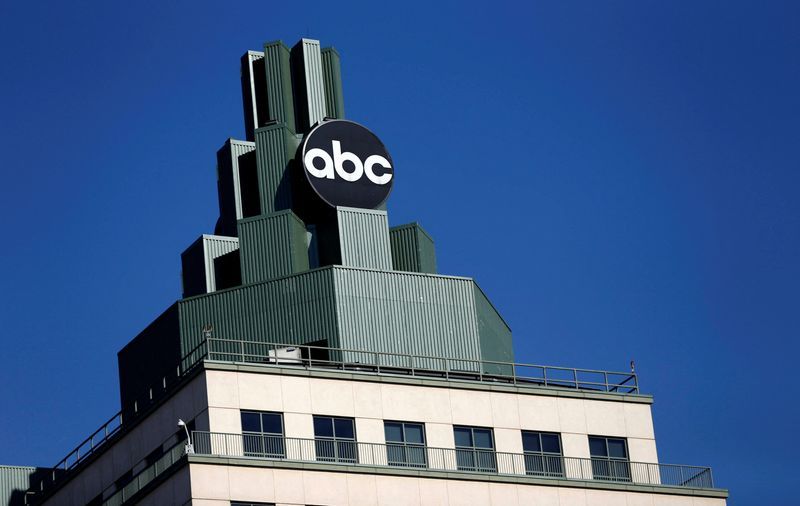
Disney and its ABC unit have launched a legal challenge against the Federal Communications Commission, seeking to block an accelerated review of broadcast licenses for eight ABC stations. The company argues in its U.S. District Court filing in Washington that the FCC's sudden action represents politically motivated retaliation aimed at punishing a news and entertainment network that has resisted pressure from the Trump administration to alter its programming and editorial decisions.
The dispute centres on what Disney characterises as an "extraordinary assault on free speech" and raises fundamental questions about governmental authority over media organisations operating on public airwaves. The lawsuit alleges that the FCC is weaponising its regulatory authority to coerce compliance with the administration's content preferences, violating the First Amendment rights that have traditionally protected American broadcasters' editorial independence. Disney seeks an immediate temporary restraining order to halt the license renewal proceedings and prevent the FCC from scheduling any hearings while the case proceeds.
President Donald Trump has maintained a combative relationship with the mainstream media throughout his political career, and his conflict with Disney specifically has intensified over recent months. He has repeatedly demanded that broadcasters discontinue programmes he views as hostile to his administration, with ABC becoming a particular focus of his criticism. Most recently, Trump called for ABC to lose its broadcast licenses after the network declined to air his prime-time speech on election matters, demonstrating the escalating nature of these disputes.
The Trump administration's targeting of specific programmes and personalities adds another layer to this confrontation. Trump called for the dismissal of late-night host Jimmy Kimmel and subsequently urged the FCC to act against ABC licenses. In November, he demanded license revocation after criticising an ABC News correspondent for posing a question to Saudi Arabia's crown prince regarding the 2018 killing of Washington Post journalist Jamal Khashoggi—a query Trump deemed "insubordinate."
FCC Chair Brendan Carr, who ordered the reviews in April, maintains that the agency's actions stem from a year-long investigation into whether Disney's diversity policies constitute unlawful discrimination. Significantly, Carr ordered these early reviews despite the stations' licenses not being scheduled for renewal consideration until October 2028, marking the FCC's first early review of this nature in more than fifty years. Carr has defended the move as an effort to enforce long-neglected public interest obligations for broadcasters utilising public airwaves, arguing that previous FCC leadership had inadequately fulfilled this responsibility.
The regulatory pressure extends beyond ABC News programming to encompass entertainment content as well. The FCC has also initiated an investigation into "The View," ABC's daytime talk show featuring political commentary, citing potential violations of federal rules requiring broadcasters to provide equal opportunities for political candidates. Disney has noted that since February, the programme has ceased inviting political candidates to appear, a decision the company attributes directly to the FCC's investigation and implicit pressure campaign.
U.S. District Judge Loren AliKhan responded swiftly to the lawsuit by ordering both parties to propose a timeline for considering Disney's request for a temporary restraining order. The judge also directed the FCC to notify her immediately should the agency move toward initiating licence revocation proceedings. This judicial intervention suggests the court recognises the potential constitutional significance of the case, even at this preliminary stage.
Democratic FCC Commissioner Anna Gomez has characterised the agency's conduct as a coordinated "campaign of censorship and control," asserting that the threat of license revocation constitutes inappropriate punishment for speech the administration opposes. This assessment aligns with Disney's core legal argument that regulatory action has become a tool for suppressing disfavoured content rather than serving legitimate public interest objectives. The commissioner's statement underscores the polarised nature of contemporary debates about regulatory authority and media independence.
Broadcast license revocations remain extraordinarily rare in American regulatory history, yet critics contend that merely threatening such action can exert significant pressure on broadcasters and their editorial decision-making. Networks have enjoyed substantial First Amendment protection over programming choices, yet the potential loss of a broadcasting license creates an asymmetrical power dynamic between government agencies and media organisations. This case will test whether the FCC can instrumentalise its licensing authority to influence content without triggering constitutional protections.
For Malaysian and Southeast Asian observers, this dispute illuminates ongoing tensions between regulatory authority and media freedom in democracies. While the United States has established constitutional safeguards theoretically protecting press independence, this case demonstrates how political pressure can manifest through regulatory mechanisms even in mature democracies. The outcome may influence international discussions about appropriate boundaries for government oversight of broadcast media and the extent to which regulators can legitimately condition license renewal on compliance with administration preferences.
The FCC has not yet disclosed its timeline for making substantive decisions regarding Disney's licenses, with Chair Carr stating only that the agency will "follow the facts and the law and keep moving forward." This ambiguity itself creates uncertainty for Disney's operations and may serve as a form of pressure independent of any formal action. The case's progression through the federal courts will likely establish important precedent regarding whether regulatory retaliation claims can succeed when underlying investigations cite ostensibly legitimate policy concerns.
This litigation arrives amid broader debates about media accountability, government authority, and the proper scope of broadcast regulation. While proponents of stronger FCC oversight argue that public interest obligations have languished for decades, critics counter that heightened scrutiny can easily become a mechanism for censorship. The court's ultimate ruling will likely influence how regulatory agencies elsewhere approach their oversight responsibilities and whether political considerations can influence formal regulatory proceedings.

