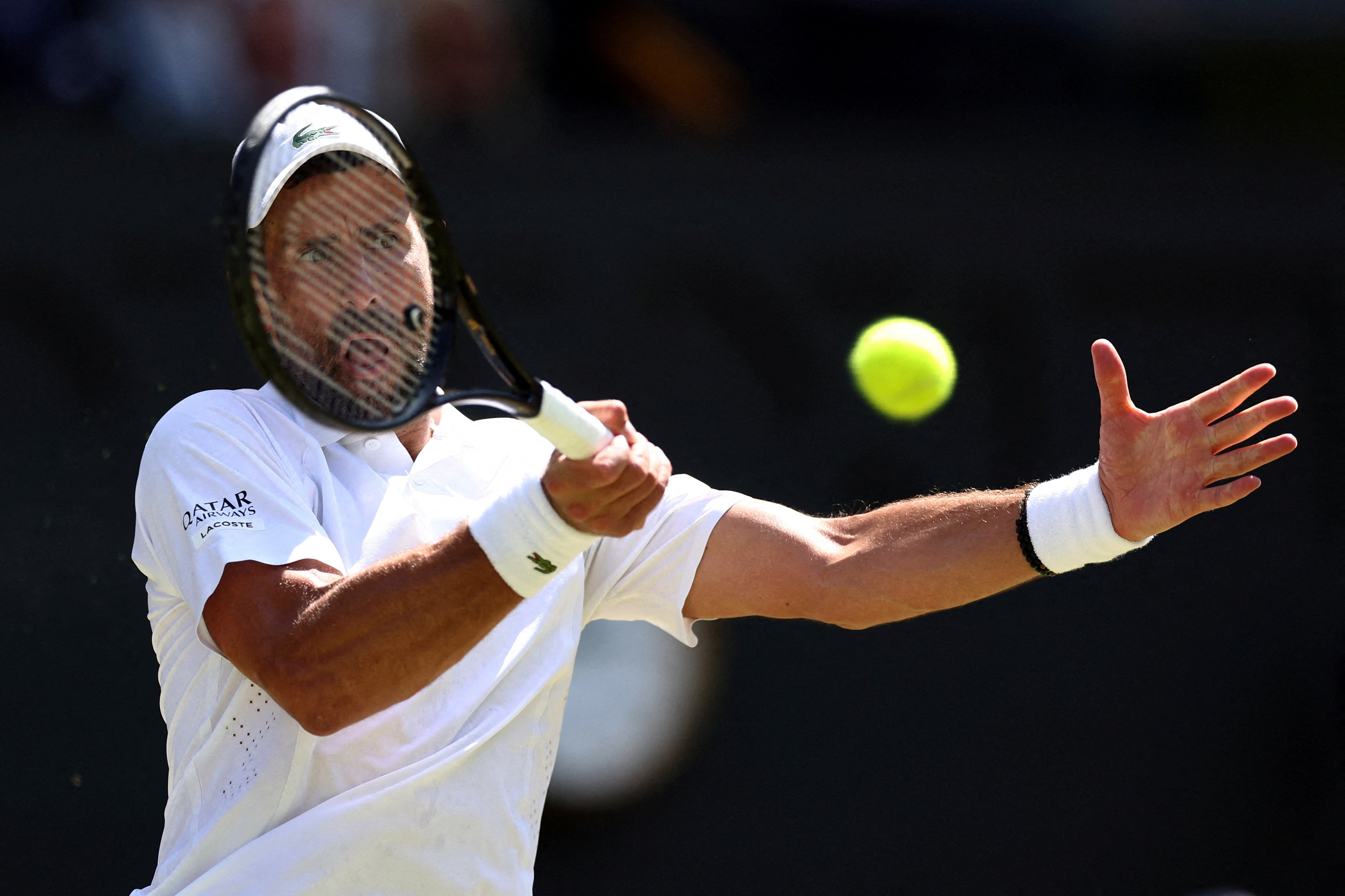
Novak Djokovic has advanced to the Wimbledon semifinals after an extraordinary marathon match against Felix Auger-Aliassime, triumphing in the longest quarterfinal in the tournament's history. The 39-year-old Serbian secured a 7-6 (12-10), 3-6, 6-3, 6-7 (4-7), 7-6 (10-4) victory that consumed an exhausting five hours and 15 minutes on Centre Court, finishing with just six minutes to spare before the championship's 11 pm curfew. His reward is a semifinal meeting with defending champion Jannik Sinner, setting up a tantalizing contest between two of the sport's current heavyweights.
The match was punctuated by a dramatic confrontation between Djokovic and tournament referee Denise Parnell over the closure of Centre Court's roof. With the score locked at one set apiece and daylight beginning to fade at 7.40 pm, Parnell descended to the court to inform the players that the roof would be shut. Djokovic immediately protested, arguing vehemently that there remained sufficient daylight to complete another entire set without artificial lighting. His frustration boiled over as he challenged the consistency of the tournament's application of its own rules, reminding Parnell that in his first-round encounter against Wu Yibing, the roof had remained open until nearly 8.30 pm.
The exchange revealed the tactical calculus running through Djokovic's mind as much as his irritation with what he perceived as arbitrary decision-making. Auger-Aliassime, at 25 years old, possesses a formidable indoor game honed through years of competition in climate-controlled arenas across North America and Europe. By keeping the match in natural light, Djokovic sought to neutralize one of his opponent's significant advantages. His insistence that Wimbledon is fundamentally an outdoor tournament underscored a legitimate point about the nature of grass-court tennis and its traditional dependence on daylight play.
Parnell held firm in her decision, citing the cautionary example of Sinner's fourth-round match against Shintaro Mochizuki, where the roof had been forced closed mid-set due to insufficient light. The referee's concern about disrupting the rhythm and fairness of competition reflected genuine operational considerations that tournament organizers must balance. Yet Djokovic's pointed response—dismissing the relevance of Sinner's circumstances to his own match—illustrated the intense psychological pressure and combative mindset required to navigate such grueling encounters at the sport's highest level.
Despite the confrontation, Djokovic's physical condition presented perhaps an even more pressing concern during the contest. Midway through the opening set, he called for the trainer and visibly winced after what appeared to be a tweak to his left calf muscle. The injury scare raised immediate questions about his capacity to sustain the physical demands of a five-set match, particularly against an opponent ten years younger with fresh legs. Yet the Serbian champion had overcome such obstacles before, drawing on the mental fortitude that has characterized his remarkable career. He managed to secure the first set via a marathon tie-break at 12-10, grimacing visibly with each serve but refusing to yield.
Auger-Aliassime responded by claiming the second set decisively, capitalizing on Djokovic's apparent discomfort to level the match. The Canadian, seeded third, demonstrated why he has emerged as a serious contender at the sport's pinnacle, combining his formidable serve and indoor prowess with the tactical acumen to exploit an opponent struggling with injury. However, Djokovic's mobility improved noticeably as the match progressed, suggesting that the initial injury concern may have been more precautionary than debilitating. Breaking Auger-Aliassime's serve in the third set represented a significant tactical achievement, as the Canadian had surrendered his serve only once throughout the entire fortnight.
The fourth set descended into a tie-break that Auger-Aliassime won convincingly, forcing the match into a deciding fifth set where Djokovic had demonstrated remarkable resilience throughout his career. At his age, many observers questioned whether he possessed the physical reserves to outlast a younger opponent in such a grueling contest. Yet as the sun descended and the match stretched toward the 11 pm curfew, Djokovic's experience and mental composure began to assert themselves over Auger-Aliassime's raw athleticism. The decisive set culminated in a first-to-10 tie-break, a sudden-death scenario that demands absolute precision and mental clarity under maximum pressure.
Djokovic ultimately prevailed 10-4 in that final tie-break, celebrating a victory that ranked among the most demanding of his recent campaign. His post-match comments reflected both the physical and emotional toll of the encounter. He emphasized the role of psychological management and the importance of maintaining emotional equilibrium amid the extreme tension that such matches generate. His reference to playing for these moments—to the drama and intensity that justifies the sacrifice required to compete at this level—suggested that despite his age and the pursuit of an eighth Wimbledon title, he continues to derive genuine fulfillment from testing himself against elite competition.
For Malaysian and Southeast Asian tennis enthusiasts, this victory underscores the enduring competitive quality of players in their late thirties and beyond, challenging assumptions about athletic decline with age. Djokovic's performance also highlights the complex interaction between physical conditioning, tactical sophistication, and mental resilience that separates champions from pretenders. The intensity of his dispute with the referee, meanwhile, illustrates the high stakes and passionate engagement that characterize professional tennis at its most elite echelon, where marginal advantages in conditions can influence outcomes in matches that may ultimately determine tournament success.
Djokovic now faces the daunting prospect of recovering sufficiently to challenge Jannik Sinner in the semifinals. His comment about wishing the match had been the final, thereby avoiding concerns about how his body would feel the following day, betrays the genuine uncertainty surrounding his physical condition heading into the next round. Nevertheless, his ability to survive and ultimately prevail in the longest Wimbledon quarterfinal in history demonstrates why, even approaching 40, he remains a formidable threat to any potential opponent.

