Novak Djokovic enters the U.S. Open with perhaps his most favourable circumstances in years to claim a record 25th Grand Slam title, as the dominant young guns who have blocked his path suddenly face significant obstacles. Jannik Sinner's absence due to a knee injury removes one of the two players who have consistently denied the Serbian champion his pursuit of a standalone record, while Carlos Alcaraz's return from over four months away with a wrist problem leaves considerable uncertainty about his competitive sharpness. The 39-year-old Djokovic remains convinced of his ability to succeed at Flushing Meadows despite limited preparation and ongoing physical concerns, channelling a Serbian concept he described in his recently released documentary as essential motivation.
Since his triumphant 2023 campaign at the U.S. Open, Djokovic has endured a frustrating period as Alcaraz and Sinner have dominated men's tennis at the highest level. The pair has combined to claim 10 of the last 11 major championships, effectively shutting out the veteran performer who once appeared destined to extend his record indefinitely. Across the previous six Grand Slams, these two younger rivals have defeated Djokovic five times, including Alcaraz's victory in this year's Australian Open final that represented perhaps the Serb's best realistic chance to move clear of Margaret Court's all-time record of 24 major titles. The repeated denials have made this moment particularly significant, as another year passes without breaking through the barrier that has defined his recent career ambitions.
Djokovic's resilience in the face of mounting pressure stems partly from a cultural philosophy he articulated in discussions preceding the tournament. He referenced the Serbian concept of "inat," describing it as a force of stubborn determination that emerges precisely when external circumstances seem insurmountable and public opinion turns against an individual. This mindset, he suggested, represents a fundamental aspect of Serbian mentality—the capacity to channel doubt and opposition into renewed resolve. For a competitor accustomed to dominating from the baseline, this psychological framework appears increasingly important as physical factors become more variable and younger opponents possess superior speed and consistency.
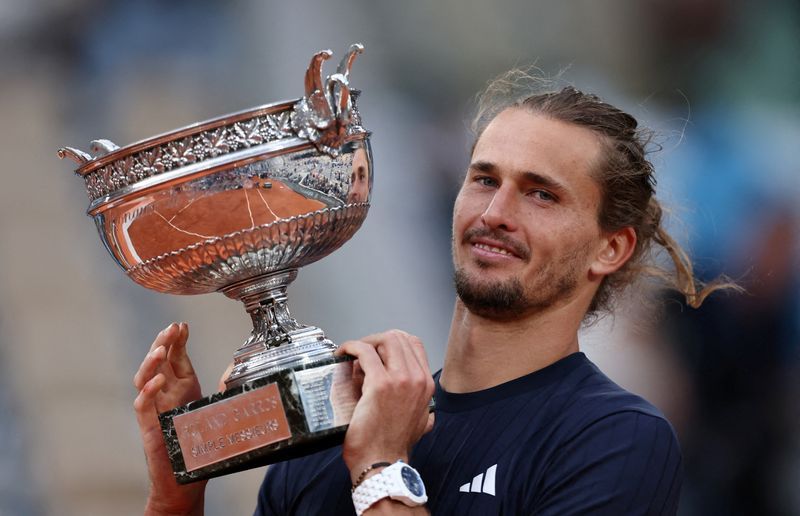
Alexander Zverev has emerged as the most concrete threat to Djokovic's ambitions, having finally broken his major championship drought at the French Open before reaching the Wimbledon final to establish himself as a legitimate contender for New York honours. The German's breakthrough season demonstrates that the generational transition extending beyond Alcaraz and Sinner, with multiple capable challengers now capable of producing the elevated performances required on tennis's biggest stages. Zverev's combination of size, power, and technical sophistication makes him a particularly difficult matchup, especially on hard courts where his serve and aggressive baseline game flourish most effectively. His dual achievements across clay and grass this season suggest he carries genuine momentum into the American event.
Alcaraz's extended absence complicates the tournament picture despite his status as defending champion and one of the most dynamically talented players in the sport. Four months represents a substantial layoff at the professional level, and while the Spaniard has demonstrated an uncanny ability to produce his finest tennis when circumstances demand it most, questions necessarily persist about whether his wrist has fully recovered and whether match sharpness can be quickly regained. His capacity to win majors when returning from injury remains unproven, and the uncertainty may advantage Djokovic should their paths cross. However, Alcaraz's proven mental resilience and the experience of having won multiple majors at such a young age means discounting him would represent folly.
Legendary Swiss player Roger Federer weighed into the discussion with an assessment emphasizing that Djokovic remains dangerous whenever appearing in any draw. Speaking to reporters in New York, Federer highlighted the Serbian's demonstrated ability to perform at the highest levels across different surfaces and circumstances throughout his career. That track record of consistency across decades suggests that age alone should not exclude him from serious consideration, particularly in a tournament he has previously won four times. Federer's observations carry particular weight given their historic rivalry and his understanding of the sustained excellence required to remain competitive at this level as a player moves through his late thirties.
Beyond Djokovic and Zverev, the American contingent presents intriguing possibilities for a homegrown breakthrough after more than two decades without a men's champion. Ben Shelton has strengthened his credentials by capturing the Canadian Open at Montreal, though his inability to maintain consistency in Cincinnati immediately afterward raises questions about whether he possesses the sustained focus required across majors. Fellow Americans Frances Tiafoe and Taylor Fritz provide additional hope, with Fritz reaching last year's final and harbouring genuine ambitions of ending the 23-year drought since Andy Roddick's 2003 victory. Shelton's recent momentum following a disappointing Wimbledon exit demonstrates his potential, but Andy Roddick has correctly identified that managing the first week strategically to preserve energy for later rounds represents his key challenge.
The American challenge reflects broader tournament dynamics where multiple players outside the established hierarchy possess genuine semifinal ambitions. Rising talents including Arthur Fils and Rafael Jodar will seek to leverage the weakened favourite's field to advance further than expected, while Felix Auger-Aliassime builds upon last year's semifinal appearance that represented his best major performance. These deeper runs by second-tier competitors reflect tennis's current structure, where injuries and the difficulty of maintaining peak form across five sets have created opportunities for breakthrough performances from unexpected sources. The expanded contender list means that any eventual champion will have navigated a competitive gauntlet rather than facing a clearly designated favourite.
Djokovic's pursuit of the 25th major carries particular resonance for how sporting narratives develop when careers extend into unexpected longevity. Achieving this milestone would represent validation of his decision to continue competing despite age-related physical limitations and the generational challenge posed by younger opponents. Conversely, falling short again would represent another chapter in a compelling story of delayed gratification and persistent ambition. The U.S. Open's hard court surface has historically favoured Djokovic's game, though his preparation for this particular event has been compromised by various factors. Nevertheless, his presence in the draw fundamentally alters the tournament's complexion by introducing a player capable of producing exceptional tennis across any given fortnight, even when circumstances suggest otherwise.

