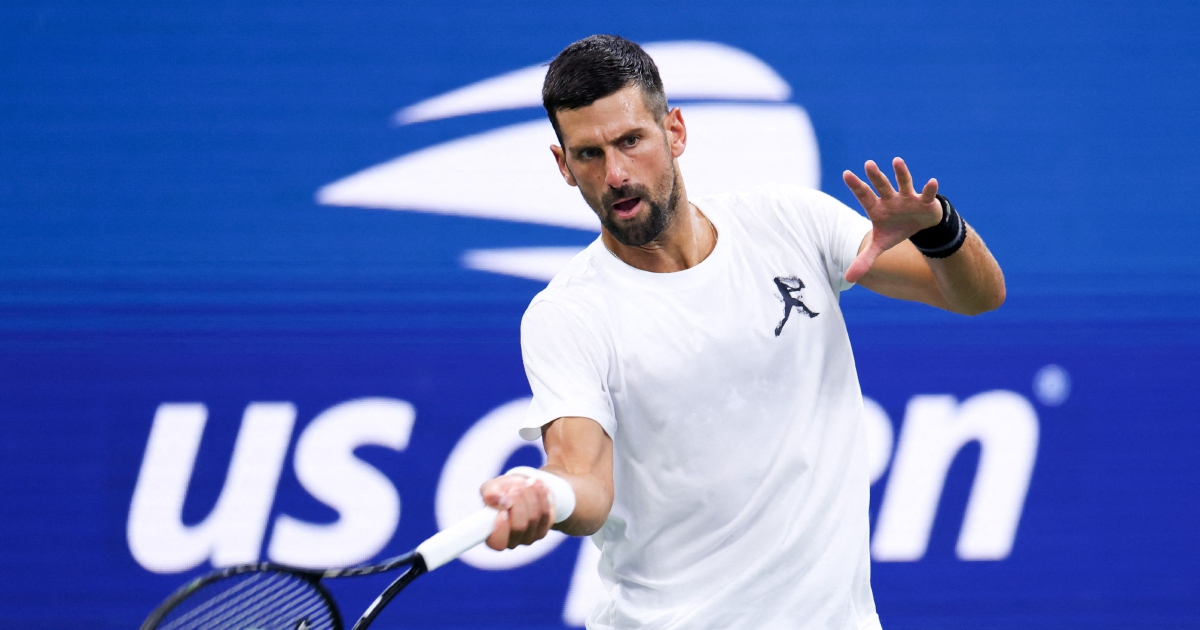
Novak Djokovic arrives at the US Open with one objective dominating his focus: capturing his 25th Grand Slam championship and etching his name permanently atop the sport's greatest achievement list. Since claiming the US Open crown in 2023, the Serbian tennis icon has carried the weight of unfinished business through each tournament, trailing only Margaret Court's record 24 major titles by a single victory. That narrow margin has become both motivation and pressure as the world's elite converge in New York for the year's final Grand Slam.
The significance of what Djokovic pursues extends far beyond personal accomplishment. Breaking Court's 52-year-old record would represent a seismic shift in tennis history, definitively crowning him the greatest Grand Slam collector the sport has witnessed. While numerous players have matched or approached various records during the tennis era, the Grand Slam count remains the ultimate barometer of dominance, spanning decades and multiple generations of competition. For Djokovic, who has constructed a career of methodical record-breaking, reaching 25 would validate decades of singular focus and competitive excellence.
Djokovic's preparation for this US Open campaign reflects the meticulous approach that has characterised his entire career. At an age when many champions have already faded from contention, the Belgrade-born athlete continues refining his game and physical conditioning with the same intensity he brought to his early twenties. The American hard courts suit his game style, with their predictable bounce and fast pace playing to his strengths in baseline control and transition play. His history at Flushing Meadows demonstrates consistency, having won the title four times previously, establishing him as a genuine favourite despite the unpredictable nature of Grand Slam competition.
Yet the path to history carries complications that extend beyond court performance. Djokovic has faced repeated obstacles securing entry to the United States, stemming from COVID-19 vaccination requirements that persisted into recent years. These controversies, regardless of one's stance on vaccine policies, have complicated his preparation and availability for American tournaments. Each US Open appearance has carried an element of uncertainty, making his presence at this year's tournament significant simply because it was not guaranteed. The mental resilience required to navigate such external pressures while maintaining championship-level focus distinguishes elite athletes from the merely excellent.
The competitive landscape at this US Open presents both familiar challenges and fresh uncertainties. Younger players including Jannik Sinner, Carlos Alcaraz, and Taylor Fritz have demonstrated increasing competitiveness against the established order, pushing Djokovic to sustain peak performance across seven matches. Unlike his earlier career dominance when he frequently faced predictable opponents in deep runs, contemporary tennis demands consistent excellence against multiple dangerous threats. Each potential adversary possesses weapons and game styles that demand total concentration and adaptability.
For Malaysian and Southeast Asian tennis enthusiasts, Djokovic's pursuit holds particular resonance. The region has produced few Grand Slam champions, with most players from developing tennis nations viewing major titles as aspirational rather than achievable. Witnessing how an athlete maintains hunger and competitive edge over two decades provides valuable perspective on the dedication required to reach sport's pinnacle. Djokovic's example transcends tennis, illustrating principles of persistence, physical discipline, and mental toughness applicable across professional domains throughout Asia's emerging economies.
The narrative unfolding around Djokovic's US Open campaign also reflects broader conversations about tennis legacy and historical comparison. Contemporary sports debates increasingly involve weighing achievements across different eras, considering variables like field strength, tournament structure, and medical advances. By surpassing Court's record, Djokovic would stake his claim as undisputed greatest Grand Slam winner, settling debates that have occupied tennis discourse for years. Such clarity regarding historical standing carries significance extending beyond statistics into how future generations evaluate tennis excellence.
Djokovic's mental state approaching the tournament will prove as consequential as physical preparation. The weight of chasing history can either concentrate focus or create destructive pressure. Champions at his level develop psychological frameworks enabling them to compartmentalize external expectations, converting motivation into consistent performance. His recent tournament results provide indication of whether he has successfully managed this psychological dimension or whether the burden of approaching such a significant milestone might prove destabilizing.
The broader tennis community anticipates this US Open with heightened attention precisely because Djokovic's record-breaking pursuit represents conclusion of tennis's most dominant era. Whether he succeeds or falls short, his career has fundamentally reshaped understanding of what sustained excellence in professional tennis requires. Younger players entering their primes will benchmark their achievements against Djokovic's standards, making his influence felt for decades beyond his eventual retirement. The US Open 2024 represents an opportunity to define his final chapter in active competition.

