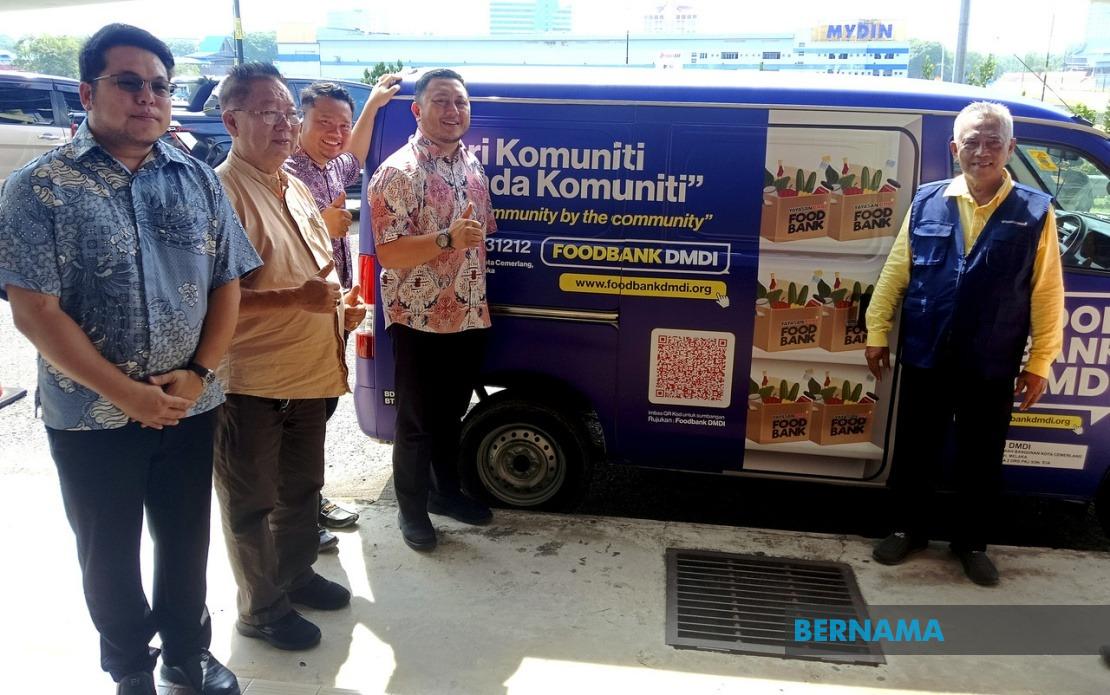
The Dunia Melayu Dunia Islam (DMDI) Foundation has launched an ambitious food assistance programme aimed at supporting 2,000 economically vulnerable families across Melaka through a structured twelve-month distribution schedule. The initiative, known as Food Bank DMDI, represents a targeted welfare response to household food insecurity in the state, with operations centred at the DMDI Food Bank Centre in Kota Cemerlang, Ayer Keroh. According to Datuk Mohd Ridhwan Mohd Ali, who chairs the foundation, the rollout will proceed methodically in waves, commencing with an initial cohort of 200 households before progressively widening coverage to reach the full 2,000-family target.
The programme's design prioritises populations experiencing acute economic vulnerability. Intended beneficiaries encompass households below the poverty line, individuals classified within asnaf groups under Islamic welfare frameworks, persons with disabilities navigating restricted employment opportunities, single-mother households managing childcare and income responsibilities simultaneously, and families whose earnings remain irregular or insufficient. Rather than relying solely on administrative nomination, the foundation employs a community-based verification process wherein local leaders recommend candidates, followed by formal screening conducted by the Food Bank committee to ensure resources reach those facing genuine hardship.
Each participating family receives a monthly food kit containing essential staple items designed to reduce household grocery expenditure and improve nutritional security across the year-long engagement period. The composition of these kits reflects practical necessities rather than luxury items, addressing the reality that food costs often consume a disproportionate share of low-income household budgets in Malaysia. This direct provision of consumables effectively creates immediate relief from the perpetual budgeting pressure that characterises poverty, allowing families to redirect limited cash resources toward housing, utilities, healthcare, and education.
The foundation's relief operations extend beyond the routine Food Bank programme into disaster response. When communities face catastrophic events—particularly the flood emergencies that periodically devastate Malaysian neighbourhoods—DMDI mobilises ad hoc food distributions calibrated to immediate post-disaster needs. This dual-track approach acknowledges that welfare support must accommodate both chronic poverty and acute emergencies, ensuring the organisation maintains operational capacity for both sustained assistance and rapid humanitarian mobilisation.
Financial support for the initiative came into focus during a public distribution event where Datuk Mohd Ridhwan accepted food supplies valued at RM16,000 from multiple donor organisations. These incoming resources underscore the programme's reliance on voluntary philanthropic contributions rather than government budgetary allocation, positioning DMDI as part of Malaysia's broader civil society welfare ecosystem. The foundation recognises that individual donation amounts need not be substantial to accumulate meaningful impact; consequently, the organisation has established entry-level giving mechanisms requiring contributions as modest as RM1, channelled through the digital portal www.foodbankdmdi.org.
To encourage donor participation and expand financial capacity, DMDI is pursuing approval from the Inland Revenue Board (LHDN) to furnish tax exemption receipts for contributors. This regulatory positioning would convert charitable giving into a tax-efficient mechanism for Malaysian donors, potentially unlocking additional funding from both individual philanthropists and corporate entities seeking documented charitable deductions. The absence of such certification currently represents a potential constraint on fundraising efficiency, as many potential high-value donors require documentary proof of charitable status for accounting and compliance purposes.
The Melaka initiative carries particular salience for Southeast Asian readers navigating the region's increasing focus on welfare provision and social safety nets. Malaysia's steady urbanisation and structural economic shifts have created pockets of persistent poverty even within developed areas, particularly among populations—such as single mothers and persons with disabilities—whose labour market participation remains constrained. Food bank models, traditionally associated with wealthy Western economies, increasingly appear across middle-income Asian contexts as governments recognise that market mechanisms alone fail to guarantee minimum nutrition access for vulnerable subpopulations.
The phased implementation approach signals realistic operational planning rather than merely aspirational target-setting. Commencing with 200 families allows the foundation to refine logistics, assess community uptake, troubleshoot distribution challenges, and establish sustainable operational procedures before attempting large-scale expansion. This methodical scaling demonstrates administrative maturity—the recognition that premature expansion often creates operational chaos that ultimately damages programme credibility and effectiveness. Subsequent phases can incorporate lessons learned from initial implementation, improving targeting accuracy and distribution efficiency.
DMDI's community-leader-based identification mechanism reflects the Malaysian social reality that informal networks often identify need more accurately than bureaucratic processes. However, this approach simultaneously introduces potential for patronage bias and incomplete coverage, particularly among socially marginalised populations lacking advocacy within community hierarchies. The addition of formal committee screening partially mitigates such risks by introducing a secondary verification layer, though the foundational reliance on community nomination still carries inherent inequities requiring ongoing monitoring and refinement.
The programme's sustainability ultimately hinges on maintaining donor commitment across the twelve-month implementation period. One-off philanthropic gestures frequently wane in momentum as initial enthusiasm dissipates; consequently, DMDI's success depends on cultivating reliable, repeat contribution relationships rather than pursuing sporadic large donations. The relatively low minimum contribution threshold (RM1) represents an attempt to build broad-based donor participation that, cumulatively, generates consistent funding rather than feast-famine cycles of resource availability.
For Malaysian policymakers, the DMDI initiative illustrates how civil society organisations increasingly shoulder welfare responsibilities traditionally assumed primarily by government structures. While such community engagement strengthens social cohesion and leverages distributed resources, it simultaneously highlights gaps in state-provisioned safety nets. The existence of organisations like DMDI responding to nutrition insecurity among 2,000 Melaka families implicitly indicates that existing government assistance programmes—whether through the Ministry of Women, Family and Community Development or targeted poverty reduction initiatives—remain insufficient to comprehensively address food security across vulnerable populations. Strengthening coordination between government welfare frameworks and civil society provision would likely improve overall coverage and reduce beneficiary confusion regarding assistance eligibility and access mechanisms.

