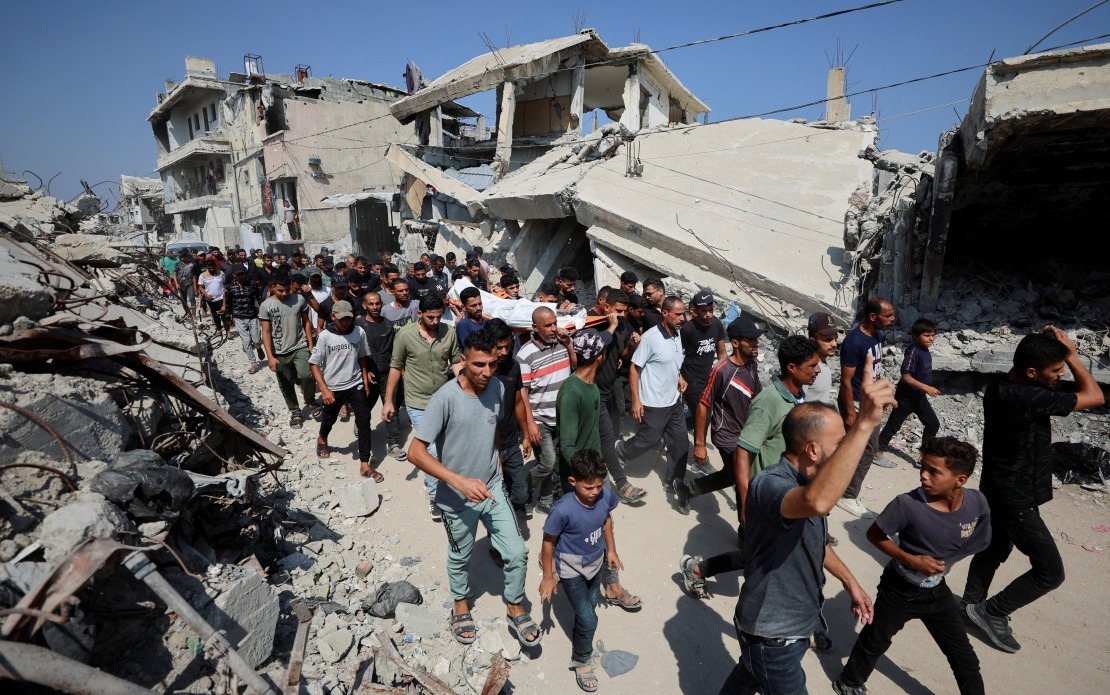
Doctors Without Borders (MSF) has delivered a scathing rebuke of the Israeli military's determination to end all investigative proceedings concerning the deaths of its employees and their family members in Gaza, without initiating any formal criminal inquiries. The international humanitarian organisation made the announcement in Istanbul on Thursday, nearly two years after it first formally requested that the Israeli authorities launch full investigations into the fatal incidents. The decision follows MSF's legal petition to Israel's High Court after the Military Advocate General repeatedly failed to respond to its demands for accountability.
The closure of these cases represents what MSF characterises as a fundamental failure of the Israeli legal framework to address what the organisation argues constitute potential violations of international humanitarian law and war crimes. The group maintains that the military system investigating its own conduct has proved inadequate and fundamentally compromised as a mechanism for achieving genuine justice. This structural inadequacy, MSF argues, extends to the broader patterns of civilian casualties that have characterised the conflict in Gaza since October 2023.
MSF has underscored that it had taken multiple precautions to ensure the safety of its operations in Gaza and to facilitate their recognition by Israeli forces. The organisation states that it had consistently shared the names and specific locations of its personnel with Israeli military authorities, and had ensured that all its vehicles carried clearly visible identification markings. Despite these measures, MSF personnel and their relatives continued to be killed in targeted incidents, suggesting to the organisation what it describes as either deliberate targeting or catastrophic operational negligence on the part of Israeli forces.
One particularly significant incident occurred in November 2023, when an MSF convoy came under attack, resulting in the deaths of two relatives of MSF staff members. Among those killed was Alaa Al Shawa, who held a dual status as both a volunteer contributing his time to support MSF medical operations at Al-Shifa Hospital. This case exemplifies the complexity of the humanitarian crisis, in which the distinction between civilian medical support workers and formal staff members blurs in the context of urgent medical emergencies.
A second incident in February 2024 witnessed an attack on an MSF shelter located in Khan Younis that claimed the lives of the wife and daughter-in-law of an MSF staff member while wounding six additional individuals, the majority of whom were women or children. These incidents form part of a pattern that MSF asserts demonstrates systematic targeting or reckless disregard for the safety of humanitarian workers and their dependents. The accumulation of such incidents over the course of months suggests to MSF a failure at multiple levels of command and operational control within the Israeli military structure.
The humanitarian toll extends far beyond the direct deaths within MSF's own network. Since the onset of military operations in October 2023, fifteen MSF staff members have been killed by Israeli forces operating in Gaza. This figure must be contextualised within the broader catastrophe affecting Gaza's healthcare system: approximately 1,700 health care workers across all organisations and hospitals have been killed during the same period. This represents a systematic dismantling of the territory's medical infrastructure at a time when civilian casualties have created unprecedented demand for emergency medical services.
MSF's contention that the Israeli legal system offers no genuine prospect for accountability represents a damning assessment of institutional capacity and political will. The organisation argues that no internal military review mechanism, regardless of its theoretical independence, can substitute for an investigation conducted by a truly impartial external body with genuine authority to impose consequences. This position reflects international legal standards established through decades of humanitarian law development and precedent, standards that Malaysia and other Southeast Asian nations have committed to upholding through international humanitarian law conventions.
The closure of these cases arrives amid escalating humanitarian devastation in Gaza that, according to the territory's Health Ministry, has claimed the lives of 73,417 Palestinians since October 2023, with an additional 174,360 sustaining injuries of varying severity. Over a 24-hour period documented at the time of MSF's statement, 10 Palestinians were killed and 25 wounded. The Health Ministry also documents what it characterises as violations of ceasefire agreements, reporting that such breaches have resulted in an additional 1,283 Palestinian deaths and 4,248 injuries beyond the principal death toll.
MSF's assertion that military objectives cannot justify the systematic sacrifice of civilian populations invokes core principles of international humanitarian law that distinguish lawful military action from war crimes. The organisation's demand for investigation by an impartial external body reflects the inadequacy of self-policing mechanisms in conflict situations, a principle broadly accepted across the international community. For Malaysia and other nations in the region, the case highlights the importance of international accountability mechanisms and the limitations of relying on belligerents' internal processes to ensure compliance with humanitarian law.
The closure of these investigations without criminal proceedings or external scrutiny contributes to what human rights organisations characterise as systematic impunity for violations against humanitarian workers and civilians. This pattern has implications extending beyond Gaza, potentially affecting the security and operational capacity of humanitarian organisations throughout the Middle East and beyond. The international humanitarian community, which includes Malaysian medical and relief organisations, faces heightened risks when the targeting of clearly identified medical personnel goes uninvestigated and unpunished.

