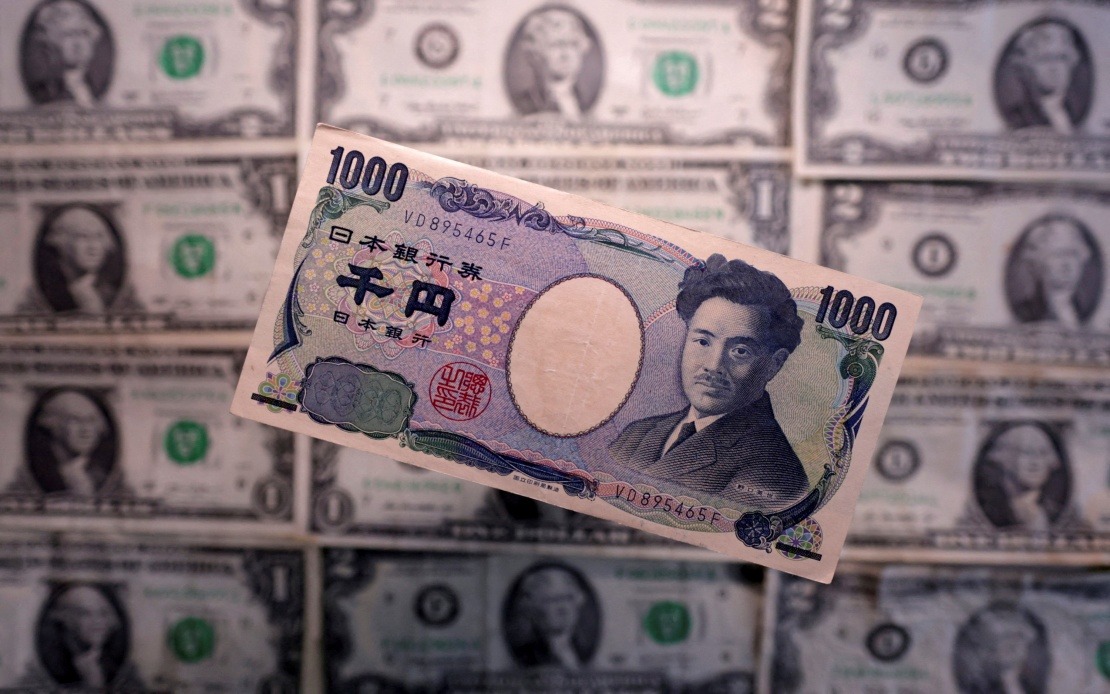
The United States dollar has remained stubbornly resilient near a 39-year peak against the Japanese yen, hovering in the lower 163 range on Wednesday and demonstrating remarkable staying power even as Tokyo signals its readiness to intervene in currency markets. The currency surged overnight to 163.24 yen, marking its most commanding position since December 1986, a level that underscores the dramatic weakness in Japan's currency relative to its American counterpart despite explicit warnings from Japanese authorities that they stand prepared to take decisive action.
The persistence of dollar strength reflects a complex interplay of geopolitical and monetary factors that appear to overwhelm efforts by Japanese policymakers to arrest the yen's descent. Safe-haven buying, traditionally a cornerstone of dollar demand during periods of international instability, has intensified amid escalating tensions throughout West Asia. The region's volatility has created investor preference for the perceived security of US assets and currency, a dynamic that has historically proved powerful enough to override central bank messaging or official intervention threats.
Crude oil markets have emerged as a critical amplifier of dollar demand, with West Texas Intermediate futures repeatedly testing the $84 per barrel threshold following a declaration by Iran-aligned Houthis based in Yemen that they have established a naval blockade targeting Saudi Arabia. This geopolitical escalation introduces genuine uncertainty about global energy supply chains and has triggered speculative positioning that favours dollar holdings as a hedge against potential energy shocks. For regional economies like Malaysia that depend significantly on stable energy pricing and currency relationships, these developments carry tangible implications for import costs and corporate profitability.
Market participants have simultaneously begun pricing in the possibility that the Federal Reserve may respond to inflationary pressures emanating from elevated crude prices by maintaining or even raising interest rate levels. This anticipation has generated substantial dollar-buying activity in New York trading sessions, as investors position themselves to benefit from potentially higher yields on dollar-denominated assets. The logic is straightforward: if US interest rates remain elevated relative to other major economies, including Japan, the differential return advantage attracts capital inflows and supports currency appreciation.
Maki Sawada, a strategist at Nomura Securities, has offered an assessment that captures prevailing market sentiment regarding the dollar's trajectory. According to Sawada's analysis, the combination of ongoing Middle East tensions and diverging monetary policy paths suggests the dollar will likely sustain levels above the 160 yen threshold in the near term. This forecast reflects confidence that the structural drivers supporting dollar strength remain intact rather than merely temporary disturbances that might quickly reverse.
Japan's equity markets delivered a mixed performance amid these currency and commodity pressures, revealing the multidirectional forces affecting investor sentiment. The Nikkei Stock Average opened with promising momentum, climbing more than two per cent in early dealings as semiconductor-related companies drew support from gains registered by their counterparts in the United States and South Korea. Enthusiasm centred on renewed confidence in future demand for semiconductor capacity, a sector that remains crucial to Japan's manufacturing base and export competitiveness.
However, this initial strength proved unsustainable as the trading day progressed and market participants adjusted positions ahead of earnings announcements from major technology firms, particularly Alphabet Inc., the parent company of Google. The anticipation of corporate results created caution among investors holding substantial technology positions, triggering profit-taking that eroded the morning's gains. Additionally, the persistent upward pressure on crude oil prices weighed on equity valuations more broadly, as market participants recognised that elevated energy costs threaten corporate margins and consumer purchasing power.
The Nikkei 225 ultimately finished marginally lower, declining 116.59 points or 0.18 per cent to close at 66,115.60, a result that masks the internal volatility characterising the session. The Topix index performed somewhat better, advancing 18.18 points or 0.45 per cent to settle at 4,033.13, suggesting that stocks outside the heavyweight technology sector found greater stability. Within the Prime Market's broader composition, nonferrous metals and financial stocks emerged as notable gainers, benefiting from different drivers than the technology-focused indices.
Service sector shares and air transportation companies experienced notably poor performance, a pattern consistent with the headwinds created by geopolitical uncertainty and rising energy expenses. Air transportation firms face particular vulnerability to elevated fuel costs, while service-oriented businesses often struggle when broader economic uncertainty dampens consumer spending and business investment. The divergence between sectoral performance reflects how the intersection of currency weakness, energy price shocks, and Middle East tensions creates winners and losers across different segments of the Japanese economy.
For Southeast Asian observers, these developments carry significance beyond academic interest in currency markets and commodity prices. The yen's weakness affects regional trade competitiveness, as a weaker yen makes Japanese exports more attractive globally while simultaneously making imports from other countries, including regional suppliers, more expensive in yen terms. This dynamic influences Japanese manufacturing investment decisions and supply chain strategies across Southeast Asia. Furthermore, if the dollar's strength persists and interest rate differentials continue favouring US assets, capital flows that might otherwise support regional emerging market bonds and equities may instead concentrate in dollar-denominated investments.
Japan's apparent inability or unwillingness to forcefully intervene despite public warnings raises questions about the limits of unilateral currency management in contemporary markets characterised by enormous daily transaction volumes and rapid capital movement. The fact that dollar strength persists despite clear signals of potential intervention suggests market participants either doubt Tokyo's commitment to action or believe that any intervention would prove temporary and insufficient to fundamentally alter the dollar's trajectory given the strength of underlying drivers.

