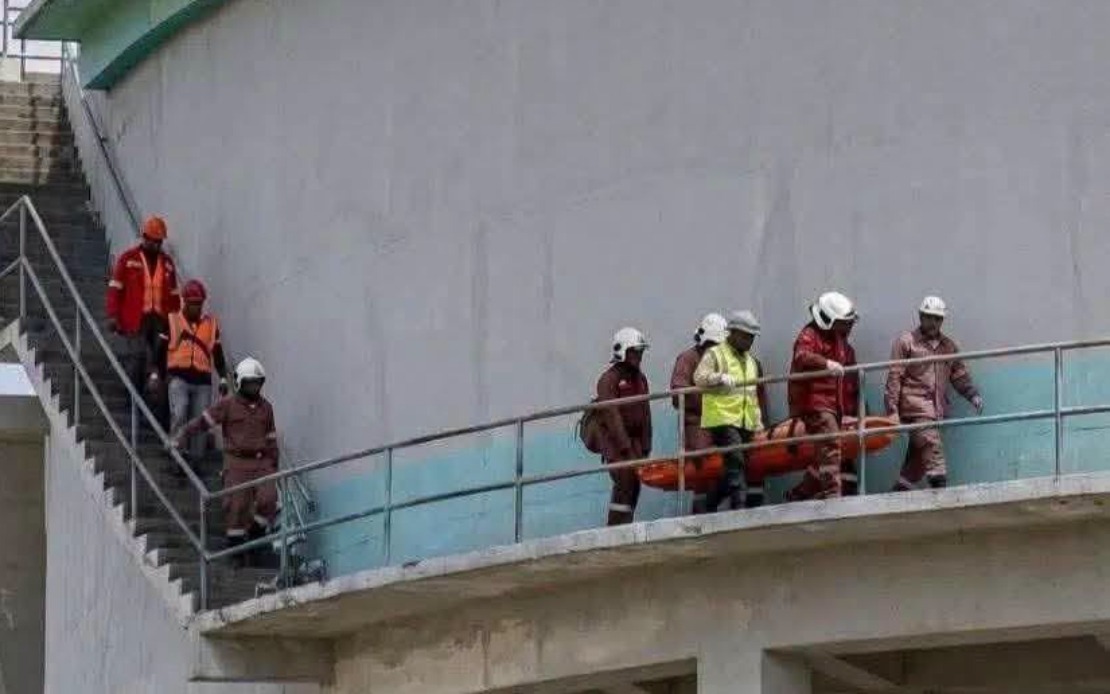
The Department of Occupational Safety and Health (DOSH) has launched a formal investigation into a workplace fatality that claimed the life of an industrial trainee during water tank cleaning operations at Menara Saujana Perdana 1 in Sungai Buloh, Selangor, on June 16. The incident, which underscores the persistent hazards associated with confined space work in Malaysia, has triggered a comprehensive review of safety protocols at the site and the broader practices governing such high-risk operations across the nation's industrial and commercial sectors.
DOSH director-general Hazlina Yon confirmed that field investigators from the Selangor office have already visited the location and established a restricted perimeter to preserve evidence. The agency has prohibited any unauthorised disturbance or removal of materials from the accident scene, a standard procedural step that allows technical experts to reconstruct the sequence of events and identify contributing factors. Preliminary fact-finding efforts are now underway, with investigators conducting detailed interviews with witnesses and other individuals present or engaged in the work at the time of the incident.
Should the inquiry uncover breaches in Malaysia's occupational safety framework, regulatory enforcement measures will be deployed proportionately. The investigation operates under Sections 15, 17 and 18 of the Occupational Safety and Health Act 1994, which establish comprehensive legal obligations on employers, self-employed contractors and other responsible parties. These legislative provisions mandate that all stakeholders maintain working environments and systems of work that safeguard the physical and mental wellbeing of employees and other affected persons throughout their involvement in workplace activities.
Confined space operations represent one of the most hazardous categories of work in Malaysia's industrial landscape, yet they remain insufficiently regulated in many sectors. Water tank cleaning, in particular, poses multiple overlapping dangers including oxygen depletion, toxic gas accumulation, structural collapse, and hazardous material exposure. The tragic incident at Menara Saujana Perdana 1 represents a stark reminder that such work demands rigorous adherence to established safety protocols before, during and after operations commence. Hazlina emphasised that organisations must obtain mandatory confined space entry permits and deploy appropriate engineering controls and safety equipment before authorising workers to access such environments.
Risk assessment and hazard identification constitute the foundational pillars upon which effective workplace safety programmes rest. Employers bear the primary legal responsibility for conducting thorough evaluations of every task undertaken at their sites, with particular scrutiny applied to work classified as high-risk. This assessment must occur before operations commence and should involve consultation with employees, safety representatives and technical specialists familiar with the specific activities in question. The assessment outcomes should then dictate the precise control measures, personal protective equipment, monitoring systems and emergency response protocols required for that particular work activity.
The training and supervision of industrial trainees and newly recruited workers emerges as a critical vulnerability within Malaysia's occupational safety framework. Hazlina stressed that employers must ensure all personnel, particularly those at early stages of their careers, receive comprehensive safety education, task-specific instruction and detailed briefings on the specific risks inherent to their assigned work. This training must be reinforced through competent on-site supervision from individuals possessing both technical knowledge of the work and formal qualifications in occupational safety. Many fatal incidents in confined spaces globally occur when experienced workers unconsciously normalise unsafe practices, and when junior employees lack sufficient knowledge or confidence to question questionable methodology.
The incident highlights how contractor and vendor management often represents a governance weakness in larger organisations. Where external parties undertake work at company premises, the host organisation retains concurrent legal responsibility for ensuring those contractors maintain compliance with Malaysian occupational safety standards. This principle extends to ensuring contractors possess appropriate experience, competence, insurance coverage and safety management systems before commencing work. The legal relationship between principal and contractor does not diminish the principal's accountability for preventing harm to contractor employees.
For Malaysian enterprises operating in water treatment, facility maintenance, commercial cleaning and similar sectors, this investigation carries immediate operational implications. Organisations should promptly audit their confined space procedures, training records, permit systems and supervision arrangements. Many companies that conduct such work informally—without documented procedures or requisite permits—face substantial legal exposure should a fatality or serious injury occur. The financial consequences extend beyond regulatory penalties to encompass civil liability, reputational damage and potential criminal charges against company directors under the DOSH Act and other legislation.
The investigation's conclusions will likely inform DOSH's future enforcement priorities and may trigger sector-wide compliance campaigns targeting water treatment facilities, food processing plants and manufacturing operations that routinely conduct tank cleaning and similar confined space work. Malaysia's occupational fatality rate, whilst improving, remains elevated relative to developed nations, and concentrated enforcement in high-risk activities represents an evidence-based strategy for prevention. The Sungai Buloh incident serves as a demonstration of how even routine maintenance work conducted at substantial commercial facilities can result in tragedy when systematic safety failures accumulate.
Hazlina's public statement, whilst formally routine in character, carries implicit warning for business operators. The DOSH director-general has signalled that enforcement will follow if violations are established, suggesting investigators are already evaluating whether the employer maintained adequate permit systems, conducted sufficient risk assessments, provided appropriate training and deployed competent supervision. Organisations with similar operations should regard this investigation as a catalyst to review their own safety culture and systems before regulatory attention turns toward their own facilities.
International experience demonstrates that fatal confined space incidents typically result from preventable human and organisational failures rather than inevitable accidents. Malaysia possesses adequate legislative frameworks to prevent such tragedies, yet implementation gaps persist in small to medium enterprises and in informal sectors where safety consciousness remains underdeveloped. The investigation at Menara Saujana Perdana 1 represents an opportunity for the safety regulator to reinforce these messages through transparent communication of findings and enforcement outcomes once inquiries conclude.