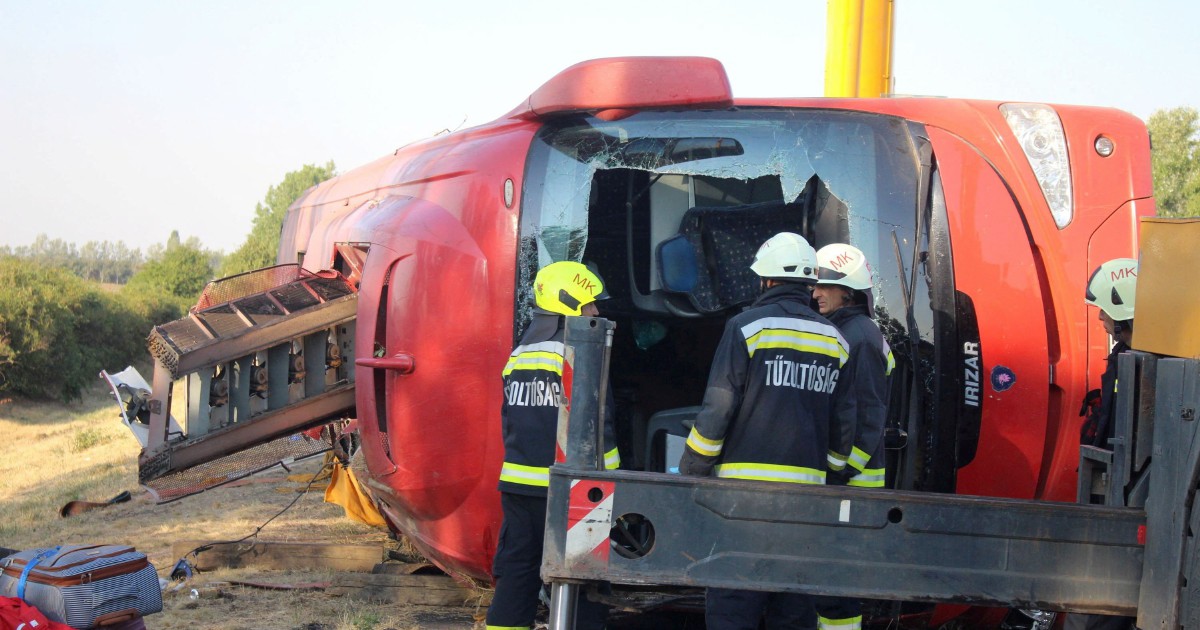
A passenger bus from Poland flipped over on a major Hungarian highway in the early morning hours of Sunday, resulting in one of the region's deadliest transport accidents in recent times. The incident claimed 12 lives and left at least 10 others nursing serious injuries, according to statements from Hungarian Prime Minister Peter Magyar and other officials monitoring the emergency response.
The exact circumstances surrounding the rollover remain under investigation by Hungarian authorities, though such accidents on European motorways typically stem from a combination of factors including excessive speed, fatigue among drivers, poor weather conditions, or mechanical failures. The early morning timing of the incident—when visibility is reduced and drivers are most prone to fatigue—may have played a contributing role in the disaster.
Hungary's motorway network, while generally modern and well-maintained, experiences regular heavy traffic from international coach services connecting Central Europe with destinations further south and west. Polish coach operators frequently run long-distance services through Hungary as a transit route to Austria, Germany, and beyond, making such accidents a recurring concern for both countries' transport safety authorities.
The scale of fatalities in this incident underscores the particular vulnerability of coach passengers in rollover scenarios. Unlike personal vehicles, buses concentrate large numbers of people in a single vehicle, meaning mechanical failure or driver error affects all occupants simultaneously. The seriousness of injuries among the 10 survivors suggests the force of impact was considerable, raising questions about whether modern safety features such as electronic stability control or advanced braking systems were functional at the time of the accident.
For Malaysia, this tragedy serves as a sobering reminder of transport safety challenges that transcend borders. Malaysian tour operators who arrange coach travel through Europe for pilgrimages, cultural tours, and commercial trips rely heavily on international bus networks, particularly for connections through Central European hubs. While European safety standards are generally robust, accidents of this magnitude demonstrate that no transport corridor is entirely risk-free.
The incident will inevitably trigger reviews of safety protocols among both Hungarian authorities and the international bus industry. Prime Minister Magyar's immediate acknowledgment of the disaster and involvement of officials suggests the Hungarian government views this as a priority matter requiring swift investigation and potential regulatory responses. Such scrutiny often leads to enhanced driver training requirements, stricter vehicle inspection schedules, and improved monitoring of fatigue among long-distance operators.
For the Polish bus industry specifically, this accident represents a significant blow. Polish coach operators have built a competitive reputation across Europe for affordable long-distance services, capturing substantial market share from established competitors. A major fatal accident inevitably raises questions about operational standards and may prompt customers to reconsider their choice of travel provider, potentially affecting the broader Polish transport sector's international reputation.
The medical response capability in the region surrounding the crash location becomes critical in incidents of this scale. The serious injuries sustained by 10 survivors suggest they required emergency transport to major trauma centres equipped for managing multiple casualty incidents. Hungary's healthcare infrastructure in major urban centres is generally adequate for such emergencies, though the challenge of coordinating care for this many serious injuries simultaneously tests the capacity of any regional health system.
Investigators will likely examine vehicle maintenance records, driver qualifications and rest hours, road conditions at the time, and whether the bus was operating within legal weight limits. European Union transport regulations establish detailed requirements for driver working hours and mandatory rest periods, designed specifically to prevent fatigue-related accidents. Determining whether these standards were violated will form a central component of the investigation.
This tragedy highlights broader concerns about safety in European coach transport, an industry that transports tens of millions of passengers annually across the continent. While overall safety records remain strong relative to passenger volumes, high-profile accidents create pressure for continuous improvement in standards, technology, and enforcement mechanisms. For Malaysian travellers and operators utilising European coach services, the incident reinforces the importance of selecting established operators with strong safety records and comprehensive insurance coverage.
The psychological impact on surviving passengers should not be underestimated. Survivors of transport accidents often experience lasting trauma, and many may face challenging rehabilitation periods. The families of the 12 deceased face the additional burden of repatriation arrangements and cross-border legal procedures, complications that are particularly acute when accidents involve international transport.
As investigations proceed, the incident will be closely monitored by transport regulators across Europe and internationally. Any findings regarding systemic safety failures could prompt wider industry changes affecting coach operators worldwide, including those with connections to Malaysian travel and tourism sectors. The outcome of this accident investigation may influence insurance premiums, safety requirements, and operational practices across the entire European coach industry for years to come.

