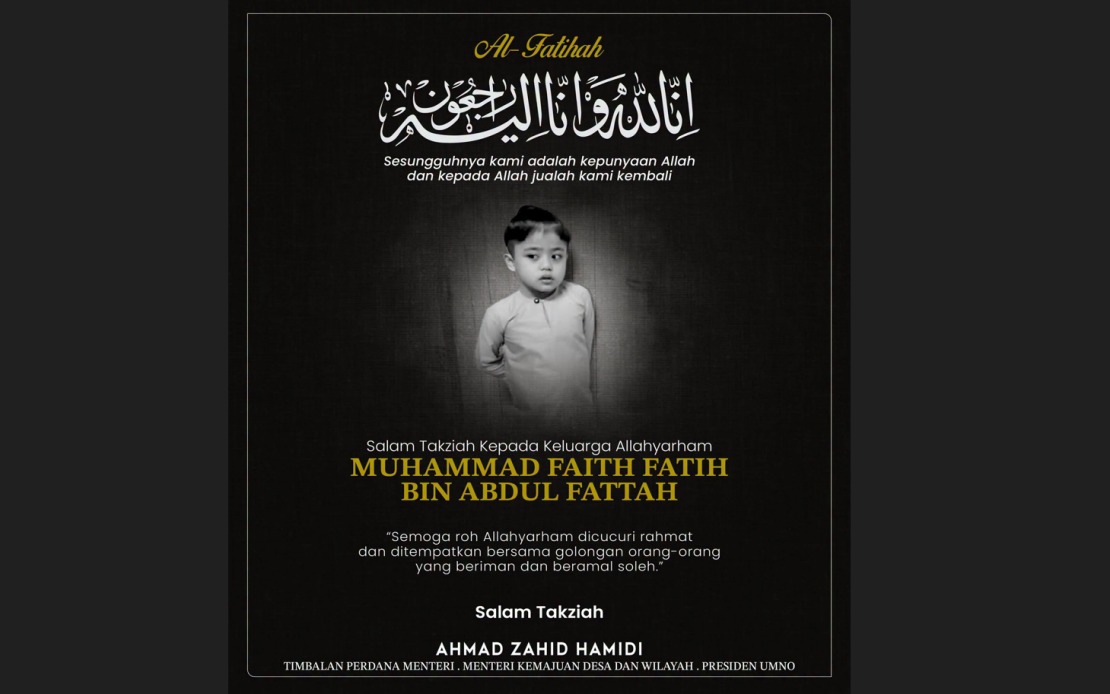
Deputy Prime Minister Datuk Seri Dr Ahmad Zahid Hamidi has conveyed his sympathies to the bereaved family of Muhammad Faith Fatih Abdullah Fattah, a six-year-old child with autism, whose body was discovered in an oil palm plantation area spanning Kampung Baru near Sungai Sumun in the Hutan Melintang district of Perak. The tragic discovery occurred during evening hours as search and rescue personnel combed through the plantation terrain following an urgent missing person report.
Ahmad Zahid, who serves as Member of Parliament for Bagan Datuk, shared his condolences through a Facebook announcement, characterising the incident as particularly distressing given the child's young age and special needs status. His statement reflected the profound nature of the loss, acknowledging the unique vulnerability of children with autism and the intensified grief that accompanies such circumstances. The Deputy Prime Minister's public expression of sympathy underscores the heightened attention these cases receive within Malaysian political and social discourse.
The DPM offered prayers for the family's spiritual fortitude during their period of mourning. He called upon the broader community to recite Al-Fatihah, the opening chapter of the Quran, as a collective gesture of remembrance and respect for the deceased child. This invocation represents both a personal expression of faith and an attempt to galvanise community solidarity around a grieving family facing an incomprehensible loss.
According to police accounts, the child went missing from his residence on June 30, with authorities receiving notification of his disappearance at approximately 4.54 pm. Bagan Datuk police chief Supt Mohammad Ali Mohd Jali reported that the boy was last observed in his home's living room before vanishing under circumstances requiring immediate investigation. The gap between the initial disappearance and discovery spanned several hours, during which worried family members and emergency responders mounted intensive search efforts across the surrounding area.
The body was located within a drainage channel situated within the oil palm plantation at 10.08 pm, marking the conclusion of the search operation but the beginning of investigative and grieving processes. The specific location of discovery—a drain within an agricultural estate—raises questions about accessibility and safety considerations in rural plantation communities, particularly regarding supervision of children with special needs who may face additional challenges in navigating unfamiliar terrain or responding to emergencies.
The circumstances surrounding the child's presence in the plantation area and subsequent death remain subject to police investigation. Such incidents in Malaysia's rural plantation regions periodically highlight the intersection of agricultural development, community safety, and child welfare considerations. The Perak state location places this tragedy within one of Malaysia's major palm oil producing regions, where vast plantation estates create distinctive geographical and safety challenges distinct from urban environments.
Cases involving the deaths of children with autism spectrum disorder frequently receive heightened public and institutional attention, reflecting evolving societal recognition of the vulnerability and specific care requirements of neurodivergent children. This incident serves as a poignant reminder of the increased risks faced by children with autism in unsupervised or inadequately supervised situations, particularly in environments featuring natural hazards such as water bodies or uneven terrain.
The Deputy Prime Minister's intervention through public condolences represents standard protocol in Malaysian politics when high-profile tragedies claim young lives, particularly within his parliamentary constituency. Such statements serve multiple functions: offering genuine compassion to affected families, demonstrating leadership responsiveness to community crises, and implicitly acknowledging broader systemic questions regarding child safety and special needs protection in Malaysian society.
For families navigating autism spectrum disorder in Malaysia, this tragedy intersects with broader concerns about community awareness, emergency preparedness, and support structures. The incident may prompt renewed discussions about safety protocols for children with special needs, supervision frameworks in rural areas, and accessibility of emergency services. Parents of autistic children often report heightened anxiety regarding elopement—the tendency of some children with autism to wander or flee—and this case underscores those legitimate concerns, particularly in plantation communities where hazards are dispersed across wide areas.
The response from political leadership, while offering compassion, also highlights the need for comprehensive policy approaches addressing child safety vulnerabilities. Malaysia's autism advocacy community has increasingly emphasised the importance of community awareness, appropriate training for caregivers and emergency personnel, and environmental modifications to reduce accident risks. Incidents such as this typically catalyse discussions about resource allocation toward special needs support infrastructure and public education initiatives.

