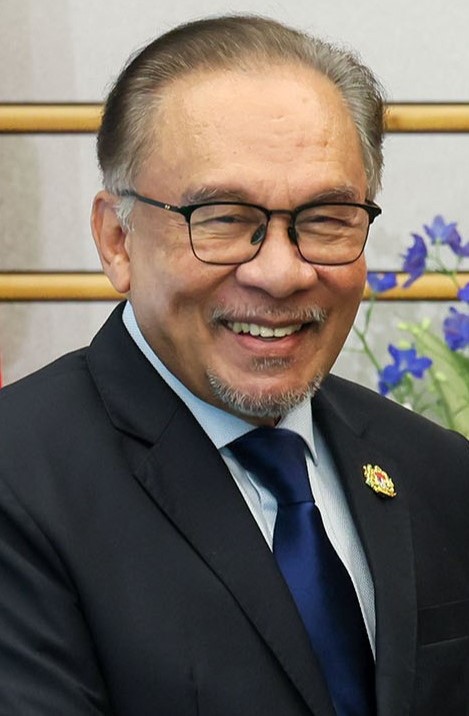
Datuk Seri Dr Adham Baba is positioning himself as the continuity candidate for Pasir Raja in the 16th Johor State Election, having been formally announced as the Barisan Nasional nominee for the seat. The former Health Minister believes his decade-long tenure representing the constituency and the relationships he has cultivated with residents over the years will prove decisive in securing the mandate needed for a return to the state assembly.
Dr Adham's political pedigree in Pasir Raja runs deep. He held the state seat for two consecutive terms between 2008 and 2018, giving him direct experience of the constituency's evolving needs and voter expectations across a full decade. This prior experience forms the cornerstone of his campaign strategy, with the politician confident that voters will recognize the value of returning a representative with institutional knowledge and established connections within the community. His argument rests on the premise that familiarity with local dynamics and existing relationships with constituents constitute a tangible advantage in electoral competition.
Beyond his assembly credentials, Dr Adham has held several national-level positions that have further elevated his public profile and political standing. Most recently, he served as Minister of Health, a portfolio carrying significant responsibility for public welfare during a demanding period for the nation's healthcare system. He also held the position of Minister of Science, Technology and Innovation, reflecting his broader engagement with policy areas affecting economic development and workforce capability. Additionally, Dr Adham won the Tenggara parliamentary seat in both the 14th and 15th General Elections, demonstrating electoral viability at the federal level.
His current role as chief of the Tenggara UMNO division places him at the heart of grassroots party organization within the broader Johor political landscape. This divisional leadership responsibility means Dr Adham has ongoing visibility and engagement with party members and grassroots supporters, relationships that typically translate into campaign infrastructure and voter contact networks. He emphasized during the candidate announcement that his familiarity with the constituency extends across multiple layers, from formal party structures to informal community connections built over years of constituency engagement.
When discussing the broader campaign environment, Dr Adham articulated a strategic view of electoral competition that emphasizes ground-level engagement over other factors. He contended that the outcome of the Johor state polls will largely reflect which political formations can most effectively mobilize their machinery to reach voters in person. According to his analysis, the party able to deploy campaigners most actively and conduct the most extensive voter contact will enjoy the greatest electoral advantage. This perspective highlights the continuing importance of traditional campaign methods and face-to-face engagement even in an era of digital politics.
The focus of his policy agenda if elected centers on two interconnected sectors critical to long-term economic productivity and individual opportunity. Dr Adham has signaled that strengthening higher education infrastructure and capacity building through skills training programmes will be his principal priorities for the Pasir Raja constituency. These policy areas reflect a recognition that economic competitiveness depends on workforce quality and that state-level assemblypersons can meaningfully influence local investments in education and vocational development.
The higher education component of his platform addresses the aspirations of younger voters and families seeking pathways to improved economic mobility. In the Malaysian context, access to quality tertiary education remains unevenly distributed across constituencies, and state representatives often play important advocacy roles in ensuring that their areas receive appropriate allocations of resources for university campuses, polytechnics, and college facilities. Skills training initiatives similarly address the employment transition challenges facing workers displaced by economic restructuring or those entering the workforce without traditional academic qualifications.
Dr Adham's re-entry into state-level electoral politics after a five-year absence represents a notable shift in Johor's political trajectory. His previous departure from the Pasir Raja assembly reflected his pursuit of the Tenggara parliamentary seat in 2018, a decision that proved electorally successful but left the state seat to other representatives. This return suggests either shifting political calculations about where his efforts can best be deployed or evolving circumstances in Johor that make state representation strategically important once again.
For Pasir Raja voters, the contest presents a choice between continuity and change. Dr Adham's campaign emphasizes proven track record and relationship-building, appealing to constituents who value experience and existing connections with their elected representative. His national ministerial experience and parliamentary success offer evidence of political competence and influence in national-level decision-making processes, factors that voters may consider important for securing resources and attention for their constituency.
The announcement of his candidacy also signals Barisan Nasional's confidence in deploying a recognizable political figure with national standing in the state polls. His ministerial experience and parliamentary credentials distinguish him from candidates operating primarily at state or local levels, potentially lending credibility to BN's broader campaign narrative. The coalition appears to be leaning on personalities with proven electoral appeal and administrative experience to counter opposition arguments about governance quality and political performance.
For the broader Southeast Asian context, Malaysia's continuing reliance on traditional forms of political competition and candidate selection deserves attention. Unlike some democratic systems emphasizing ideological positioning or policy platforms, Malaysian electoral politics maintains considerable emphasis on candidate personality, local connections, and demonstrated competence in previous roles. Dr Adham's candidacy exemplifies this pattern, with his campaign message centered on relationship continuity and experience rather than distinctive policy visions.
The Johor state election itself carries weight beyond the individual constituency races. As one of Malaysia's largest and most politically influential states, Johor's electoral outcome shapes the broader national political balance and influences perceptions of momentum favoring either the incumbent government or opposition forces. Dr Adham's particular race therefore operates within this larger strategic context, with implications potentially extending beyond the Pasir Raja state seat itself.