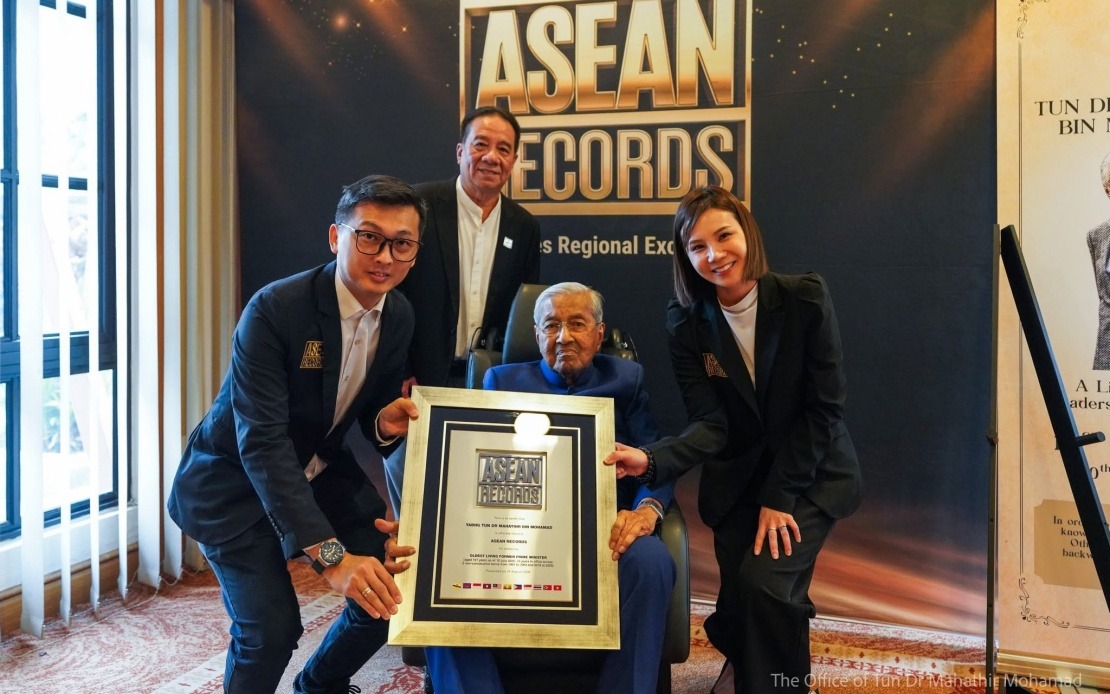
Tun Dr Mahathir Mohamad and his wife Tun Dr Siti Hasmah Mohd Ali have achieved a remarkable historical distinction, becoming the first former head of government and spouse in Southeast Asia and major Asian markets to both live as centenarians. The couple received formal recognition of three unprecedented records at a ceremony held at the Perdana Leadership Foundation in Kuala Lumpur, cementing their place in regional history books.
The 101-year-old former Prime Minister received an ASEAN Records citation designating him as the Oldest Living Former Prime Minister in the region, a distinction underscoring his extended influence on Malaysian and Southeast Asian affairs. His wife, Tun Dr Siti Hasmah, who celebrated her 100th birthday last month, simultaneously earned recognition as the Oldest Living Spouse of a Former Prime Minister, a title reflecting her decades of public service alongside Dr Mahathir's political career. Together, they secured a joint ASIA Records recognition acknowledging their historical status as the first former head of government and spouse to both become living centenarians.
The timing of these recognitions carries symbolic weight, arriving during a month crowded with personal milestones for the couple. Dr Mahathir marked his 101st birthday on July 10, followed days later by Dr Siti Hasmah's entry into her centennial year on July 12. The couple's golden wedding anniversary arrived shortly thereafter on August 5, when they commemorated 70 years of marriage, adding another layer to their remarkable longevity narrative.
Adjudicators from ASEAN and ASIA Records conducted thorough verification procedures to confirm the authenticity of these achievements across the broader regional and Asian context. The records adjudication team determined that no comparable achievement has been publicly documented anywhere in the ASEAN region or among major Asian markets, elevating the couple's accomplishment to genuinely unprecedented status. This exhaustive verification process ensures that the recognition carries weight and credibility within international record-keeping frameworks.
Tan Sri Danny Ooi, chairman of the ASEAN Records Advisory Board, presided over the presentation ceremony, formally handing over the official certificates recognising the couple's distinctions. Accompanying him were chief adjudicators Gillian Ooi and Eldrick Koh, who serve as directors of both ASEAN and ASIA Records, lending institutional authority to the proceedings and underscoring the significance attached to these recognitions at the highest levels of regional record-keeping bodies.
Dr Mahathir shared news of the recognition through a Facebook post, framing the achievement as a meaningful acknowledgement of the couple's remarkable journey together. His willingness to publicise the milestone reflects the broader cultural significance of such longevity achievements within Malaysian society, where respect for elders and celebration of long lives carries deep traditional resonance.
The recognition of Dr Mahathir and Dr Siti Hasmah's longevity accomplishment offers Malaysian and Southeast Asian audiences a window into evolving demographics and health outcomes in the region. The couple's good health and active engagement at such advanced ages challenges stereotypes about aging in developing and middle-income nations, demonstrating that extended lifespans accompanied by relatively robust health remain achievable across the region. Their continued visibility in public and social media discourse serves as a living testament to wellness possibilities available to those with access to quality healthcare and supportive family environments.
Beyond the personal dimension, the couple's achievement holds broader implications for how Southeast Asian societies approach aging populations and the contributions of elderly citizens to national discourse. Dr Mahathir's continued commentary on Malaysian politics and governance, despite his advanced years, exemplifies how former leaders can remain culturally relevant long after leaving office. The records recognition essentially validates this extended period of relevance and influence, acknowledging that meaningful contributions to society need not terminate at conventional retirement ages.
The distinction of being the region's only documented centenarian couple comprising a former head of government and spouse carries weight within Malaysia's narrative about its political leaders and their families. Dr Siti Hasmah's role throughout Dr Mahathir's decades as Prime Minister and his extended political career established her as a significant figure in her own right, and the recognition appropriately acknowledges her parallel journey. The acknowledgment of her individual record as the oldest living spouse of a former Prime Minister ensures that her contributions receive distinct recognition rather than remaining solely derivative of her husband's prominence.
The records themselves—originating from both ASEAN and ASIA Records frameworks—represent relatively recent institutional developments aimed at documenting and validating remarkable achievements across regional and continental contexts. By formalising the couple's accomplishments through these mechanisms, Malaysia and Southeast Asia establish benchmarks against which future aging demographics will be measured, potentially inspiring other nations within the region to similarly document and celebrate the longevity achievements of their own notable citizens.

