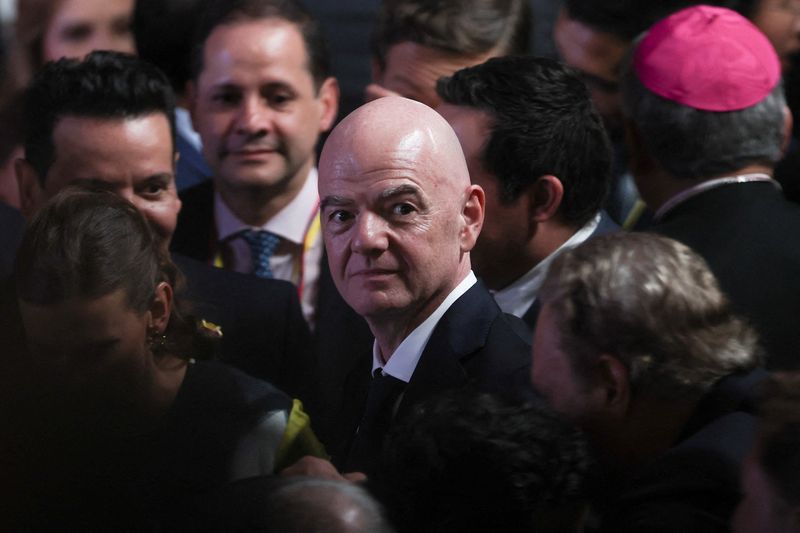
The Royal Dutch Football Association (KNVB) has taken the significant step of formally renouncing its confidence in FIFA President Gianni Infantino, unveiling plans to host a transformative international summit in Amsterdam aimed at fundamentally restructuring the world's soccer governing body. The announcement represents a watershed moment for FIFA governance, with one of the organisation's founding members from 1904 signalling that cosmetic leadership changes alone will not address deeper institutional problems plaguing the body. The KNVB's declaration came as regional football powerhouses across the globe grapple with whether to pursue a formal vote of no confidence in Infantino ahead of his scheduled re-election contest in March 2025.
The timing of the Dutch association's statement carries particular weight given its previous backing of Infantino during his most recent presidential campaign. By explicitly noting that such support "was never unconditional," the KNVB signals that the FIFA president has squandered the goodwill of even traditionally aligned supporters through his governance decisions and controversial policy proposals. This erosion of confidence reflects mounting frustration within the global football community over Infantino's leadership style and the direction he has steered the organisation, particularly following his ill-fated attempt to attract private equity investment into FIFA's marquee events including the FIFA World Cup.
At the heart of the KNVB's grievance lies a structural concern rather than mere personality conflict. The Dutch federation explicitly identifies excessive power concentration around the FIFA presidency as a fundamental flaw requiring systematic correction. The absence of meaningful checks and balances between the president's office and FIFA's administrative apparatus has created governance vulnerabilities that transcend any individual office-holder. This diagnosis suggests that the KNVB views Infantino's tenure as symptomatic of deeper institutional dysfunction that must be addressed through comprehensive restructuring rather than simple leadership succession.
The proposed Amsterdam summit represents an alternative governance model centred on inclusive dialogue rather than top-down decision-making. Rather than allow FIFA's executive apparatus to select a successor president, the KNVB advocates for determining "what kind of FIFA we want" through international consultation before identifying new leadership. This sequencing deliberately inverts the conventional approach, suggesting that institutional values and structural priorities must precede executive recruitment. The summit framework emphasises engagement with all 211 FIFA member associations and continental confederations, positioning governance reform as a genuinely global undertaking rather than a European or developed-world initiative.
The KNVB has articulated three substantive reform pillars that would reshape FIFA's fundamental operating principles. Enhanced governance structures featuring robust separation of powers and institutional checks and balances would replace the current concentration of authority. Simultaneously, human rights protection and environmental sustainability must transition from peripheral considerations to central decision-making criteria, reflecting contemporary expectations for international sporting institutions. Finally, strengthened international cooperation mechanisms would ensure that FIFA operates as a genuinely representative body serving all member associations rather than predominantly wealthy confederations.
Financial redistribution constitutes another critical element of the KNVB's reform agenda. The proposal to reinvest up to 90 percent of distributable revenue directly into soccer development would fundamentally transform FIFA's relationship with its membership base, particularly disadvantaging developing football nations. Infantino has himself acknowledged FIFA's responsibility to narrow financial disparities between wealthy and resource-constrained members, yet the KNVB's specific targets suggest implementation remains inadequate. This reallocation would represent a dramatic reorientation of FIFA's revenue model away from administrative overhead and executive compensation toward grassroots development.
The KNVB's explicit caveat that reform initiatives "should not be a European plan for the rest of the world" reflects sensitivity to accusations of developed-nation dominance within international football governance. By insisting on collaborative development with confederations across all continents, the Dutch federation seeks to position governance restructuring as genuinely multi-lateral rather than imposing predetermined solutions. For Southeast Asian football nations and other developing regions historically marginalised in FIFA decision-making, such commitments toward inclusive consultation carry significant implications for future institutional responsiveness to regional priorities and development needs.
The Dutch initiative gains additional credibility and momentum from parallel developments within the European confederation. UEFA has separately petitioned United States federal courts for authority to obtain testimony and documents from FIFA's Florida-based entities, materials intended to support a planned criminal complaint against Infantino before Swiss authorities. While the KNVB's governance reform campaign occupies a distinct institutional sphere, the simultaneous emergence of legal investigations and governance challenges suggests mounting pressure on Infantino's tenure from multiple directions simultaneously.
Infantino's scheduled re-election in March 2025 now appears unlikely to proceed as a routine endorsement of the incumbent. The KNVB's statement, combined with discussions among other regional powerhouses regarding no-confidence votes, indicates that the FIFA presidency has become genuinely contested territory. Even if Infantino survives the upcoming election cycle, the articulation of clear governance reform demands establishes parameters against which his continued tenure will be evaluated by the global football community. For Malaysian football stakeholders and Southeast Asian confederation members, this institutional turbulence at FIFA's highest levels carries direct implications for resource allocation, development priorities, and voice within world soccer governance structures.
The KNVB's proposal essentially offers FIFA a choice between proactive institutional transformation and reactive organisational crisis. By framing comprehensive governance reform as desirable even for transitions in leadership, the Dutch federation positions institutional renewal as separate from Infantino's individual fate. This approach potentially provides diplomatic cover for any transition while establishing substantive standards ensuring that successor leadership inherits not merely executive authority but responsibility for implementing systematic institutional change. Whether FIFA's membership proves receptive to such structural transformation or opts for incremental adjustments through conventional leadership succession remains unclear, but the terms of debate have been substantially reframed by the KNVB's intervention.

