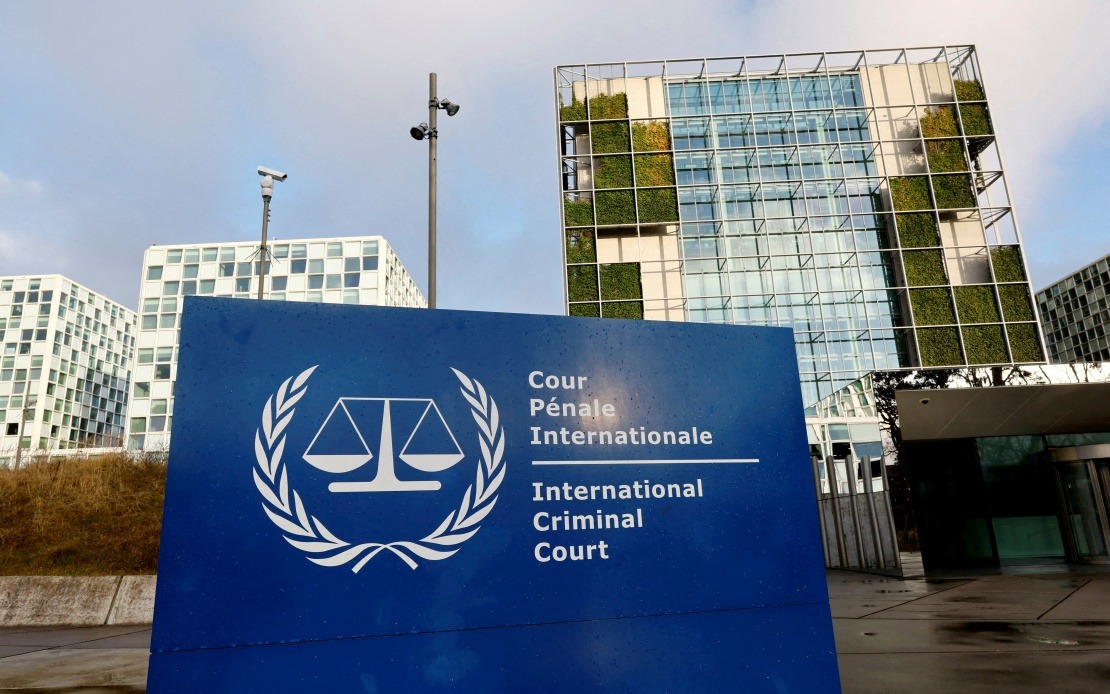
Legal academics in the Netherlands have issued a stark warning about Washington's escalating confrontation with the International Criminal Court, characterising the US campaign as a fundamental threat to the global legal order and the principle that nations should be governed by law rather than military or economic dominance. The criticism comes as American authorities intensify their efforts to contain what they view as an illegitimate threat to US sovereignty, setting up a collision between one of the world's superpowers and the only permanent international court designed to prosecute mass atrocities.
On July 13, the US Department of State announced a comprehensive initiative to counter what it termed the ICC's threat to American interests. According to Washington's position, the Hague-based institution has arrogated to itself an unjustifiable authority to investigate, prosecute, and potentially imprison US military personnel and government officials operating in pursuit of national policy. This framing treats the ICC as an overreaching tribunal that has exceeded its mandate, a narrative that shapes how American policymakers justify their increasingly aggressive stance toward the court.
Alette Smeulers, professor of international crimes at the University of Groningen, articulated the core concern among European legal specialists during a recent interview. If the United States successfully dismantles multilateral institutions like the ICC, she warned, the international system would devolve into a hierarchy of power rather than a framework of law. Such a transformation would represent a catastrophic reversal of the principles that emerged from the post-World War II international order, which explicitly sought to constrain the ability of powerful states to act unilaterally without accountability.
The roots of this conflict run deeper than recent months. Last December, the United States demonstrated its willingness to weaponise economic sanctions against ICC personnel, imposing penalties on two judges whom Washington accused of pursuing politically motivated investigations targeting Israel. This earlier action signalled that the Trump administration—and potentially its successors—regard the court as a geopolitical liability rather than a legitimate judicial body worthy of cooperation or restraint.
Smeulers emphasised that the American critique fundamentally mischaracterises the ICC's actual scope and function. The court, she explained, is severely constrained by its own legal framework. It can prosecute only the gravest offences—genocide, crimes against humanity, war crimes, and aggression—and only when those crimes occur within territories of states that are parties to the Rome Statute or involve nationals of member states. Far from representing an unchecked power, the ICC operates within narrow jurisdictional boundaries that reflect careful negotiation among its constituent nations.
Kyra Wigard, an assistant professor of law at Utrecht University, highlighted the particular absurdity of sanctioning ICC judges for performing their judicial functions. Historically, sanctions have been reserved for terrorists, rogue regimes, or belligerent powers, not for jurists engaged in legitimate legal proceedings. By treating judicial independence as a hostile act meriting economic punishment, Wigard argued, the United States sets a dangerous precedent that could encourage other states to threaten judges and prosecutors whenever they dislike particular decisions.
The implications for the ICC extend beyond institutional survival to encompass the fundamental viability of international justice mechanisms. Smeulers cautioned that the American campaign could have cascading effects on both the court's operational capacity and the broader architecture of global legal institutions. Washington has explicitly signalled its intention to pressure other nations to withdraw from the Rome Statute, potentially triggering a domino effect that could hollow out the court's membership and legitimacy. Should major economies follow the US lead, the ICC could be reduced to a marginal institution with limited reach and credibility.
For Southeast Asian observers, this struggle carries particular significance. Several nations in the region, including Cambodia, the Philippines, and others, are either ICC members or have engaged with the court's investigations. Any weakening of the institution through American pressure could fundamentally alter how regional powers approach questions of accountability for mass atrocities, potentially emboldening authoritarian practices across Asia by demonstrating that international law is negotiable when powerful interests demand it.
The broader philosophical dispute underlying this conflict concerns whether international law represents genuine governance or merely serves as a facade for power politics. The American position implicitly holds that national interest supersedes international legal obligations when the two conflict. The European critique, by contrast, insists that the legitimacy of the international system depends on applying law equally to all states, regardless of their military or economic capabilities. That fundamental disagreement cannot be easily bridged through compromise.
Dutch scholars warn that allowing the United States to successfully dismantle the ICC without serious consequences would reverberate far beyond the court itself. It would signal that international institutions exist only insofar as they align with great power preferences, and that when smaller states attempt to hold larger ones accountable through lawful mechanisms, those larger powers possess the tools to destroy the very institutions that enabled such accountability. This outcome would reshape international relations in ways that fundamentally disadvantage nations lacking military or economic superpower status.
The stakes in this confrontation thus transcend any single institution or set of legal procedures. What hangs in balance is the viability of a rules-based international order in which even the most powerful nations operate within agreed constraints. The Dutch criticism, coming from a nation that helped establish the modern framework of international law, represents not merely academic objection but a fundamental warning about where American policy is pointing the world.

