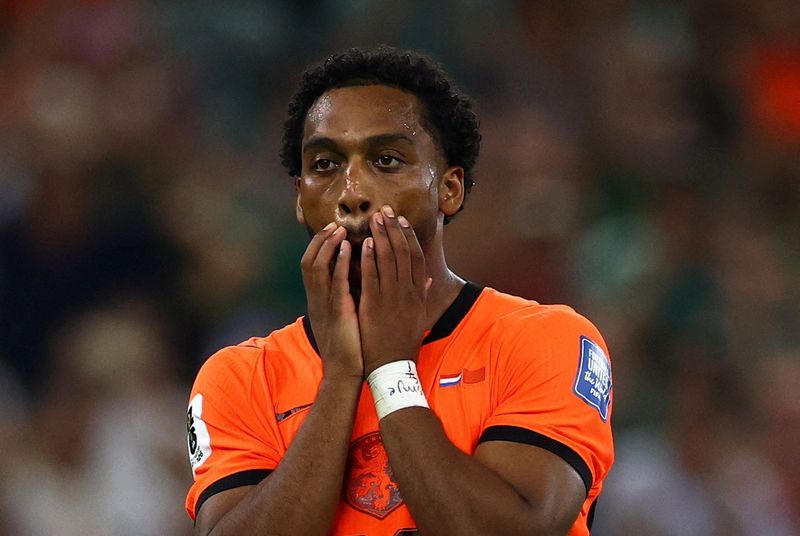
The Netherlands football association has condemned a wave of racist abuse directed at its players following Monday's penalty shootout defeat to Morocco in the World Cup last-32 clash held in Monterrey. Justin Kluivert, Quinten Timber and Crysencio Summerville, who all failed to convert their spot-kicks during the decisive shoot-out, became targets of discriminatory and hateful comments across social media platforms after Morocco prevailed 3-2 from the penalty mark. The match itself had ended level at 1-1 after extra time, setting up the dramatic finale that ultimately ended Dutch hopes in the tournament.
The KNVB's response to the offensive material was swift and unequivocal, with officials describing the treatment of their players as "appalling." Rather than allowing such behaviour to pass unchallenged, the Dutch football governing body announced its intention to escalate the matter through formal channels. The association indicated it would file a report with Meld Online Discriminatie, a dedicated platform designed specifically to combat discriminatory content and hate speech on the internet in the Netherlands.
Once a complaint is formally submitted to Meld Online Discriminatie, the organisation's legal team conducts a thorough assessment of the reported material to establish whether it meets the threshold for a criminal offence. Should the legal review conclude that the content violates applicable laws protecting individuals from hate speech, the case can be forwarded to the Public Prosecution Service. This escalation potentially triggers a criminal investigation by relevant authorities, which may ultimately lead to prosecutions of those responsible for posting the abusive content.
This latest incident represents a troubling continuation of a pattern that has become increasingly visible at major international football tournaments. The targeting of players following penalty shoot-outs, particularly when players from ethnic minority backgrounds are involved, has become a recurring phenomenon in recent years. The visibility of such abuse on social media platforms has made it impossible to ignore, forcing football associations and governing bodies to take public stances against racist behaviour within their sport.
The most high-profile parallel to the current situation occurred during the 2021 European Championship final between England and Italy. Three England players—Marcus Rashford, Bukayo Saka and Jadon Sancho—all missed penalties as the team fell short in a closely contested shootout. The racist messages they subsequently received on social media sparked significant public outrage and prompted a determined police response. British authorities launched a comprehensive enforcement operation targeting online hate speech, resulting in multiple arrests over the following weeks. The legal consequences for offenders were substantial: two individuals received prison sentences, while another received a suspended sentence, signalling that courts were taking these matters seriously.
The comparison between the England experience and the current Dutch situation is instructive for understanding how different jurisdictions are beginning to treat online racist abuse associated with sports events. Both cases demonstrate that major football organisations are now willing to pursue formal legal action rather than simply issuing statements. This represents a significant shift from earlier eras when such abuse was sometimes treated as an unfortunate but inevitable aspect of competitive sports.
The KNVB's message about the broader implications of discriminatory behaviour within football extends beyond the immediate concern for protecting individual players. The association articulated a fundamental principle: that football's greatest strength lies in its capacity to unite people from diverse backgrounds and cultures. Discrimination, by its nature, works directly against this unifying purpose. The statement effectively argues that racist abuse is not merely a matter of individual player protection, but a threat to the very values that make football globally beloved and relevant.
The tournament context adds particular significance to this incident. The 2022 World Cup in Qatar had already generated considerable debate around issues of inclusion, diversity and the treatment of marginalised communities. The emergence of racist abuse directed at players competing in the tournament extends these conversations into the realm of fan conduct and online behaviour. It raises questions about responsibility—not just for individuals posting offensive content, but for social media platforms themselves in moderating such material and for football's governing bodies in establishing clear standards.
For Malaysian and Southeast Asian football fans, these developments carry relevant lessons about the international sport's evolving standards on discrimination. As the region develops its own football culture and participates increasingly in continental and global competitions, questions about how to protect players and promote inclusive spaces around football become more pressing. The experience of established European football associations in confronting online racism provides important precedent and methodology that could inform regional approaches.
The involvement of Meld Online Discriminatie in the Dutch case also illustrates how specialised reporting mechanisms for online hate speech are becoming embedded within national legal frameworks across Europe. These structures represent an institutional recognition that online discrimination requires dedicated investigative and prosecutorial resources. The success or failure of such approaches in the Netherlands and elsewhere will likely influence how other football associations, both within Europe and internationally, develop their own responses to similar incidents.

