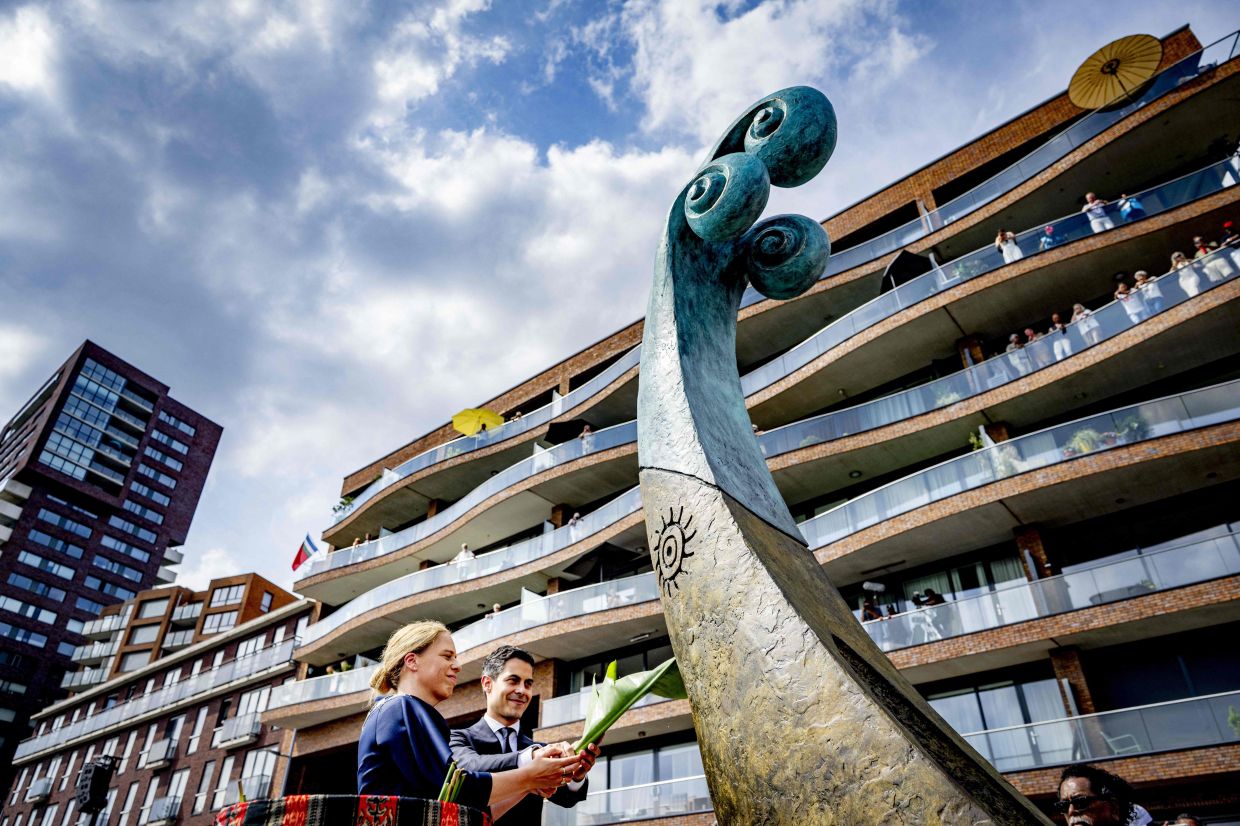
Dutch Prime Minister Rob Jetten delivered a formal state apology on Sunday to members of the Moluccan diaspora, recognizing what he termed an act of historical justice for a community whose suffering has defined Franco-Dutch relations for over seven decades. Speaking at the unveiling of a commemorative monument in Rotterdam, Jetten acknowledged the systematic failure of the Dutch state to honour its commitments to Moluccans who had fought alongside Dutch forces during the tumultuous post-World War II independence struggle in the Indonesian archipelago.
The Moluccans, originating from Indonesia's eastern spice islands, found themselves caught between competing loyalties during the independence era. Many had served in the Royal Netherlands East Indies Army, believing they were fighting to preserve Dutch colonial order. When Indonesia declared independence in 1948 and secured international recognition in 1949, these Moluccan soldiers faced an uncertain future in their homeland, where nationalist sentiment ran high and those who had collaborated with colonisers faced potential retaliation.
Facing this precarious situation, approximately 12,500 Moluccans were transported to the Netherlands in what was officially framed as a temporary relocation. Dutch and Indonesian negotiators agreed that this would be a brief arrangement, a holding measure allowing Moloccans to escape the hostile climate at home until conditions stabilized. The Dutch government presented this as a humanitarian gesture, a way to protect former allies from the violence and retribution that often follows decolonization struggles across Asia and Africa.
Yet this temporary arrangement became a permanent exile. The Netherlands reneged on its promise to facilitate repatriation, leaving thousands of Moloccans stranded in an unfamiliar country during one of Europe's most economically challenging decades. Rather than being absorbed into Dutch society with genuine integration efforts, the community was warehoused in substandard accommodation and subjected to systematic neglect. Former concentration camps, sites heavy with Holocaust trauma, were repurposed to house these unwanted colonial remnants. Employment opportunities were scarce, and no coordinated programme existed to help newcomers acquire Dutch language skills or secure meaningful work.
The human costs of this betrayal rippled across generations. First-generation Moloccans grappled with displacement, loss of homeland, and the erosion of promised prospects. They watched their children grow up in a country that treated them as perpetual outsiders, denied the dignity of genuine belonging. The psychological toll of broken promises, combined with poverty and social marginalization, created deep intergenerational trauma within Moluccan families scattered across Dutch cities.
By the 1970s, second-generation Moloccans, who had never known the spice islands, erupted in violence born from accumulated frustration and rage. Feeling profoundly betrayed by the Dutch government's failure to secure them either a genuine future in the Netherlands or a pathway home to an independent Moluccan state, younger Moloccans engaged in armed actions that shocked Dutch society. These incidents, though limited in scope, represented a desperate cry from a community abandoned by the state.
Prime Minister Jetten's apology, delivered before hundreds of Moloccans gathered in Rotterdam's Lloydkade—the very waterfront where their ships had first arrived—carried significant symbolic weight. His evident emotion underscored the gravity of acknowledging state wrongdoing. He specifically enumerated the failures: inadequate reception, poor housing, invisibility, abandonment, the unfulfilled longing for home, and the cascading grief within families. This granular acknowledgment of specific harms differed markedly from generic apologies, lending authenticity to the gesture.
Yet Jetten's own words reflected the limitations of apology divorced from concrete reparation. He acknowledged that words alone cannot reverse history or transform present reality, that recognition is not restitution. This candour suggested institutional awareness that the ceremony, however meaningful symbolically, could not undo lived experience of displacement, lost decades, and disrupted identities. For many Moloccans present, the apology represented overdue validation of suffering long dismissed or minimized by Dutch society.
This moment carries significance beyond Netherlands-Indonesia relations. Southeast Asia has witnessed numerous instances of colonial and post-colonial injustice whose wounds remain unhealed. Malaysia, having navigated its own transition from colonialism, understands the complex legacies these transitions create. The Dutch apology offers a regional model of acknowledging historical wrongs, even if imperfectly. It demonstrates that wealthy nations can eventually confront their roles in creating displaced populations and failed promises, though often only decades later.
The monument unveiled on Lloydkade functions as permanent testimony to a shameful chapter in Dutch history, ensuring future generations cannot claim ignorance of the Moluccan experience. Its placement at the arrival point creates a geographical and temporal circuit: Moloccans arrived here with hope for temporary refuge; they left here only through formal acknowledgment of betrayal. For the Indonesian government and Southeast Asian nations observing this moment, it potentially raises uncomfortable questions about how postcolonial states have addressed their own internal displaced populations and historical injustices.
For Malaysian readers, the Moluccan case illuminates how colonial legacies extend far beyond independence dates. Populations caught between competing national projects, those who backed losing sides, often endure decades of marginalization. It reinforces that decolonization was never simply about flag changes but involved profound disruptions to human lives and communities whose consequences persist generationally. The Dutch apology, while overdue, acknowledges that historical justice requires eventual reckoning, even as it arrives too late for many who lived through the original abandonment.