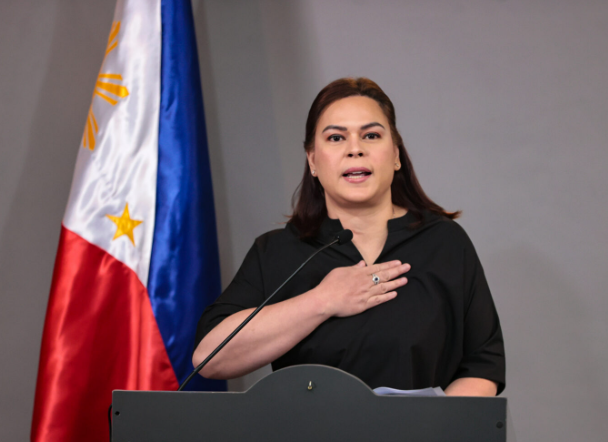
Vice President Sara Duterte seized on the gathering of thousands of Iglesia ni Cristo members along Epifanio de los Santos Avenue on Tuesday to amplify her criticism of President Ferdinand Marcos Jr.'s administration, describing the massive turnout as evidence of deepening public discontent with the government's performance and priorities.
Duterte framed the religious organization's presence on the capital's main thoroughfare as emblematic of what she termed a "growing sentiment" that has animated her own opposition throughout 2024. The Vice President characterized the Marcos administration as fundamentally defined by poor governance, suggesting that policy failures across multiple sectors have created widespread frustration among ordinary Filipinos struggling with the country's most pressing economic and social challenges.
The religious organization's decision to mobilize supporters stemmed from concerns about what the Iglesia ni Cristo described as "selective justice" and "distortion of law," specifically in response to announced charges against Senator Rodante Marcoleta. This framing by the INC lent broader institutional credibility to concerns about the fairness and impartiality of the legal system under the current administration, resonating with Duterte's messaging about democratic backsliding.
Duterte's most pointed criticism centered on what she characterized as the administration's detachment from the lived experiences of millions of Filipinos confronting acute economic pressures. Rising consumer prices, employment uncertainty, and spiraling costs for basic necessities have emerged as defining features of household anxiety across the archipelago. Rather than meeting these challenges with substantive policy solutions, Duterte contended, the Marcos government has instead prioritized silencing critics and constraining space for legitimate political opposition and accountability discourse.
The Vice President specifically highlighted what she viewed as an intimidation campaign targeting those who question alleged malfeasance within the presidential palace, critique government performance, or level allegations against the President. Such actions, she suggested, represent a systematic assault on the democratic freedoms that ought to anchor any functioning republic, undermining constitutional protections for free expression and meaningful public participation in governance.
Duterte escalated her rhetoric by characterizing the administration's approach to dissent as fundamentally incompatible with democratic governance. A government responding to criticism through coercion and repression, she argued, betrays the institutional commitments it is sworn to uphold. This framing transformed the dispute from a conventional political disagreement into a broader constitutional conflict about the nature of the state itself and its obligations to protect democratic space.
She further contended that the underlying issues transcend partisan politics entirely, reframing the conflict as touching upon national honor and the collective future of a population already bearing substantial economic hardship. When citizens experience both material suffering and political marginalization simultaneously, Duterte implied, the legitimacy of governance itself comes into question. This rhetorical move attempted to unite diverse constituencies around shared concerns about economic justice and political freedom rather than narrow factional interests.
The timing of Duterte's intervention carries particular significance given her own precarious political position. The House of Representatives impeached her on multiple grounds including alleged threats toward Marcos and his wife, unexplained accumulation of wealth, and improper use of confidential government funds. The Senate Impeachment Court is scheduled to commence her trial beginning July 6, meaning her public statements about Marcos administration overreach carry an undertone of personal legal jeopardy that complicates her claimed commitment to principled opposition.
For Malaysian observers and regional analysts, Duterte's orchestrated embrace of the INC rally illuminates the complex dynamics of Philippine politics at a moment of constitutional stress. The incident demonstrates how institutional vehicles for popular expression—whether religious organizations mobilizing supporters or legislative bodies conducting impeachment proceedings—become flashpoints in broader struggles over legitimate authority and the boundaries of acceptable governance. The Duterte-Marcos conflict, once framed as a family political rivalry, has increasingly become articulated as a conflict between competing visions of democratic accountability and state power.
The Vice President's emphasis on economic hardship and political repression occurring simultaneously also reflects a recognition that Philippine political legitimacy increasingly depends on tangible improvements in living standards alongside protection of civil liberties. As inflation and unemployment persist across Southeast Asia's second-largest economy, governments that appear both economically incompetent and politically repressive face mounting vulnerability to coordinated opposition. Duterte's strategy of leveraging institutional discontent—embodied by the INC's mobilization—suggests she understands that durability in Philippine politics requires constructing broad coalitions around shared grievances about economic management and democratic governance.
The broader significance extends beyond bilateral Duterte-Marcos tensions to encompass questions about institutional resilience in the Philippines and regional implications for democratic governance. When sitting vice presidents publicly characterize administrations in language suggesting fundamental illegitimacy and authoritarian tendencies, and when major religious organizations mobilize supporters around allegations of judicial partiality, political systems face testing moments requiring careful navigation by all actors. The coming trial and its resolution will substantially influence whether Philippine democratic institutions can absorb such conflicts through established constitutional processes or whether polarization continues deepening.

