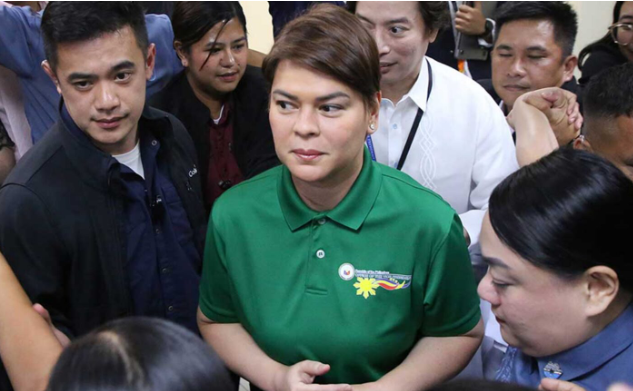
Vice President Sara Duterte continues to dispute the foundational strength of impeachment charges levelled against her, asserting on Tuesday that allegations surrounding a purported assassination plot targeting President Ferdinand R. Marcos Jr, First Lady Liza Marcos, and former Speaker Martin Romualdez rest on shaky legal ground. Her renewed claim comes as the Senate impeachment court advanced deeper into what has become a protracted constitutional proceeding that shows no signs of swift resolution.
The trial entered its fourth day of deliberations with significant developments challenging the prosecution's case. Duterte's legal team, led by lawyer Mark Vinluan, exposed what they characterise as material inconsistencies within the National Bureau of Investigation's documentation during cross-examination of NBI-Bangsamoro Autonomous Region in Muslim Mindanao Regional Director Jeremy Lotoc. The defence highlighted discrepancies in affidavit dates and docket number entries, suggesting procedural irregularities that could undermine the reliability of critical evidence.
Duterte's statement released immediately before proceedings emphasised her core defence strategy: distinguishing between allegation and substantiation. She argued that repeatedly invoking threats without tangible corroboration, conjuring hypothetical perpetrators, and constructing a narrative architecture from manufactured details amounts to converting speculation into fact through institutional machinery rather than establishing genuine criminal intent. This approach places heavy weight on evidentiary standards, appealing to judicial rigour over political momentum.
The characterisation of the prosecution's approach as eroding institutional credibility carries particular significance within the Philippine political context, where public faith in government institutions remains fragile. Duterte contended that such practices compromise the legitimacy of impeachment itself as a constitutional safeguard. Rather than strengthening democratic accountability, she suggests the proceedings actually damage the rule of law by prioritising narrative construction over factual foundation.
The impeachment court remains focused on Article IV of the complaints, which specifically addresses the assassination plot allegations that Duterte herself publicly disclosed in late 2024. The House prosecution panel has marshalled only two witnesses thus far while navigating through roughly half of the eleven allocated days designated for this particular article. This pace raises questions about the comprehensiveness of the government's case and its ability to build sustained momentum throughout the extended timeline.
Projections indicate the entire impeachment process could stretch across ninety-two trial days, with the possibility of proceedings extending into early 2027. Such an extended schedule reflects both the complexity of the charges and the potential for protracted litigation that consumes significant legislative resources. For context, this represents an uncommonly lengthy constitutional process for the Philippines, effectively consuming portions of the current presidential term.
Notably absent from courtroom proceedings has been Duterte's personal attendance, a tactical choice that may reflect her confidence in her legal representation or strategic calculations about public perception. Her chief of staff, Zuleika Lopez, is anticipated to appear as the prosecution's third witness, potentially providing testimony regarding internal communications or statements attributed to the Vice President. Lopez's testimony carries particular weight given her proximity to the accused and access to potentially damaging or exculpatory information.
The defence strategy appears calibrated toward highlighting procedural weaknesses and evidentiary gaps rather than mounting a comprehensive counter-narrative. By focusing on technical inconsistencies within investigative documentation, Duterte's legal team potentially establishes reasonable doubt without necessarily requiring her to articulate alternative explanations for the alleged assassination plot she herself disclosed. This approach shifts the burden back toward the prosecution to establish its case beyond reasonable doubt.
For Malaysian observers and Southeast Asian analysts monitoring Philippine political developments, this impeachment proceeding illustrates broader tensions within democratic systems regarding the appropriate balance between political accountability and judicial rigour. The case demonstrates how institutional processes designed as constitutional safeguards can become entangled with partisan political disputes, raising questions about the separation between legitimate accountability mechanisms and weaponisation of legal procedures against political opponents.
The extended timeline and evidentiary challenges surfacing during early trial stages suggest the proceedings will likely remain contentious and potentially inconclusive for an extended period. Whether the prosecution can overcome the inconsistencies already highlighted and present compelling evidence by the conclusion of Article IV remains uncertain. The outcome could significantly influence not only Duterte's political future but also establish precedents regarding evidentiary standards in future impeachment proceedings within the Philippines.

