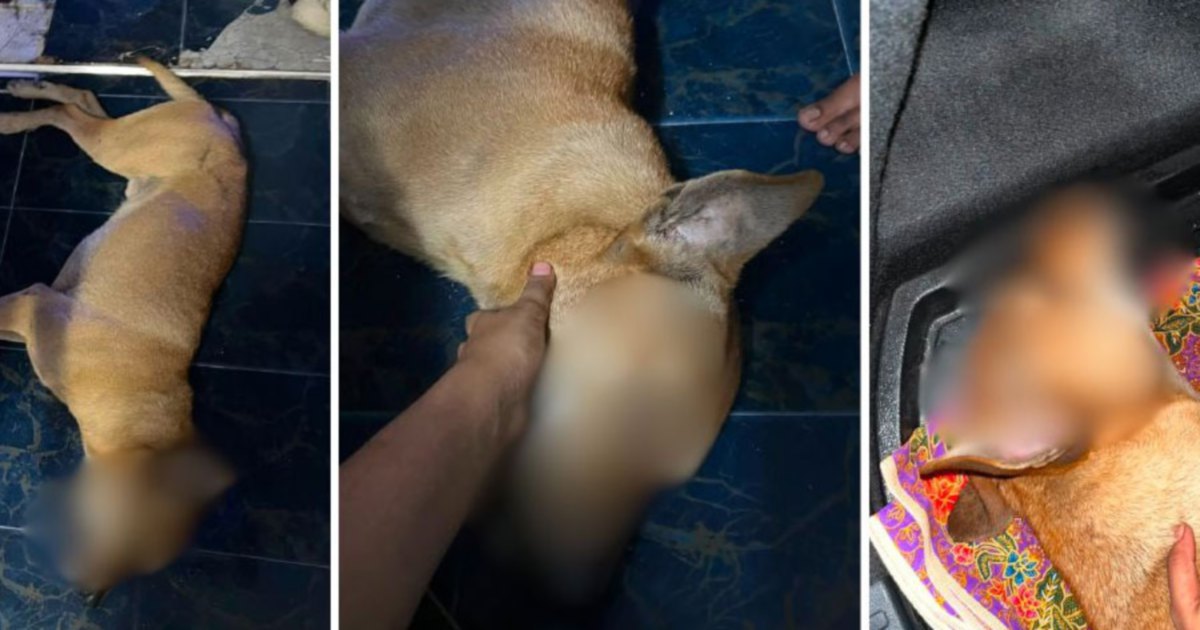
The Selangor Department of Veterinary Services has taken decisive action in response to widespread concern over the alleged mistreatment of a dog named Rocky, filing an official police complaint and systematically collecting testimonies from individuals connected to the case. The move marks a significant escalation from initial inquiry to formal criminal investigation, signalling the authorities' commitment to establishing the facts and holding responsible parties accountable if wrongdoing is substantiated.
The investigation was prompted by a video that circulated online depicting what appeared to be acts of animal cruelty. Such footage typically generates substantial public outcry in Malaysia, where animal welfare concerns have become increasingly prominent in social discourse. The DVS decision to lodge a police report demonstrates that the allegations were deemed sufficiently serious to warrant formal law enforcement involvement rather than administrative handling alone.
Recording formal statements from multiple individuals represents a standard investigative procedure designed to establish a comprehensive account of events. These testimonies will likely form the evidentiary foundation for any potential charges, as witnesses provide crucial corroborating details that video footage alone may not capture. The gathering of statements also serves to identify the chain of custody for evidence and pinpoint any individuals who may have information regarding the circumstances surrounding the alleged abuse.
The case reflects broader Malaysian concerns about animal welfare enforcement. The country's animal protection framework has faced criticism from both domestic and international observers for insufficient penalty levels and inconsistent enforcement. Cases that generate public attention, as Rocky's apparently has, often trigger more rigorous investigation than those that remain obscure, raising questions about resource allocation within veterinary enforcement agencies.
For the Selangor DVS specifically, the case presents an opportunity to demonstrate institutional capacity and resolve in addressing animal cruelty allegations. Selangor, as Malaysia's most populous state and economic engine, operates under particular scrutiny regarding public services. The department's handling of this high-profile matter could influence public perception of veterinary authority competence and willingness to protect animals from harm.
The involvement of multiple witnesses suggests that the alleged incident may have occurred in a semi-public setting or involved multiple actors. This dimension could complicate investigations but also provides more perspectives for authorities to evaluate. Cross-referencing accounts and identifying inconsistencies or corroborations is essential for building a credible case file that could withstand potential legal challenges.
Police involvement is procedurally necessary because animal cruelty constitutes a criminal matter under Malaysian law, specifically the Animal Welfare Act 1954. While veterinary authorities possess investigative expertise regarding animal injury and condition assessment, police forces handle the criminal investigation apparatus, including formal interviewing, warrant procedures, and liaison with prosecutors. This institutional division reflects the technical and legal dimensions of animal cruelty prosecutions.
The Rocky case arrives amid heightened social media activism around animal welfare issues in Southeast Asia. Vietnamese and Thai networks have similarly mobilised around documented cases of animal abuse, creating transnational momentum for stronger protections. Malaysia's handling of such cases increasingly occurs within this regional context, where international observers and diaspora communities track outcomes and comparative legal responses.
Public pressure surrounding this investigation reflects evolving Malaysian attitudes toward animals. Where previous generations might have dismissed cruelty allegations as private domestic matters, contemporary civil society increasingly frames animal welfare as a legitimate public concern requiring institutional response. Pet ownership, particularly of dogs in urban areas, has expanded dramatically, creating larger constituencies invested in protective outcomes.
The investigation's trajectory will likely depend on several factors: the clarity of the video evidence, the credibility and consistency of witness accounts, the ability to identify and locate relevant individuals, and the resources dedicated by both DVS and police. Cases involving viral videos sometimes experience investigative momentum that dissipates as media attention wanes, making the initial phase critical for evidence gathering.
Legal outcomes remain uncertain at this stage. Malaysian courts have convicted individuals under animal cruelty statutes, though sentences and fines have sometimes disappointed animal advocates seeking stronger deterrence. The Rocky case could become a test of whether enforcement agencies and judicial bodies are genuinely toughening responses to documented abuse or whether outcomes remain comparatively lenient.
The formal investigation also sends a signal to the broader public about institutional willingness to act on animal cruelty reports. Citizens considering whether to document and report suspected abuse observe how authorities respond to high-profile cases. A thorough, transparent investigation that reaches a clear determination—whether resulting in charges or exoneration—would reinforce that reporting has genuine consequences.
Looking forward, the DVS and police will likely release public updates as the investigation progresses, though Malaysian authorities traditionally maintain evidentiary confidentiality during active cases. The outcome, whenever it arrives, will influence both this specific matter and broader policy discussions regarding animal protection enforcement in Malaysia.

