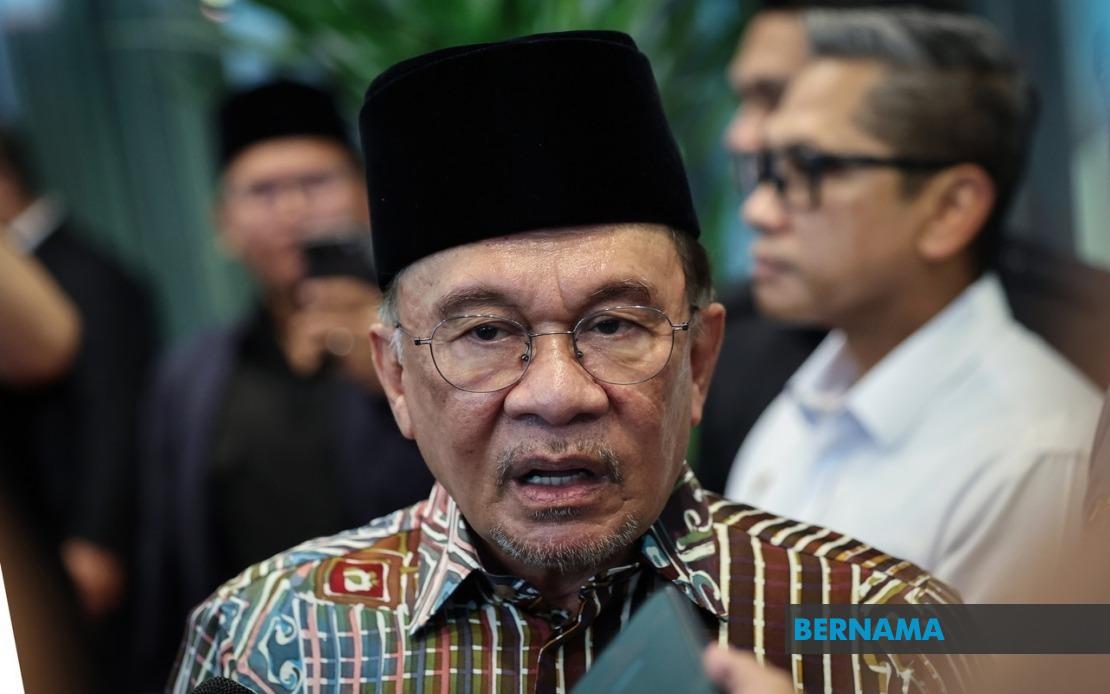
Prime Minister Datuk Seri Anwar Ibrahim has launched a scathing critique of Israel's announcement to issue construction tenders for the E1 settlement project, emphasising that such development would effectively partition the West Bank and eliminate prospects for a unified Palestinian state. Speaking through a Facebook post, the Prime Minister stressed the strategic significance of the territory in question, located east of Jerusalem, as fundamental to establishing a geographically coherent and economically viable Palestinian nation.
The E1 settlement represents a particularly sensitive flashpoint in the decades-old Israeli-Palestinian conflict. Its location, sitting between Israeli-controlled Jerusalem and the settlement of Ma'ale Adumim, gives it outsized symbolic and practical importance. Anwar's intervention underscores Malaysia's consistent positioning as a vocal defender of Palestinian rights within international forums, a stance that reflects both historical commitment and substantial domestic sympathy among Malaysian citizens for the Palestinian cause.
Anwar reiterated the established international legal consensus that Israeli settlements across the occupied West Bank constitute violations of international law, yet he highlighted the apparent disconnect between this legal reality and Israel's continued expansion policies. The Prime Minister characterised Israel's conduct as proceeding with what he termed "impunity," suggesting that existing international condemnation and resolutions have failed to produce meaningful constraints on Israeli settlement activity. This observation carries particular weight given the longstanding role of international law and UN resolutions in framing the Palestinian dispute.
Placing the E1 announcement within a broader context of escalating tensions, Anwar linked the settlement tender decision to concurrent phenomena that he identified as deeply troubling. He referenced intensifying violence perpetrated by Israeli settlers against Palestinian civilians throughout the West Bank, alongside what he characterised as genocide occurring in Gaza. This framing presents the E1 tenders not as an isolated policy decision but as part of a comprehensive pattern of conduct that he argued demonstrates Israeli abandonment of even rhetorical commitment to peace negotiations or respect for international community preferences.
The Prime Minister's statement carried an implicit warning directed at international commercial entities. Malaysia announced it would closely monitor which companies choose to bid on or participate in the E1 settlement construction contracts, with an explicit commitment to "act accordingly" toward such firms. This language suggests potential Malaysian countermeasures, which could range from diplomatic pressure to commercial restrictions or boycott-related actions. Such an approach aligns with Malaysia's historical support for Palestinian-led boycott, divestment, and sanctions initiatives.
Anwar's position gains additional weight from recent statements by UN Secretary-General António Guterres, who expressed serious alarm regarding reports of new illegal Israeli settlement outposts proliferating across the occupied West Bank. Through his spokesperson Stephane Dujarric, Guterres articulated the specific dangers posed by E1 development. The construction would effectively sever transport and communication links connecting the northern and southern portions of Palestinian-controlled territory, thereby fragmenting what remains of Palestinian territorial holdings into disconnected enclaves.
The geopolitical implications of E1 construction extend beyond immediate humanitarian concerns. UN officials have warned that such development would fundamentally compromise the territorial integrity of any future Palestinian state, rendering the two-state solution—long considered the internationally accepted framework for resolving the conflict—increasingly unviable. This concern reflects a technical reality: without territorial contiguity, Palestinians cannot effectively exercise sovereignty, develop coherent security arrangements, or establish integrated economic systems.
Malaysia's stated position reflects the country's broader diplomatic orientation toward Middle Eastern affairs. As an Organisation of Islamic Cooperation member nation and a significant voice within ASEAN, Malaysia has maintained consistent advocacy for Palestinian self-determination. However, the E1 issue also illustrates the limits of such advocacy, as Malaysia's responses remain largely declaratory, depending on diplomatic channels and moral suasion rather than leveraging hard power or overwhelming economic influence.
The timing of Malaysia's response carries significance within regional dynamics. Southeast Asia has traditionally balanced commercial relationships with Israel against solidarity expressed with Palestinians, particularly through Muslim-majority nations within the bloc. Malaysia's warning to international companies represents an attempt to inject consequences into what might otherwise remain a symbolic protest, though the practical effectiveness of such warnings depends heavily on whether other nations adopt similar positions.
For Malaysian stakeholders monitoring these developments, the E1 controversy illustrates the persistent challenges confronting efforts to achieve sustainable Middle Eastern peace. The sequential Israeli announcements of settlement expansion have historically preceded or followed periods of diplomatic initiative, suggesting settlement policy operates as both a political statement and a mechanism for establishing facts on the ground that subsequent negotiations must accommodate. This pattern has frustrated international peacemaking efforts across multiple decades.
The broader regional dimension warrants consideration as well. E1 development would alter the strategic balance within occupied Palestinian territory, affecting not only territorial configuration but also water resources, transportation networks, and economic corridors. These factors carry implications extending beyond Palestinian governance, potentially affecting stability and development trajectories throughout the region during an already turbulent period marked by conflicts in Syria, Iraq, and Yemen.
Anwar's forceful language represents Malaysia's determination to sustain international attention on Palestinian concerns, particularly as global media focus periodically shifts toward other conflicts. By explicitly connecting E1 construction to broader patterns of settlement expansion and ethnic tensions, Malaysia positions the issue within frameworks that resonate with international humanitarian and legal discourses, potentially attracting support from non-aligned nations and civil society organisations beyond traditional Palestinian solidarity networks.

