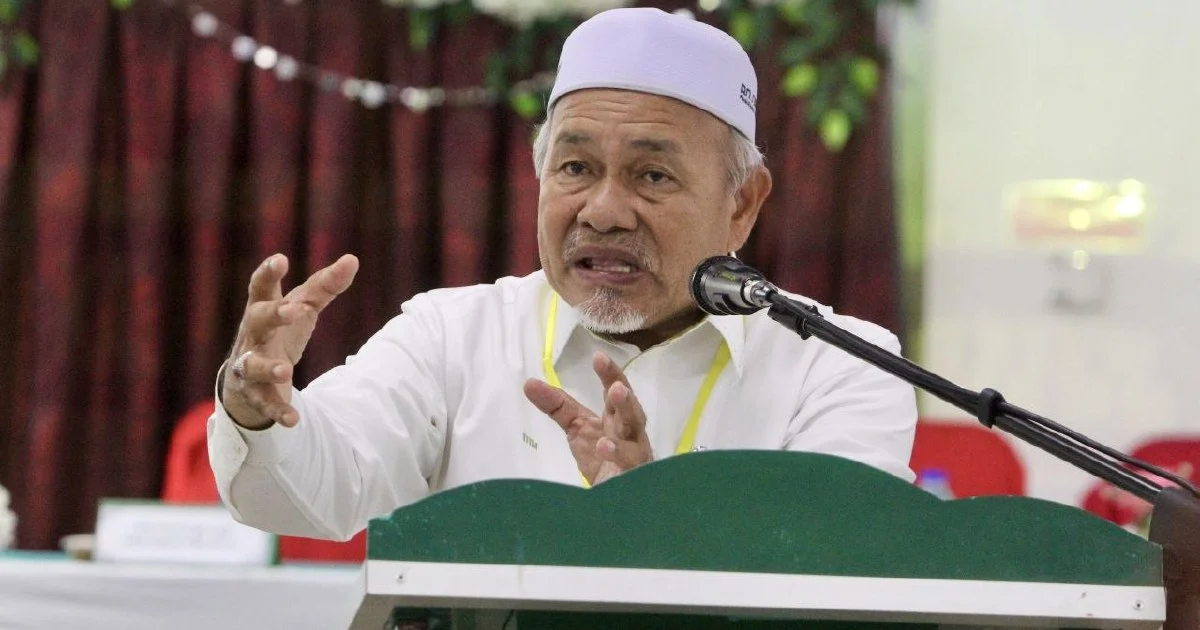
Prime Minister Datuk Seri Anwar Ibrahim's government appears unlikely to pursue an early general election in the near term, according to PAS deputy president Datuk Seri Tuan Ibrahim Tuan Man, who attributed the cautious approach to Barisan Nasional's commanding performance in the Johor state polls. The political assessment underscores how regional electoral results continue to influence calculations at the federal level, with opposition parties carefully reading the messaging embedded in electoral outcomes.
The Johor state election delivered a decisive victory for the Barisan Nasional coalition, significantly altering the political dynamics that have defined Malaysian politics since the 2022 general election. BN's strong showing in the sultanate, traditionally a bellwether for national sentiment, appears to have reinforced the rationale for maintaining the current federal parliament rather than seeking a fresh mandate. This logic reflects a fundamental principle in electoral politics—governments prefer to dissolve parliament when conditions favour them rather than when opponents possess momentum.
Anwar Ibrahim's administration, which took office following the contentious 2022 general election that produced a hung parliament, has navigated a complex political environment marked by competing coalition interests and shifting alliances. The coalition supporting the federal government comprises multiple parties with sometimes divergent agendas, making consensus on major decisions such as timing a general election a delicate matter. The Johor results appear to have influenced this calculus by suggesting that BN, rather than the ruling coalition's constituent parties, may be positioned to benefit from fresh elections.
Tuan Ibrahim's remarks carry particular significance as PAS, though currently outside the federal government, maintains considerable influence in Malaysian politics. The Islamist party holds substantial representation in parliament and governs multiple states, giving its leadership insights into broader political sentiment. By suggesting that an early election is improbable, the PAS deputy president was effectively reading the room—acknowledging that BN's momentum makes the timing unfavourable for parties outside its orbit.
The distinction between state and federal politics remains crucial for understanding Malaysian elections. State-level victories do not automatically translate into federal gains, yet they provide important indicators of public sentiment and organisational effectiveness. BN's Johor triumph demonstrated its ability to mobilise voters and execute campaign strategies effectively, qualities essential for success in a general election where multiple states compete simultaneously for voter attention and resources.
Anwar Ibrahim's calculation regarding timing any general election likely involves multiple strategic considerations beyond electoral projections. Governing with a coalition requires accommodation and compromise, and dissolving parliament prematurely could unsettle coalition partners who have invested in the current arrangement. Additionally, having sufficient time to advance legislative and policy agendas before seeking a fresh mandate allows governments to present tangible achievements to voters rather than abstract promises.
The political uncertainty that characterised post-2022 Malaysian politics appears to be gradually crystallising into clearer patterns. The Johor results reinforced existing perceptions of which coalitions and parties command genuine support in major population centres. For the Anwar Ibrahim administration, this recognition suggests that waiting longer before calling elections may provide better opportunities to reshape electoral arithmetic in their favour or at least minimise losses to BN's growing influence.
BN's resurgence under the leadership of Prime Minister Datuk Seri Ismail Sabri Yaakob and its alliance partners contrasts sharply with its weakened position following the 2018 general election, when internal scandals and political fragmentation cost the coalition its parliamentary majority. The rebuilding process has clearly resonated with voters, particularly in traditional BN strongholds like Johor. This revival carries implications not only for the timing of the next general election but also for the broader trajectory of Malaysian politics over the next election cycle.
Regional developments in Southeast Asia also inform Malaysian electoral strategy. Neighbouring countries conduct elections with varying frequencies, and Malaysian political parties observe how economic conditions, regional security situations, and cross-border developments might influence voter sentiment domestically. The current stability in the region, combined with Malaysia's own economic management concerns, may argue for allowing more time for government policies to demonstrate results before submitting to electoral judgment.
The speculation about early elections, which periodically surfaces in Malaysian political discourse, typically reflects anxiety among political players about changing circumstances. Tuan Ibrahim's assessment that an early election remains unlikely essentially signals a degree of stabilisation in political calculations—major coalitions appear to have settled on expectations about the viability of holding elections at the scheduled time or slightly before it, rather than much earlier. This relative predictability itself represents a departure from the volatile political environment of 2021 to 2022.
Looking forward, the timing of GE16 will likely be influenced by multiple factors beyond electoral projections. Economic performance, legislative agendas, coalition stability, and unforeseen events will all play roles in determining when parliament dissolves. For now, the PAS deputy president's assessment reflects what appears to be an emerging consensus among major political players that the next general election will occur closer to its constitutionally mandated schedule than many had previously anticipated, giving the Anwar Ibrahim administration additional runway to consolidate its position before facing the ultimate judgment of voters.

