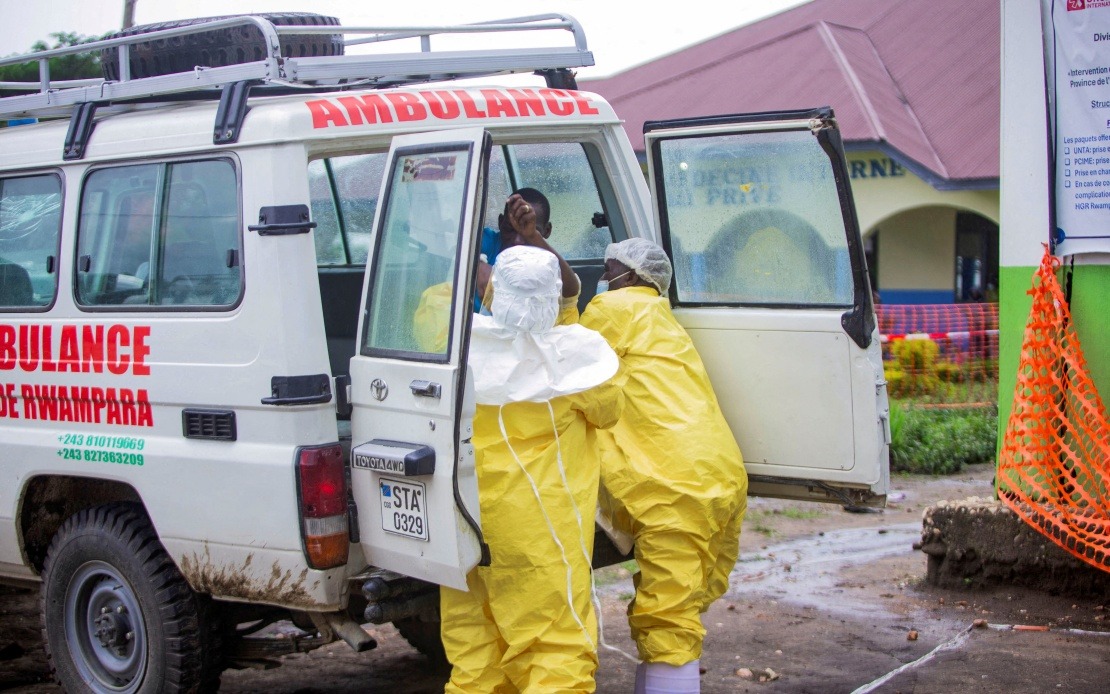
The Democratic Republic of the Congo faces an escalating public health emergency as Ebola cases continue to multiply across multiple regions. According to data released by the country's health authorities through Friday, July 12, the nation has now documented 1,873 confirmed cases of the virus, alongside 672 fatalities. The geographical spread presents particular challenges for containment efforts, with confirmed infections identified across the provinces of Ituri, North Kivu, South Kivu, Haut-Uele and Tshopo.
The emergence of the virus in Haut-Uele and Tshopo represents a significant development in the crisis trajectory, marking the first occasion these provinces have appeared in official situation reports. This territorial expansion underscores the difficulty authorities face in restricting transmission chains, as the disease continues to establish itself in previously unaffected areas. Epidemiological investigations have traced the cases detected in these two provinces back to Ituri, the original epicentre of the outbreak, through documented contact networks and human movement patterns between regions.
The strain on the Democratic Republic's healthcare infrastructure has become acute. Currently, 763 patients are receiving treatment either in isolation wards or hospital settings, while the aggregate occupancy rate across treatment facilities has climbed to 95.1 percent. This near-saturation level leaves minimal surge capacity to accommodate further patient influxes, a concerning indicator given the trajectory of new cases and the virus's high mortality rate. The system is operating on razor-thin margins, with little room to absorb unexpected spikes in demand for beds and medical resources.
The human cost remains severe, though a degree of optimism exists in recovery figures. Among those infected, 306 individuals have successfully recovered and been discharged from treatment. A further 299 suspected cases are under investigation, of which 91 have resulted in death. These suspected cases represent a pipeline of potential confirmed infections, suggesting the true scale of the outbreak may yet expand as investigations conclude and diagnoses are confirmed through laboratory testing.
The outbreak itself originated from the Bundibugyo ebolavirus, a strain of the Ebola virus, when the epidemic was officially declared on May 15. The Bundibugyo variant typically presents with a lower fatality rate compared to certain other Ebola species, though the mortality figures recorded here—representing approximately 36 percent of confirmed cases—remain a stark reminder of the pathogen's lethality and the vulnerability of populations in regions with limited healthcare infrastructure and disease surveillance capabilities.
For Southeast Asian nations including Malaysia, this ongoing crisis in Central Africa underscores the importance of robust disease surveillance systems and international cooperation frameworks. While the geographic distance between the Democratic Republic of the Congo and the region provides substantial protection from direct transmission risk, the precedent set by international outbreak responses shapes preparedness strategies and influences resource allocation decisions across the region. The potential for air travel to bridge continental distances demands that countries maintain heightened vigilance and rapid diagnostic capacity.
The involvement of five provinces indicates that the outbreak has moved beyond a localized cluster and now constitutes a regional emergency requiring coordinated response across administrative boundaries. The epidemiological linkages between the provinces suggest that population movements—whether for trade, family connections, or displacement—have facilitated viral transmission. Understanding these pathways becomes critical for designing targeted interventions that interrupt transmission while minimizing disruption to essential human activities and maintaining social cohesion in affected communities.
The treatment facility occupancy rate of 95.1 percent raises serious questions about the adequacy of current health system capacity and the potential for overwhelmed medical personnel to make triage decisions under pressure. When hospitals operate near maximum capacity, the quality of care may deteriorate, infection control measures can become compromised, and staff experience burnout that threatens the continuity of response operations. International support, whether through technical expertise, medical supplies, or personnel deployment, becomes increasingly vital under such conditions.
The recovery of 306 patients, though representing only about 16 percent of confirmed cases, demonstrates that survival is achievable with adequate supportive care and treatment. These recovered individuals also represent a resource for contact tracing and epidemiological investigation, as they can provide detailed accounts of their symptom onset, exposure circumstances, and interactions that occurred during their infectious period. Qualitative data derived from survivor interviews often proves invaluable in refining understanding of transmission dynamics.
Looking forward, the trajectory of this outbreak will depend substantially on whether transmission reduction efforts can match or exceed the rate of new case detection. The geographic spread across five provinces suggests that the window for containing the outbreak through localized measures may have closed. Regional coordination, adequate resourcing of health facilities, community engagement and behavior change, alongside sustained epidemiological investigation, represent the cornerstones of any strategy aimed at reversing the current trend. The international community, regional organizations, and the DRC government must remain aligned in recognizing this as an ongoing emergency requiring sustained commitment and resources.

