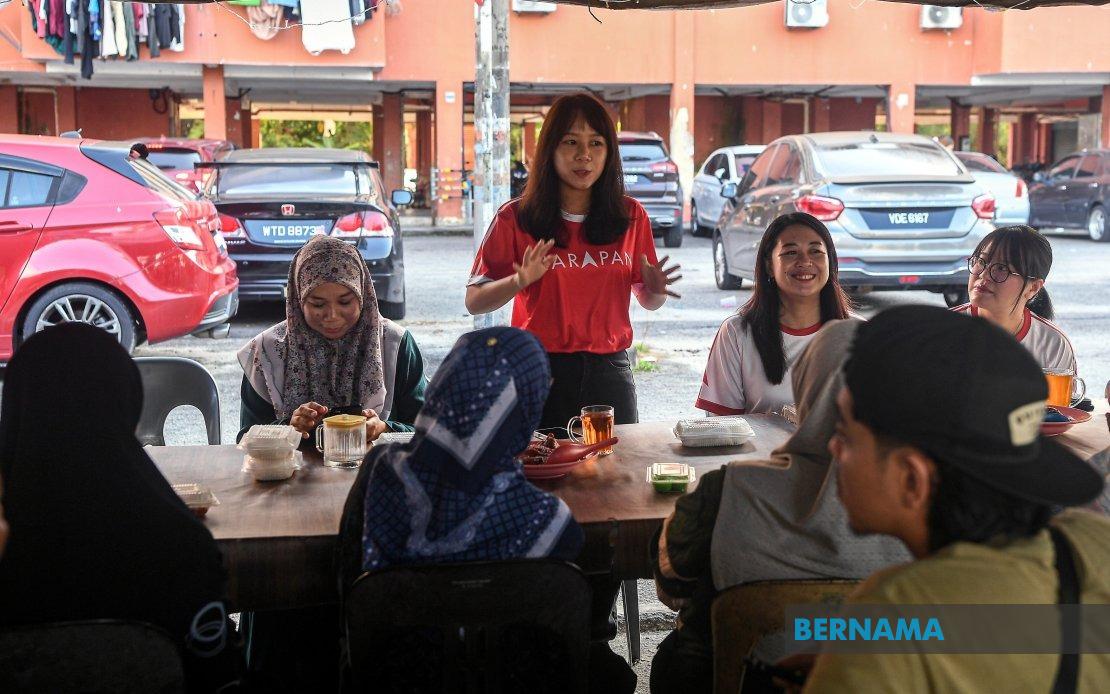
The race for Johor Jaya reflects a broader competition over how to revitalise one of Johor's urban constituencies through economic strategy and community engagement. Pakatan Harapan candidate Lee Wern Yiing has staked her campaign on leveraging emerging economic opportunities and reconnecting youth to Johor's future, while Barisan Nasional's Chan San San emphasises her decade-long community experience and practical approach to addressing residents' daily concerns.
Lee, 30, represents a younger generation entering electoral politics with an explicitly idealistic orientation. Her decision to return from studies in Singapore in 2018 rather than pursue a lucrative career abroad was consciously driven by optimism about Malaysia's reform trajectory. This personal narrative reflects a broader PH positioning around attracting talent back to the country and channelling youthful energy into political participation. Having served as a special officer to former Johor Jaya assemblyman Liow Cai Tung before her nomination, Lee brings organisational experience alongside her role as Johor DAP Socialist Youth chief, positioning her as someone embedded within party structures whilst claiming to represent generational change.
A central thrust of Lee's campaign rejects what she characterises as a dismissive view of young voters. Rather than accepting assumptions about youth political disengagement, she argues that younger Malaysians conduct careful analysis of policy announcements and electoral choices based on observable outcomes. This framing shifts responsibility from voters to politicians to communicate clearly about government achievements and intentions. Her strategy combines conventional digital media outreach with community initiatives such as the Johor Jaya Run, suggesting a hybrid approach that recognises social media's importance whilst maintaining ground-level engagement.
The Johor-Singapore Special Economic Zone emerges as a focal point in Lee's economic blueprint. She positions the JS-SEZ not merely as an infrastructure project but as a mechanism for creating employment ecosystems capable of retaining and attracting young professionals. Her rhetoric around enabling young people to "go home" and "build futures in Johor" directly addresses the migration phenomenon whereby Johor talent gravitates toward Singapore's economy or Malaysia's major urban centres. By linking major regional economic projects to individual life decisions about where to work and raise families, Lee attempts to translate macro-level development plans into microsocial relevance.
Beyond economic zones, Lee's platform encompasses employment creation, housing access and cost-of-living pressures—issues with direct household impact. These align with standard opposition messaging around affordability and economic opportunity, yet her emphasis on youth-specific retention differentiates her positioning. She proposes that successful Johor Jaya development requires not just investment attraction but active policy work to make the constituency a destination choice rather than a place young people leave.
Chan San San, the Barisan Nasional candidate, grounds her campaign in contrasting epistemology. She claims that over a decade of community-level work has taught her that residents' difficulties are concrete realities rather than statistical abstractions. This language distances BN from perceptions of bureaucratic detachment whilst emphasising experiential knowledge accumulated through years of presence. Chan's credentials span city council membership with Johor Bahru City Council, deputy secretary responsibilities within MCA, and volunteer work with the MCA Crisis Relief Squad—a portfolio suggesting establishment integration and readiness to leverage formal administrative channels.
Chan's development agenda comprises four pillars, with local economic strengthening and transportation infrastructure as primary components. Her emphasis on Johor Jaya as an eastern corridor transportation hub reflects recognition of connectivity's economic importance. The Rapid Transit System project becomes, in her framing, a catalyst for broader accessibility improvements that affect resident mobility and congestion. Unlike Lee's forward-looking narrative about attracting people homeward, Chan's approach emphasises solving existing residents' movement problems through infrastructure completion and coordination with major transit systems.
The positioning of traffic congestion as a policy priority distinguishes BN's campaign from PH's emphasis on youth migration and employment ecosystems. Congestion affects daily quality-of-life for established residents commuting within or from the constituency, whereas Lee's focus on creating sustainable economic ecosystems targets demographic replenishment. These represent different diagnoses of Johor Jaya's challenges and different prescriptions for development.
The four-cornered contest involving Lee, Chan, Parti Bersama Malaysia's Lau Yi Leong and independent candidate Lim Hun Peaw creates a fragmented field where vote splitting may influence outcomes. However, the substantive contest appears centred on the PH-BN axis, with these two candidates articulating most developed policy narratives. The July 11 polling day determines outcomes across 56 state seats in what constitutes the sixteenth Johor state election cycle, with 172 total candidates contesting.
For Malaysian and regional observers, the Johor Jaya contest exemplifies contemporary state-level electoral dynamics where economic strategy and demographic retention have become central to political competition. Neither major coalition voices redistributive socialism or fundamental systemic reform; instead, both address development through efficiency and opportunity creation—albeit emphasising different mechanisms and beneficiary groups. Lee's strategy targets professional youth mobility and knowledge-economy positioning, whilst Chan's approach privileges quality-of-life improvements for incumbent populations.
The campaign also reflects shifting understandings of voter sophistication and messaging efficacy. Lee's rejection of youth disengagement narratives and her emphasis on accurate policy communication represent assumptions about voter discernment that contrast with older campaign models emphasising charismatic personality or patronage networks. Chan's community-rooted credentialism suggests voters reward tangible prior experience, yet both candidates ultimately operate within development-focused frameworks rather than oppositional left-right ideologies.
Johor's electoral significance within Malaysian politics ensures that state-level contests carry implications for national coalition stability. Performance in constituencies like Johor Jaya contributes to broader assessments of government effectiveness and opposition viability. The specific platforms articulated by candidates—economic zones, transit systems, youth retention, congestion management—reflect genuine policy concerns whilst also serving broader narrative purposes about governmental competence and vision.

