The Economy Ministry is making a formal bid to extend the People's Income Initiative – Food Entrepreneur Initiative (IPR-Insan), a scheme designed to lift low-income food vendors into sustainable business operations. Economy Minister Akmal Nasrullah Mohd Nasir confirmed that the ministry will petition the Ministry of Finance to prolong the programme beyond its current timeframe, citing demonstrated success in generating entrepreneurial income while keeping food prices accessible for students and campus communities.
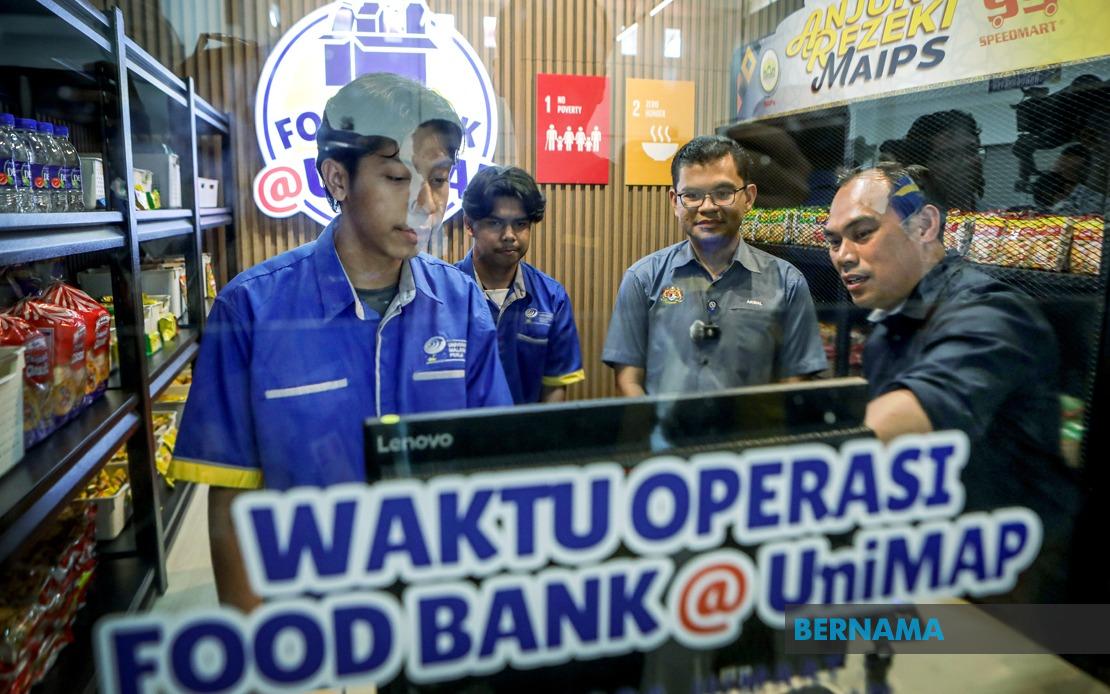
The decision to seek an extension comes after on-the-ground evaluations revealed the initiative delivers tangible benefits across multiple stakeholder groups. B40 entrepreneurs—those in the bottom 40 percent of income earners—gain entry into formalized business channels without significant capital investment, whilst consumers benefit from competitively priced meals. Akmal Nasrullah highlighted this dual advantage during a working visit to Universiti Malaysia Perlis (UniMAP) in Arau, where he directly observed the programme's campus-based implementation through automated vending machines positioned in student residential colleges.
The vending machine model represents an innovative fusion of financial inclusion and technology adoption. Rather than requiring vendors to secure physical retail space, navigate licensing bureaucracy, or invest heavily in infrastructure, the IPR-Insan approach provides a systematized platform accessible to entrepreneurs operating from home kitchens. This significantly lowers barriers to entry for individuals without existing business networks or substantial savings. For participating B40 vendors, the vending machine effectively becomes a technological bridge connecting them to a captive, regular customer base—university students who form a reliable and growing market segment with consistent purchasing power.
At UniMAP's Tuanku Abdul Rahman Residential College, one participating entrepreneur, Norleyana Nordin, demonstrated the income-generation potential of the scheme. Her homemade food business, operated through the vending machine, achieved average monthly sales of RM2,178.80, with a peak performance of RM4,905 recorded in January. Across the campus at Tuanku Tengku Fauziah Residential College, another vendor, Noor Hasfalela Mohd Noor, recorded substantially higher figures—averaging RM4,595 monthly, with the strongest month reaching RM10,012 in January, followed by RM5,049 in February 2026 and RM4,868 in April 2026. These figures, whilst modest by conventional business standards, represent meaningful income for households in the B40 category and demonstrate the scheme's viability.
The programme's success extends beyond raw sales numbers to encompassing broader welfare objectives within university settings. Parallel initiatives including the Food Bank and MADANI Dapur Siswa (student kitchen) address food insecurity amongst the student population, a growing concern as cost-of-living pressures mount across Malaysia's educational institutions. By creating affordable, accessible food options, these complementary schemes reduce financial stress on students and allow them to allocate limited resources toward tuition and academic materials rather than expensive meals. This holistic approach recognizes that student welfare directly impacts academic performance and retention rates.
The initiative gains additional significance when contextualized within Malaysia's broader poverty-alleviation and financial inclusion framework. Official statistics indicate persistent income inequality, with meaningful segments of the population lacking access to formal employment or entrepreneurial opportunities. The IPR-Insan programme provides a practical, scalable mechanism for transitioning informal food vendors into semi-formal business operations with verifiable income streams. This formalization, even at modest levels, creates documentation trails useful for accessing future credit, insurance, or skills development programmes—essential building blocks for long-term economic mobility.
For university partners like UniMAP, hosting the programme strengthens institutional commitment to community engagement and social responsibility. The university's endorsement legitimizes vendor operations, provides secure locations for vending machines, and associates the institution with inclusive economic practices. This alignment with Malaysia's MADANI governance framework—which emphasizes prosperity shared equitably across society—enhances institutional reputation whilst generating positive press coverage. Furthermore, by featuring the initiative during ministerial visits and documenting vendor performance, universities create compelling evidence supporting future policy advocacy for similar programmes.
The timing of the extension request reflects evolving government priorities following Malaysia's recent political transitions. The Pakatan Harapan-led administration has signalled renewed focus on B40 welfare, cost-of-living assistance, and entrepreneurial democratization. IPR-Insan aligns neatly with these messaging priorities, offering tangible outcomes that distinguish the current government's approach to inclusive growth. By seeking formal extension through Ministry of Finance channels, the Economy Ministry demonstrates institutional commitment whilst building a documented case for sustained or increased budgetary allocation.
Regional implications warrant consideration as well. Southeast Asian governments increasingly face pressure to address youth unemployment, underemployment, and informal-sector vulnerability exacerbated by technological disruption and pandemic-related economic volatility. Malaysia's IPR-Insan model offers a replicable template—relatively low-cost, technology-enabled, institutional-partnership-based—that other nations might adapt. The vending machine infrastructure, combined with university networks spanning the country, creates a scalable distribution system with lower overhead than traditional small-business support programmes requiring extensive government administrative machinery.
The extension request, if approved by the Ministry of Finance, will likely involve negotiating continued funding, potentially expanding vending machine deployments to additional campuses, and establishing performance benchmarks for future evaluations. Key questions include whether the scheme can expand beyond university settings into hospitals, corporate offices, or public institutions whilst maintaining quality standards and vendor support. Additionally, policymakers must consider whether current monthly income levels sufficiently justify continued programme investment or whether interventions should target vendor capacity-building to boost earnings further.
Minister Akmal Nasrullah's emphasis on consumer benefits alongside entrepreneur support signals recognition that sustainable poverty reduction requires multi-directional value creation rather than zero-sum redistribution. When B40 vendors earn reasonable income whilst students access affordable nutrition, the programme generates positive-sum outcomes strengthening multiple constituencies' support for continuation. This political economy dimension strengthens the extension proposal's viability, as diverse stakeholder groups—vendors, students, universities, consumer advocates—can collectively advocate for continuation during budget deliberations.
The road ahead for IPR-Insan depends partly on Ministry of Finance receptiveness to claims that social welfare investments in food entrepreneurship generate measurable returns beyond conventional cost-benefit analysis. If approved, the extension should ideally incorporate refined metrics measuring not merely sales figures but vendor skill acquisition, business sustainability beyond the initial funding period, and downstream impacts on participating entrepreneurs' household welfare and financial security. Such evidence would strengthen arguments for permanent institutionalization rather than successive temporary extensions.

