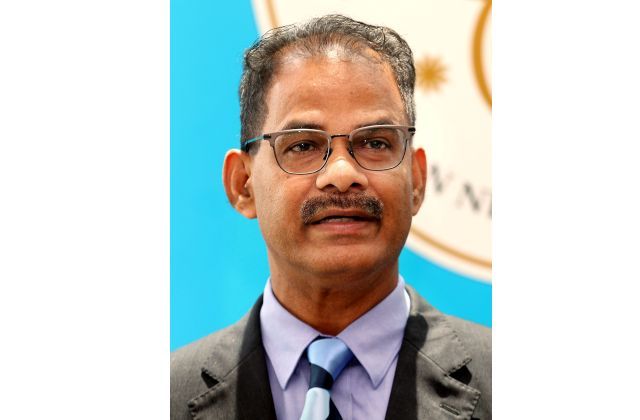
The ambitious East Coast Rail Link (ECRL) project is poised to become a significant employment driver for Selangor's locomotive manufacturing and related industries, with state officials confirming that roughly 2,000 jobs will emerge from the RM50.27 billion national infrastructure initiative. Speaking during Tuesday's state assembly proceedings in Shah Alam, V. Papparaidu, chairman of the Selangor human resources and poverty eradication committee, underscored that approximately four-fifths of these positions will demand Malaysian workers, creating a substantial pipeline of opportunities for the state's growing workforce seeking entry into technical and specialised fields.
The announcement reflects broader recognition across Malaysia's regional governments that mega-infrastructure projects can serve as catalysts for employment and skills development. With the ECRL representing one of the country's most significant transport investments, policymakers view the undertaking as an opportunity to address structural employment mismatches where vacancies exist in technical sectors even as job-seekers lack suitable qualifications. Papparaidu's statement during the assembly sitting responded to questions raised by assemblyman Nushi Mahfodz regarding how Selangor could strategically align its Technical and Vocational Education and Training (TVET) output with demand from the locomotive, semiconductor and manufacturing sectors.
The state government has already mobilized several mechanisms to bridge the gap between skills provision and employer requirements. The Kerjaya Selangor programme, developed in partnership with the Social Security Organisation (PERKESO) and accessible through the MyFuture Jobs platform, functions as a digital matching service connecting qualified jobseekers with employers. Rather than relying on traditional recruitment channels, this initiative enables systematic assessment of candidates' educational backgrounds, technical competencies and professional aspirations against specific industry vacancies. Such targeted approaches prove particularly valuable in technical fields where employers often struggle to locate workers possessing precise skill combinations.
Beyond digital matching platforms, Selangor has organized physical job fairs including the JobCare Selangor initiative, which provides TVET graduates direct access to hiring managers and interview opportunities in a single venue. These events reduce friction in the recruitment process and allow recent technical graduates to gain immediate employment feedback. According to PERKESO statistics cited during the assembly, Selangor produced 10,111 TVET graduates between January and July 10 this year, representing a consistent pipeline of workers with vocational qualifications suited to industrial roles.
The employment landscape in Selangor reveals considerable demand for technically qualified personnel across multiple sectors. During the same period referenced, 78,030 job vacancies requiring diploma-level qualifications or above existed within the state. Among these positions, 3,965 openings concentrated in high-skilled industries including automotive engineering, semiconductor manufacturing and advanced software development. Roles such as automotive engineers, data scientists and software developers featured prominently in employer listings, underscoring that modern industrial expansion demands workers capable of engaging with sophisticated technologies and analytical frameworks. These positions universally require technical competency that TVET institutions can systematically impart through structured curricula.
The locomotive sector specifically represents a logical beneficiary of TVET graduate output, given that railway vehicle manufacturing integrates mechanical design, electrical systems, quality control and assembly operations where vocational training provides direct preparation. Historical patterns across advanced manufacturing economies demonstrate that railway manufacturing complexes serve as anchors for entire supply chains of skilled workers, from component fabricators to final assembly technicians. Selangor's existing concentration of automotive and manufacturing expertise positions the state favourably to develop comparable capabilities in rail vehicle production.
However, state officials acknowledge that matching supply and demand requires more sophisticated analysis than currently exists. When Nushi inquired whether Selangor intended to conduct district-level mapping exercises connecting graduate skill profiles to local industrial requirements, Papparaidu confirmed the need for such analysis while noting practical complexities. The state would require comprehensive data from universities and technical colleges regarding graduate output by field of study, information not always readily available in disaggregated form. Furthermore, Selangor's economic geography varies considerably: Shah Alam and Pelabuhan Klang (Port Klang) function as distinct industrial clusters with different sectoral compositions and labour demands compared to other districts.
This recognition of geographical variation proves important for Malaysian policymakers designing skills initiatives. A one-size-fits-all approach to vocational training allocation would likely produce mismatches whereby certain districts train excess workers in fields where local demand is minimal while neighbouring areas experience shortages in other technical specializations. Port Klang's position as Malaysia's primary container port creates demand for logistics, maritime engineering and port operations expertise distinct from Shah Alam's automotive and electronics manufacturing focus. Properly targeted TVET expansion requires understanding these local labour market dynamics.
The ECRL project's anticipated contribution of 2,000 positions assumes successful project execution and workforce availability meeting employer specifications. Realizing this employment potential depends substantially on state and federal coordination in skills development, a domain where Malaysian governments have increasingly invested resources in recent years. The convergence of major infrastructure investment with deliberate workforce development efforts represents a development strategy gaining traction across Southeast Asia, where countries seek to position themselves as advanced manufacturing and logistics hubs rather than relying solely on lower-cost assembly operations.
For Selangor's younger population, the opportunities emerging from ECRL and related industrial expansion offer pathways into stable, well-remunerated technical careers. Vocational training historically suffered from perception as a second-tier option compared to university education, yet advanced economies increasingly recognize TVET as essential to economic competitiveness. As Papparaidu noted, equipping youth with industry-aligned technical skills represents a strategic investment in both individual livelihoods and state economic resilience. The challenge now lies in execution—ensuring training curricula evolve alongside technological change, that apprenticeship pathways link education to employment, and that career progression opportunities exist for TVET graduates willing to upgrade qualifications throughout their working lives.

