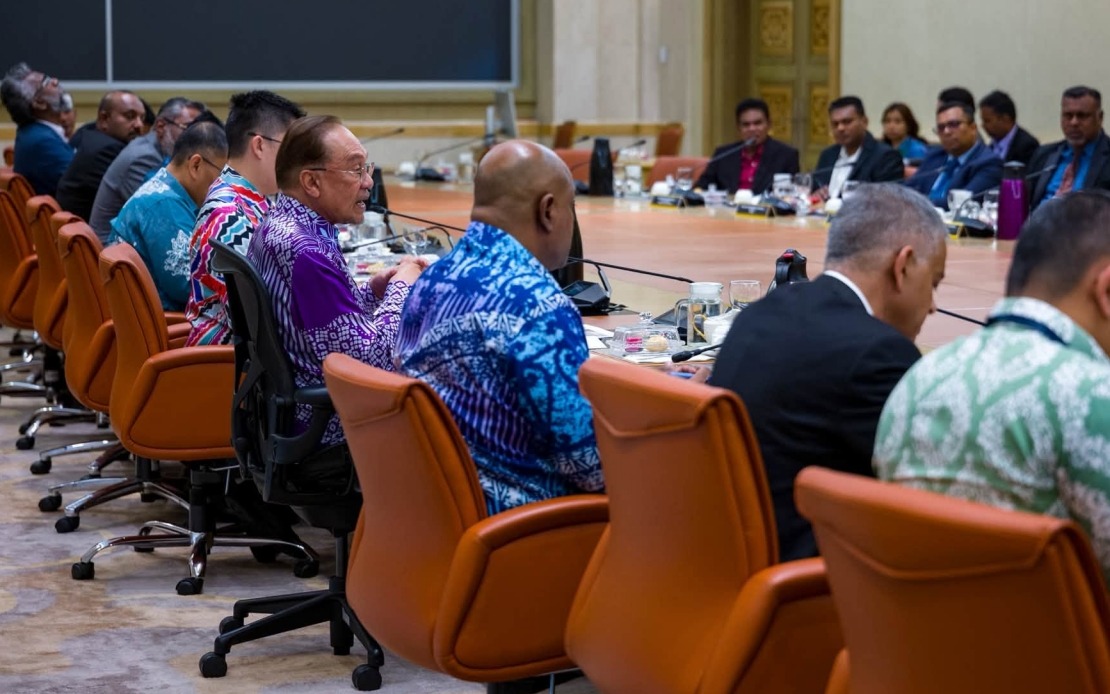
Prime Minister Datuk Seri Anwar Ibrahim has outlined a multifaceted strategy for advancing the Malaysian Indian community, placing particular emphasis on educational excellence, targeted welfare support, capacity building and meaningful job creation opportunities. Speaking following discussions with community representatives, Anwar articulated a vision centred on tangible improvements in living standards and socioeconomic mobility for Indian Malaysians across all demographic groups.
The Prime Minister's remarks underscore a recognition that minority community development requires coordinated action across multiple policy domains rather than isolated interventions. By anchoring his approach to education as a foundational element, Anwar reflects international development thinking that positions learning as the cornerstone of long-term prosperity and social mobility. Quality education enables individuals to acquire competencies needed for navigating evolving labour markets, accessing higher-income professions, and contributing meaningfully to economic growth.
Anwar's emphasis on comprehensive welfare mechanisms signals acknowledgment that educational advancement alone cannot address structural barriers facing segments of the Indian community. Welfare programmes, when properly designed and targeted, serve as critical safety nets that enable families to invest in their children's schooling without being derailed by immediate survival pressures. This represents a departure from the notion that development occurs through market forces alone, instead recognising state support's role in levelling the playing field for historically marginalised groups.
Skills development features prominently in the Prime Minister's outlined agenda, reflecting awareness that credentials alone do not guarantee employment success in competitive markets. Vocational training, technical certifications, and industry-aligned skill programmes bridge the gap between formal education and workplace requirements, particularly in sectors experiencing talent shortages. For the Indian community, this approach opens pathways into growing sectors like technology, green energy, and digital services where Malaysian representation remains limited.
The role assigned to the Malaysian Indian Transformation Unit (MITRA) represents an institutional mechanism for implementing these priorities with specificity and accountability. By calling for MITRA and partner agencies to adopt more proactive engagement at grassroots levels, Anwar acknowledges that policy effectiveness depends on understanding community realities rather than imposing top-down solutions. Ground-level intelligence gathering ensures that initiatives address genuine needs rather than assumed deficits, reducing programme wastage and improving outcomes.
Anwar's insistence on rigorous needs assessment and beneficiary targeting reflects governance principles increasingly central to Malaysia's development approach. By ensuring initiatives reach those with greatest need, the government can maximise development impact while demonstrating fiscal responsibility. This targeted orientation becomes particularly important given budget constraints, where universal approaches often fail to concentrate resources effectively on priority groups.
The framework of compassion, accountability, and good governance articulated by the Prime Minister establishes ethical foundations for community empowerment initiatives. Compassion ensures policies remain responsive to human dignity and lived experiences rather than becoming mechanistic or bureaucratic. Accountability mechanisms ensure public resources translate into tangible community benefits, building trust between government and constituent groups. Good governance practices ensure transparency in decision-making and benefit distribution, critical for communities that have historically experienced marginalisation or resource capture by privileged elites.
For the broader Malaysian context, Anwar's commitment to leaving no community behind reflects the democratic imperative of inclusive development. As Malaysia navigates middle-income challenges and seeks to transition toward high-income status, sustained economic growth requires the productive participation of all population segments. Indian Malaysian communities, comprising roughly seven percent of the national population and concentrated in specific regions and occupations, represent significant human capital whose fuller integration into expanding sectors could generate productivity gains and innovation dividends.
The emphasis on employment opportunities speaks to labour market realities where Indian Malaysians face documented disparities in income levels, occupational distribution, and access to senior positions compared with other communities. Deliberate job creation and advancement strategies, whether through skills alignment with employer needs, entrepreneurship support, or targeted recruitment initiatives, directly address these structural imbalances. Such measures become increasingly urgent as automation and economic restructuring reshape employment landscapes, potentially disadvantaging groups with lower initial access to emerging opportunities.
Anwar's positioning of community empowerment within a broader national development narrative frames minority advancement not as a zero-sum competition but as mutual benefit. When Indian Malaysian communities achieve higher educational attainment, earn stable incomes, and build productive livelihoods, the entire nation gains through expanded consumer demand, increased tax revenue, reduced social support burdens, and enhanced human capital stock. This narrative shifts empowerment from charity or political obligation to pragmatic national interest.
The challenge ahead lies in translating announced priorities into sustained implementation across multiple agencies. Effective coordination between MITRA, education ministries, labour departments, and welfare agencies requires clear accountability structures and performance metrics. Progress will depend not merely on good intentions but on dedicated budgets, trained personnel, monitoring systems, and political will to prioritise Indian community advancement even when other competing demands emerge.
Looking forward, the success of these initiatives will be measurable through concrete indicators: Indian student enrolment and completion rates in tertiary education, graduate employment rates within desired sectors, average household income growth, and occupational mobility patterns. These metrics will ultimately determine whether the announced empowerment strategy translates into genuine transformation or remains aspirational rhetoric. For Malaysia's Indian community and the broader nation seeking equitable, inclusive development, the implementation phase will prove decisive.

