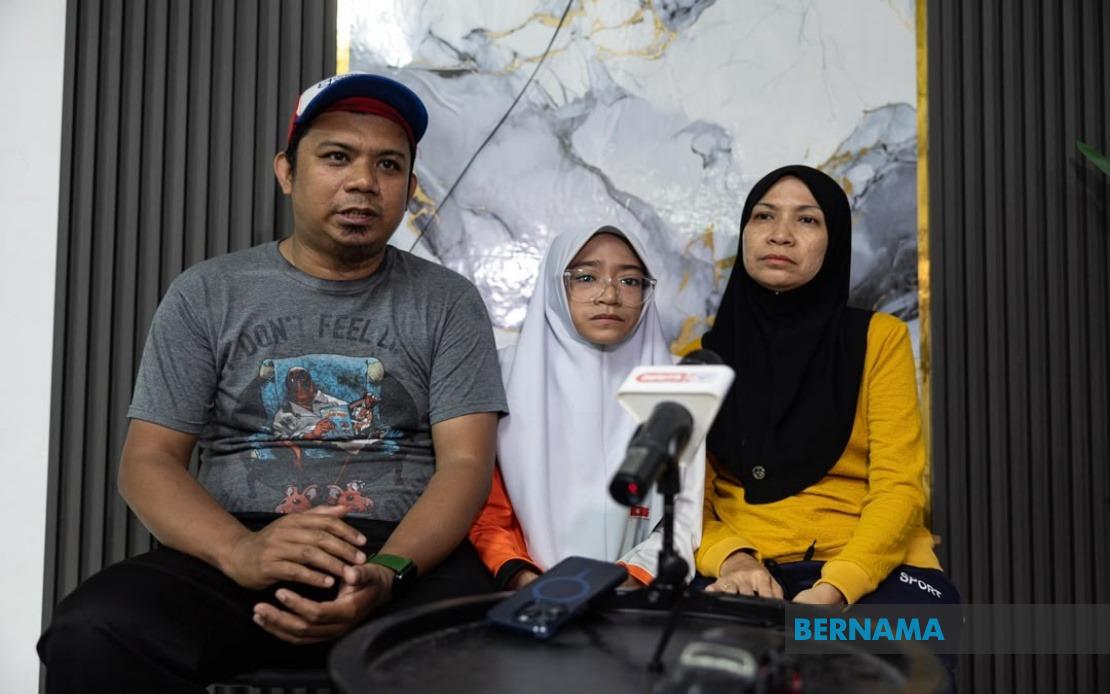
Education Minister Fadhlina Sidek, working alongside the Tun Hussein Onn Teachers' Foundation (YGTHO), has pledged RM10,000 to finance scoliosis surgery for 13-year-old Arissa El Zahra Reduan. The surgical intervention is scheduled for September 8 at Raja Permaisuri Bainun Hospital (HRPB) in Ipoh, addressing a medical challenge that had begun impacting the teenager's ability to maintain regular school attendance.
The funding commitment emerged after Arissa's father, Reduan Saad, made a public appeal seeking financial assistance to cover the RM10,000 surgery cost. His plea resonated with the Education Ministry leadership, who recognised the urgency of enabling the student to access necessary medical care without financial burden preventing her from receiving treatment.
Fadhlina announced the contribution through a video announcement made directly to Arissa and her mother, conveying the positive news through a personal video call. During this interaction, she reassured the teenager that the financial obstacle had been removed, emphasising that the funds would be transferred immediately to facilitate the hospital procedures. The minister's direct engagement with the family underscored the personal dimension of the assistance, moving beyond a mere financial transaction to genuine human connection and encouragement.
In her public statement released on social media, Fadhlina reflected on the emotional significance of the moment, noting how witnessing a young student's determination to continue her education proved deeply affecting. She expressed gratitude to media outlets for serving as intermediaries connecting governmental support systems with families facing medical hardships, highlighting how public attention can catalyse compassionate responses from authorities and foundations.
The minister's remarks during the video conversation explicitly addressed Arissa's concerns, assuring her that recovery and return to normal schooling represented realistic outcomes following successful surgery. She encouraged the teenager to maintain psychological resilience through the pre-operative period, framing the RM10,000 contribution not merely as financial aid but as institutional commitment to her educational continuity and wellbeing.
Beyond the immediate funding provision, Fadhlina's office indicated they would oversee logistical arrangements ensuring Arissa received optimal medical care throughout the surgical process. This administrative oversight suggests a comprehensive support approach extending from financial coverage through to post-operative follow-up, reflecting institutional responsibility for the teenager's complete recovery trajectory.
Scoliosis, an abnormal curvature of the spine, frequently affects adolescents and can progressively worsen during the growth years. When severe, the condition can impact respiratory function, cause chronic pain, and significantly limit physical activity—consequences that make surgical correction medically necessary for affected teenagers. Arissa's case exemplifies how financial barriers can delay or prevent access to essential corrective procedures that might otherwise proceed smoothly in healthcare systems where cost presents no obstacle.
The intervention by Malaysia's Education Ministry and YGTHO reflects broader governmental responsibility for student welfare beyond curriculum delivery and classroom instruction. Educational authorities increasingly recognise that students' physical health and freedom from financial anxiety constitute prerequisites for effective learning and school engagement. By removing the financial barrier to Arissa's surgery, the ministry addressed a fundamental prerequisite for her continued educational participation.
The YGTHO's involvement adds institutional weight to this support. As the Tun Hussein Onn Teachers' Foundation, the organisation carries heritage connected to Malaysian educational leadership and maintains ongoing commitment to supporting educators and student welfare. Their co-contribution alongside ministerial funds demonstrates how quasi-governmental educational foundations can complement formal government assistance, creating multi-layered support networks for students facing acute financial needs.
Arissa's situation, while individual, reflects broader challenges many Malaysian families encounter when confronting significant medical expenses. Public sector employees and lower-income households frequently lack comprehensive private insurance coverage, placing substantial surgical costs beyond immediate financial reach even when procedures prove medically necessary. Cases requiring external assistance highlight both the value of safety-net support systems and persistent gaps in healthcare accessibility for vulnerable populations.
The September 8 surgery date provides Arissa a defined timeline for recovery, with realistic prospects of resuming school activities during the academic year if post-operative rehabilitation progresses favourably. Early intervention during adolescence offers biomechanical advantages for spinal correction, making timely surgery particularly beneficial. The ministry's facilitation removes uncertainty that financial constraints might otherwise impose, allowing Arissa to focus on medical recovery rather than family financial hardship.
This case demonstrates how individual advocacy—whether through media coverage or personal appeals—can activate institutional responses from education authorities positioned to provide transformative assistance. Arissa's father's public appeal successfully mobilised support that exemplifies potential when governmental leaders prioritise student welfare as a core educational ministry responsibility.

