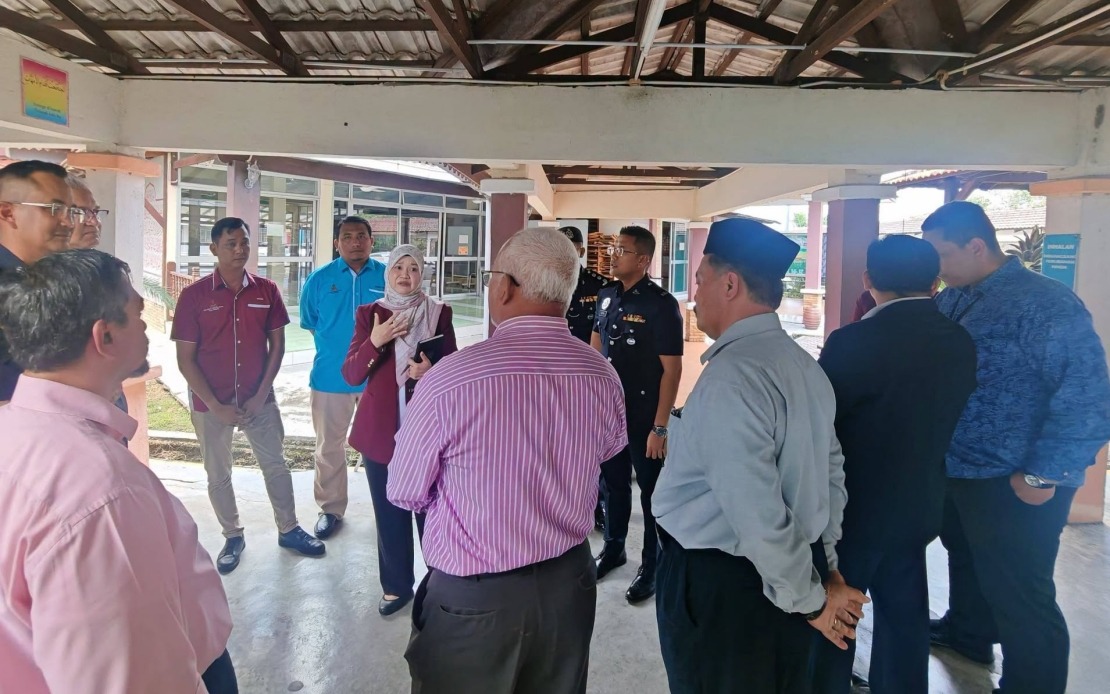
Education Minister Fadhlina Sidek made an unscheduled visit to a secondary school in Banting, Kuala Langat, on Saturday to assess the situation following a stabbing incident that shocked the school community earlier in the day. The minister arrived at the institution at 1.20 pm to meet with school management and gather first-hand details about the circumstances surrounding the attack on a Form Three student. Her swift response underscores the seriousness with which the government is treating incidents of violence in educational settings, particularly when they involve minors.
The incident unfolded in the morning when police received a report at 9.50 am about an altercation that had escalated to violence. According to preliminary investigations by the Kuala Langat district police, another female student was responsible for stabbing the victim using a knife. The rapid response from law enforcement meant that the suspect was taken into custody quickly, preventing further harm and enabling a formal investigation to commence without delay. The victim, who sustained injuries from the stabbing, was provided immediate medical intervention and transported to Banting Hospital, where she remains under observation in a stable condition.
Fadhlina's public statement following her visit reflected the government's commitment to prioritising victim welfare and psychological recovery. She emphasised that the immediate focus must remain on ensuring the injured student receives comprehensive medical treatment and that both the affected students and staff members have access to mental health support to process the trauma of the incident. The minister acknowledged the emotional toll such an event has on an entire school community, recognising that beyond the victim, many others would be experiencing distress and anxiety. Her remarks sought to instil calm and resilience during what is undoubtedly a difficult period for the institution.
In her social media address, Fadhlina also issued a careful appeal to the general public to resist the urge to spread unverified information or engage in speculation about the incident. In an age where misinformation can spread rapidly across digital platforms, her cautionary words aimed to prevent rumours that might exacerbate panic or cast aspersions on those involved without factual basis. She acknowledged the various agencies and departments that mobilised to handle the crisis, including the police and state education authorities, expressing gratitude for their coordinated efforts in managing what could have been a far more serious situation.
V. Paparaidu, the Selangor Human Resources and Poverty Eradication Committee chairman and Banting assemblyman, took the opportunity to commend the State Education Department for its prompt provision of psychosocial support and counselling services. His statement indicated that the psychological dimension of the incident was being taken seriously at the state level, with trained counsellors made available not only to the victim but also to her family members and other students traumatised by witnessing or learning about the violence. This holistic approach to post-incident care reflects evolving best practices in crisis management within educational institutions.
However, Paparaidu's public remarks also pivoted to a broader discussion about school security infrastructure and the need to strengthen protective measures. He underscored that children's safety within school premises cannot be treated as a secondary concern or subject to budgetary constraints. His call for enhanced vigilance among security personnel highlighted the human element of school safety—the importance of trained, alert staff who are present and observant during peak arrival and departure times when campuses are most vulnerable. He stressed that those responsible for monitoring entry and exit points must remain consistently attentive, ensuring that only authorised individuals access the school grounds.
The assemblyman's emphasis on fortifying entry gate security addresses a critical vulnerability in many Malaysian schools. While some institutions maintain robust security protocols, others operate with minimal checks, potentially allowing unauthorised persons to enter campus grounds unchallenged. Paparaidu's intervention suggests that this incident has prompted local authorities to re-examine security standards across Kuala Langat schools and potentially advocate for system-wide improvements. His framing of schools as sanctuaries—places where students should be able to pursue education without fear—reflects the aspirational standard against which current security arrangements should be measured.
The stabbing incident at the Banting school raises important questions about student safety and mental health within Malaysian educational institutions. While violent incidents involving schoolchildren remain relatively uncommon, their occurrence generates significant concern among parents, educators, and policymakers. The fact that the alleged perpetrator was another student, rather than an external threat, introduces complex dimensions regarding peer conflict resolution, mental health awareness among young people, and the adequacy of counselling and support services within schools. Educational institutions across Malaysia may now feel prompted to review their own conflict-management protocols and ensure that students have accessible channels to address grievances before escalation occurs.
The incident also illuminates broader questions about the detection and intervention of concerning behavioural patterns among students. Educators and school administrators are increasingly expected to recognise warning signs of psychological distress or violent ideation among their pupils, yet many schools lack specialised training or sufficient counselling staff to address emerging mental health concerns effectively. The circumstances leading to the stabbing—whether it stemmed from a pre-existing conflict, spontaneous altercation, or deeper psychological issues—remain under police investigation, but they will likely inform discussions about preventive measures that schools might implement in future.
Parents across Selangor and beyond will be watching closely to see what concrete changes emerge from this incident. While ministerial visits and sympathetic statements provide reassurance, the public expectation is that schools will translate concern into action through measurable security improvements, enhanced counselling infrastructure, and comprehensive training for staff on threat detection and de-escalation. The psychological fallout for the school community will extend beyond the immediate aftermath; students may experience lingering anxiety about their safety, and some may develop specific anxieties about returning to campus.
The Kuala Langat district police chief Supt Mohd Akmalrizal Radzi confirmed that investigations were proceeding into the circumstances of the stabbing. Police are expected to determine whether the incident resulted from a momentary conflict or reflected deeper antagonism between the students involved. The outcome of this investigation may inform charges, potential disciplinary measures within the school system, and recommendations for preventing similar incidents. For the school community, the police investigation represents a necessary step toward understanding what triggered the violence and how systems failed to prevent it.
Moving forward, this incident will likely catalyse discussions at the ministerial level about standardising school security protocols nationwide and ensuring that all institutions, regardless of location or socioeconomic status, meet baseline safety standards. Malaysian schools serve millions of students, and their safety must not be compromised by inconsistent security practices or inadequate support systems. The speed with which Education Minister Fadhlina responded to the Banting incident signals that her ministry is alert to these concerns, though sustained commitment to implementing systemic improvements will ultimately determine whether this event becomes a catalyst for meaningful change or simply another incident that fades from public consciousness.

