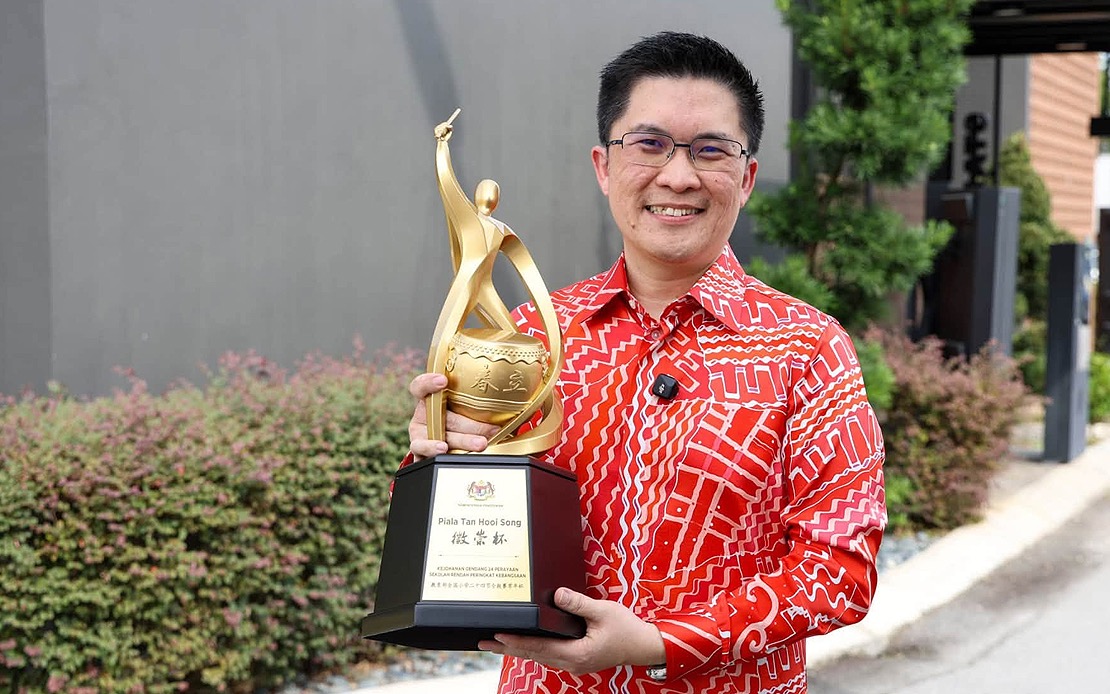
The Ministry of Education has committed to pursuing international recognition for Gendang 24 Perayaan, a distinctly Malaysian percussion ensemble, by lodging an application with UNESCO for designation as world cultural heritage. Deputy Education Minister Wong Kah Woh announced the initiative at the closing ceremony of the National Primary Schools Gendang 24 Finals Competition at Stadium Indera Mulia in Ipoh, describing the bid as a cornerstone ambition within the ministry's broader cultural preservation agenda. The move reflects growing institutional recognition that safeguarding traditional art forms requires sustained investment and formal international validation.
Wong outlined that ministerial discussions held in May examined concrete pathways to support the application process, signalling a structured approach rather than symbolic rhetoric. Multiple rounds of consultation at both government and grassroots levels have identified specific measures capable of strengthening Gendang 24 Perayaan's institutional foundation and cultural footprint. The deliberate pace of these discussions underscores the complexity of securing UNESCO endorsement, which demands demonstrable community engagement, educational integration, and transmission mechanisms across generations.
A centrepiece of the ministry's support strategy involves the Train the Trainers programme, designed to equip school educators with pedagogical expertise in Gendang 24 Perayaan performance and instruction. By positioning teachers as cultural ambassadors within their institutions, the ministry seeks to embed the art form within regular co-curricular frameworks rather than relegating it to occasional performances. This pedagogical approach acknowledges that sustainable cultural transmission depends on systematic classroom integration and faculty capacity-building, not episodic competition or festival participation alone.
The National Primary Schools Gendang 24 Finals Competition itself furnishes compelling evidence of the art form's institutional traction. The inaugural event, jointly organised by the MOE's Sports, Co-curricular and Arts Division and the Malaysia Gendang 24 Perayaan Association with Yayasan Sime Darby sponsorship, drew 16 elite primary school teams representing 417 students nationwide. The scale of participation demonstrates that Gendang 24 Perayaan has transcended regional or cultural boundaries to become a pan-Malaysian educational initiative, with schools across the country cultivating student ensembles.
Gendang 24 Perayaan itself carries a relatively recent but robust pedigree. Founded in Malaysia in 1988 by cultural pioneers Tan Hooi Song and Tan Chai Puan, the percussion ensemble remained geographically and institutionally confined for two decades before achieving formal recognition as Intangible National Heritage in 2009. That designation provided baseline cultural legitimacy domestically, yet the art form's international profile remains modest outside Southeast Asian circles. UNESCO recognition would elevate Gendang 24 Perayaan into conversations about global cultural diversity and position Malaysia as a custodian of distinctive musical traditions.
The growth trajectory from a small cluster of performing teams to hundreds of school ensembles nationwide within the past 15 years indicates both organic community enthusiasm and effective institutional scaffolding. This expansion reflects the art form's pedagogical utility—percussion ensembles teach rhythm, coordination, teamwork, and cultural identity simultaneously—alongside its accessibility to schools with limited musical resources. Unlike orchestral programmes requiring expensive imported instruments, Gendang 24 Perayaan draws on percussion traditions deeply rooted in Malaysian practice.
For Malaysian educators and policymakers, the UNESCO application represents an opportunity to assert cultural sovereignty during an era when globalisation often marginalises local arts within school curricula. By securing international validation, the ministry signals that Malaysian heritage arts merit parity with Western classical traditions in educational programming. This positioning matters particularly for lower-income schools and rural communities where cultural initiatives frequently compete with core academic pressures for limited time and budgetary allocation.
The implications extend beyond symbolic recognition to practical resource allocation and curriculum design. UNESCO designation typically triggers increased funding opportunities, research partnerships, and international exchange programmes that can enhance the art form's sustainability. Malaysian teachers and students participating in global heritage networks gain exposure to comparative cultural practices while contributing to international discussions about intangible cultural transmission. These institutional connections create multiplier effects that ripple through school systems and communities.
However, the pathway to UNESCO inscription demands sustained attention to documentation, community validation, and adaptive practice. The application process requires demonstrating that Gendang 24 Perayaan remains a living tradition practised across diverse communities rather than an archived artefact. Current institutional embedding within schools provides a compelling narrative of intergenerational transmission, yet the ministry must address questions about authenticity, innovation, and whether pedagogical standardisation might inadvertently ossify an art form traditionally characterised by regional variation and creative interpretation.
Regionally, Malaysia's pursuit of UNESCO status for Gendang 24 Perayaan contributes to Southeast Asia's broader effort to secure international recognition for indigenous cultural forms. Thailand, Indonesia, and the Philippines have similarly pursued UNESCO inscriptions for traditional arts, creating a competitive yet collaborative landscape where countries benchmark their cultural policies against neighbour achievements. Malaysia's initiative positions the nation within this regional conversation about cultural preservation and soft power projection.
The ministry's emphasis on youth engagement through school competitions and formal training programmes addresses a demographic challenge confronting many traditional arts—insufficient younger practitioners and audiences. By institutionalising Gendang 24 Perayaan within primary education, the MOE creates structural incentives for children to develop expertise while normalising cultural participation as a routine school activity rather than an optional leisure pursuit. This generation of students, trained in school settings and potentially exposed to international audiences through UNESCO networks, may become the foundation for Gendang 24 Perayaan's sustainability beyond the current century.

